
Contributors

For over a century, El Palacio has been a forum for voices exploring New Mexico’s art, archaeology, history, and landscape. Explore the writers, photographers, historians, and scientists whose perspectives have defined the magazine’s pages—past and present.

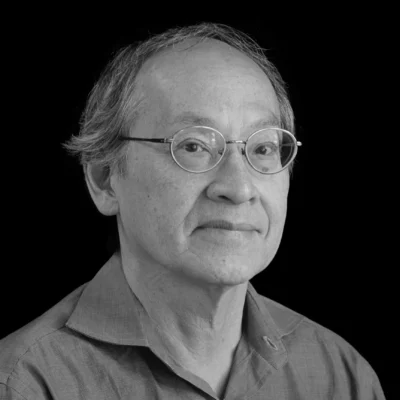
Paul Weideman

Paul Weideman has written about archaeology, historic preservation, architecture, real estate, art, and culture for The Santa Fe New Mexican and other publications for thirty years. He is the author of the 2019 book ARCHITECTURE Santa Fe: A Guidebook.

This Old House

By Paul Weideman Santa Fe’s history lives in its buildings— in the places where people lived, worked, played, studied and worshipped during the past several centuries. Many of the buildings are wonderful in themselves; as examples of adobe construction, for instance. And in both the buildings and their people, we realize the importance of historic preservation. One esteemed survivor is the Otero-Bergere House on Grant Avenue.

Hot In Here

By Paul Weideman "It’s easy in New Mexico to wind down while things heat up,” according to a New Mexico Tourism Department guide to New Mexico’s hot springs at newmexico.org. However, residents’ ability to enjoy our steamy mineral springs is not what it historically was. Part of the problem dates to the U.S. takeover of New Mexico Territory in 1848. More and more people came from the East trying to seek respite from tuberculosis and other infectious diseases, and entrepreneurs took advantage of opportunities to transform increasingly popular hot springs into businesses.

Eyes on the Land

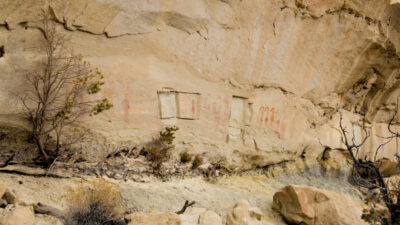
By Paul Weideman Messing with the matrix. That’s one of the problems with the modern-day fad of stacking stones into cairns in wilderness areas. Cairns are an age-old method of marking trails, but those that are constructed for less serious reasons at archaeological sites can cause irreparable damage. “If there were associated grid gardens or shallow subsurface deposits, the rock removal would likely disturb them, compromising the shallow subsurface stratigraphy,” says Jessica Badner.