

Sacred Geographies Of Northern New Mexico
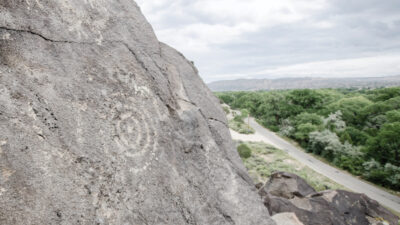
By Matthew J. MartinezPhotography by Jim O’Donnell To us, these petroglyphs are not the remnants of some long-lost civilizationthat has been dead for many years … they are part of our living culture.What is stored in the petroglyphs is not written in any book or to be found in any library. We need to return to them to remind us of who we are and where we came from, and to teach our sons and daughters of it.— Herman Agoyo, (Kaafedeh)Former Governor, Ohkay Owingeh and All-Indian Pueblo Council Chairman These words provide breath and spirit in the continued work of the Mesa Prieta Petroglyph Project (MPPP), which will celebrate its 25th anniversary in 2024.
![A smiling man wearing sunglasses and a black shirt holds a red glassblowing piece in a workshop. Text reads: Encounter Culture, Season 1 Episode 4. [gen-ai]](https://elpalacio.org/wp-content/uploads/2025/12/S1E4-blue-blue-400x225.jpg)
![A group of Native American men in traditional attire and feather headdresses stand in a line outdoors with a man in a suit; trees and a large building are in the background. [gen-ai]](https://elpalacio.org/wp-content/uploads/2025/12/047827-400x225.jpg)