
Contributors

For over a century, El Palacio has been a forum for voices exploring New Mexico’s art, archaeology, history, and landscape. Explore the writers, photographers, historians, and scientists whose perspectives have defined the magazine’s pages—past and present.

Cameron Gay

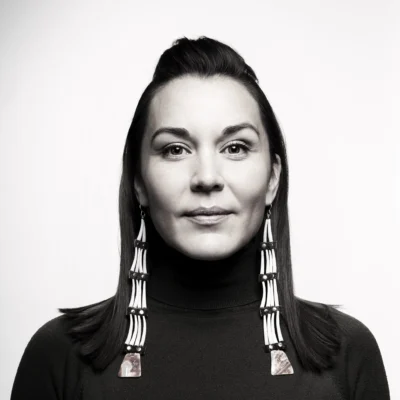
Cameron Gay (opens in a new tab) is a professional photographer.

Embroidering the Canon

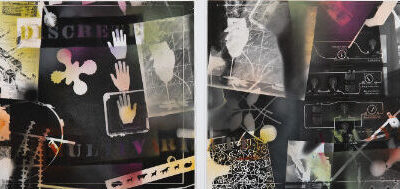
By Emily Withnall When an eclectic scattering of artists across the United States began pushing the boundaries of what photography could be in the 1960s and ’70s, they did not collectively name themselves. Organizing their movement would have been the antithesis of what they were trying to do. Though it is impossible to fully capture the range of approaches each artist took in creating their work, they were each trying to challenge the idea that photography was a window into reality.
Bohemian Rhapsody

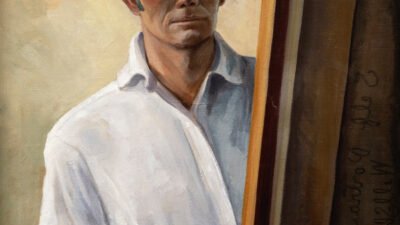
By Christian Waguespack A century ago, in 1920, serious health issues brought Pennsylvania-born artist William Howard Shuster (1893– 1969) to New Mexico, beginning forty-nine years of creativity, exploration, and community engagement. Though he received some fine-arts training in Philadelphia, it was not until he experienced the inspiration of Santa Fe that he decided to dedicate his life to art. Almost immediately, he famously joined four other young bohemians to become Los Cinco Pintores, and integrated himself into Santa Fe’s burgeoning Modernist art scene.

Perceptions of Passion

BY CHRISTIAN WAGUESPACK Since the end of the nineteenth century, artists of European descent have been continuously drawn to New Mexico, captivated by everything that we still treasure as unique to our region: the stunning light, the rich multicultural tapestry, the dramatic natural vistas. But as often as they filled their canvases with Indigenous subjects, golden aspens, or sun-drenched mountains, they were equally fascinated with the Hispanic community that has called New Mexico home for centuries.

Illustrative Artists

BY CHRISTIAN WAGUESPACK America’s land is at the heart of our national visual character. In the attempt to construct an identity for the young country, early Anglo-American artists aligned with the idea that ours was a nation without history—an idea that dismissed the validity of Native American history—and looked at the land as a fertile source to construct a national character.