Contributors

For over a century, El Palacio has been a forum for voices exploring New Mexico’s art, archaeology, history, and landscape. Explore the writers, photographers, historians, and scientists whose perspectives have defined the magazine’s pages—past and present.

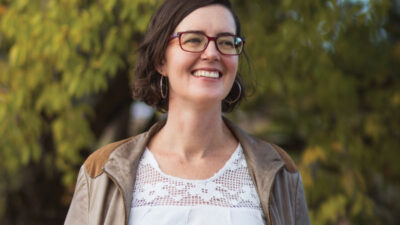
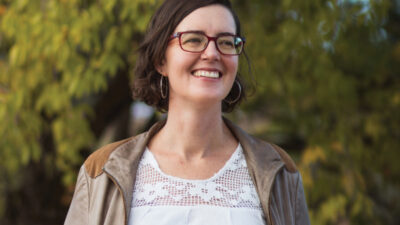
A person with short dark hair, red glasses, and large earrings smiles at the camera while standing against a textured wall. [gen-ai]

Emily Withnall

Emily Withnall (opens in a new tab) is the editor of El Palacio and the host of Encounter Culture. Prior to stepping into the editor role, she wrote for the magazine for eight years. Emily has also been published in The New York Times, Al Jazeera, High Country News, Orion Magazine, Tin House, The Kenyon Review, Gay Magazine, Source New Mexico, and other publications. She lives and writes in Santa Fe, New Mexico.

El Placio Plática: The women of the Chicano Movement

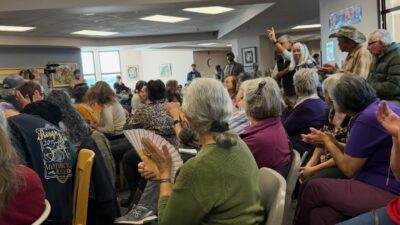
On February 22, 2026, 120 people in Las Vegas, NM, attended the El Palacio Plática at the New Mexico Highlands University Donnelly Library. The plática featured writer Myrriah Gómez and photographer and activist Adelita M. Medina. Medina was an activist during El Movimiento in Las Vegas in the 1970s and she shared her memories of the women who shaped the movement and created a school and farm in Montezuma.

Art as Inheritance

Poetry is my inheritance. My dad, raised by Scottish immigrants in New York City, was taught by Catholic nuns to memorize poetry. He passed the practice on to me; I remember standing at the edge of the Pecos Wilderness as a child, repeating the lines of “The Fairies,” by William Allingham, until I could recite it by heart. I still carry the words in my body, the rhythm of each line urging a steady onward march despite the poem’s dark elements.

The Art of Time Travel

When I’m out walking I often pause to consider the landscape, trying to imagine what a specific place may have looked like one hundred years ago, or five hundred years ago. I take in the shapes of the hills and mountains and conjure other people, other forms of settlement, and other relationships to the land. And when the wind feels particularly harsh, it comforts me to know that others across time have also endured it.

Returning to the Body

While editing this issue of El Palacio, I spent a lot of time thinking about the body. Work has always been central to the American identity and in the West this work has—and continues to be—rooted in hard, physical labor. It’s the kind of labor that does not allow you to forget about your body. In New Mexico, as in many other places, this labor has often been deeply entangled with questions of race, class, nationality, and colonialism.

If You Can Talk, You Can Sing

My Aunt Kate had a poster in her living room that I liked to look at as a kid. It featured two Zimbabwean women in colorful clothing with their arms extended and hands linked. A proverb at the top of the poster read:  If you can walkYou can danceIf you can talkYou can sing. The image was imbued with color and joy, but I appreciated the message most.

Our Place in the Family of Things

There’s a place I like to walk with my dog on the outskirts of Santa Fe. The trail offers views of the city and the pink and orange cotton candy clouds that often illuminate the sky at sunset. As I walk, I take in the soft hoots of owls as the sun slips behind the mountains and the echoes from coyotes throwing their voices between the hills.

Imagination as Necessity

I’ve been thinking a lot recently about the power of imagination. It’s incredible to me that humans can create something tangible from a dream. Although many of us have access to infrastructure like roads and indoor plumbing—to name two basic ones—these things we take for granted were brought into being by imagination. Our imaginations have created nearly everything around us, from paintings and forms of dance to technologies and new forms of collaboration.

What the Land Holds

Returning from a trip once, the woman seated beside me peered out the window as the plane began its descent to Albuquerque. “Oh my,” she said. “Look at how brown it is.” I looked. I saw some brown and grey buildings, but I also saw red earth, the gentle green of the cottonwood leaves, the dark green of the juniper, and the deep blue of the Sandias—which I knew from experience would blush a luminous pink at sunset.

Traversing the Memory Field

There are several threads running through the articles and essays in this issue of El Palacio, but as I edited the work, Diné poet Jake Skeets’s idea of the memory field kept returning to me. In his essay, Skeets writes that time and memory are not just cognitive, but physical. Just as the light we receive from the stars comes from the past, he argues, our memories are woven together with the land and within our bodies.