

![Split-screen image of two women smiling, with the Encounter Culture podcast logo and text reading Season 1 Episode 7 at the bottom. [gen-ai]](https://elpalacio.org/wp-content/uploads/2025/12/S1E7-blue-400x225.jpg)
Contributors
For over a century, El Palacio has been a forum for voices exploring New Mexico’s art, archaeology, history, and landscape. Explore the writers, photographers, historians, and scientists whose perspectives have defined the magazine’s pages—past and present.
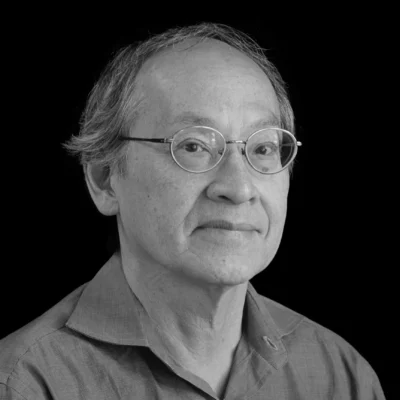
Arthur Sze
Arthur Sze is the current U.S. Poet Laureate. Sze is a poet, translator, and editor. He is the author of twelve books, including Into the Hush, Sight Lines, and others. Sze’s poems have been translated into fifteen languages, and he is the recipient of the National Book Award among many other honors. He lives in Santa Fe.
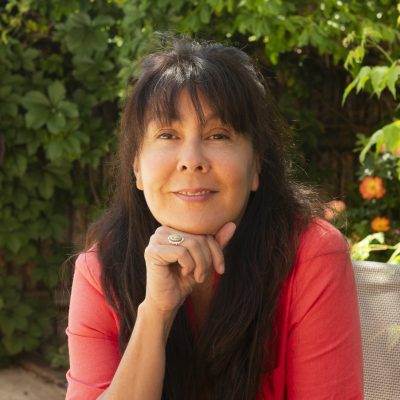
Deborah Jackson Taffa
Deborah Jackson Taffa is a citizen of the Quechan Nation and Laguna Pueblo. Her memoir Whiskey Tender was a 2024 National Book Award Finalist and was longlisted for the 2025 Carnegie Medal for Excellence in Nonfiction. Taffa serves as the director of the MFA in creative writing program at the Institute of American Indian Arts.
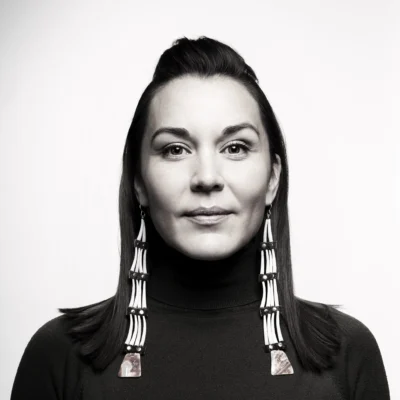
Cara Romero
Cara Romero is an award-winning contemporary fine art photographer. An enrolled citizen of the Chemehuevi Indian Tribe, Romero’s expansive oeuvre has been informed by formal training in film, digital, fine art, and commercial photography. She maintains a studio in Santa Fe, regularly participates in Native American art fairs, and was featured in PBS’ Craft in America (2019).
Carrie Hertz
Carrie Hertz is curator of textiles and dress at the Museum of International Folk Art in Santa Fe, New Mexico. Previously she directed a community-based public folk arts program and taught classes as the curator of folk arts at the Castellani Art Museum of Niagara University. She is editor of Dressing with Purpose: Belonging and Resistance in Scandinavia (IU Press) and author of publications including “Public Folklore Curatorship: Collaborating with Emerging Refugee Communities” (Folklife and Museums: 21st Century Perspectives) and “This is Not a Costume: Re(centering) Community Interpretations of Dress in Museum Collections” (Museum Anthropology Review).
![A decorative pattern featuring repeating dark dragon motifs and cross-shaped cutouts on a golden background. [gen-ai]](https://elpalacio.org/wp-content/uploads/2025/12/future-400x225.jpg)
Picturing the Future
Cultivating, weaving, and dyeing cotton were regular parts of Mo Aiqun’s childhood. Born in 1958 in the Zhuang village of Sanbao (Tian’e County, Guangxi), she began learning to sew and embroider when she was thirteen. Like many young women in her community, she arrived at her new husband’s home with quilts she made for her dowry.