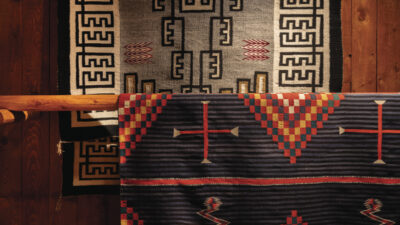
Read Not So Niche Foreground: Unknown artist (Navajo), Hubbell Trading Post rug, ca. 1800-1890. Commercial Germantown wool. 81 7 8 × 62 inches. Gift of Mr. and Mrs. Edward H. Tatum. MIAC Collection: 36197/12. Background: Unknown artist (Navajo), Two Grey Hills rug, ca. 1910-1920. Handspun wool, aniline dye. 88 3 5 × 54 ¾ inches. Gift of the Santa Fe Opera. MIAC Collection: 56595/12.

Not So Niche

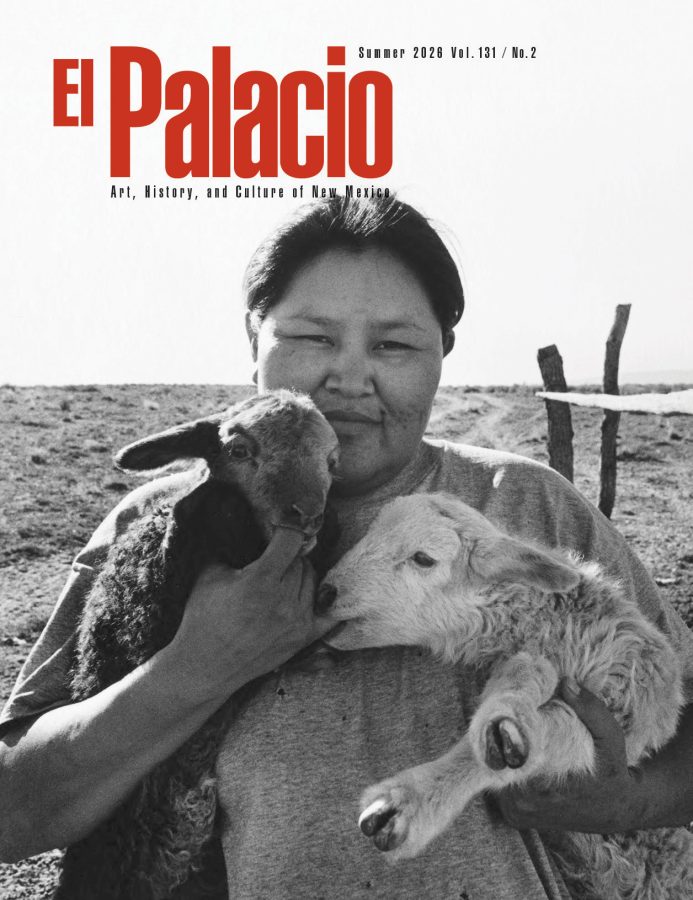
By Charlotte Jusinski In a recent email to a colleague, I found myself describing El Palacio as a “niche” magazine. But even as I wrote it, I knew it didn’t feel right. Looking at it in a more pigeonholed point of view, I guess it could be considered specialty. El Pal is specifically tied to the programming of the museums and historic sites of New Mexico, and more loosely focuses on the art, history, and culture of the Southwest as a whole.

Categories: Editor's Letter
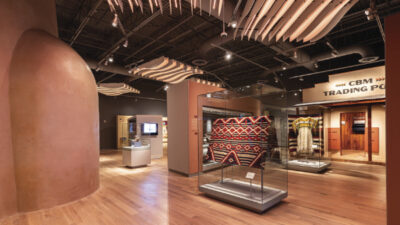
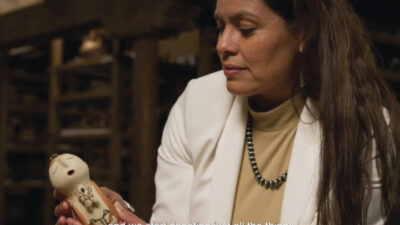
Read Full Circle The Trade and Exchange section features a reconstruction of a trading post featuring jewelry and silversmithing.

Full Circle

By Kim Suina MelwaniPhotographs by Tira Howard When I was young, my family had a subscription to National Geographic. It was not unusual to see them lying around the house, but one particular issue grabbed my attention. On the magazine’s November 1982 cover, flanked by numerous clay children, sat a familiar Pueblostoryteller figurine made by Helen Cordero who, like me, was from Cochiti Pubelo.

Categories: Featured, Indigenous arts and cultures

Read Molten Identity Dana Tai Soon Burgess. Photograph by Sueraya Shaheen, courtesy Dana Tai Soon Burgess.

Molten Identity

By Dana Tai Soon Burgess Dana Tai Soon Burgess’s new memoir, Chino and the Dance of the Butterfly (UNM Press 2022), is a deft weaving of the author’s experience with self-discovery as he realizes a life as a dancer and artist in a world that expects people of his ethnic background, Korean-American, to be a certain way and go into certain fields.

Categories: Essays and memoir

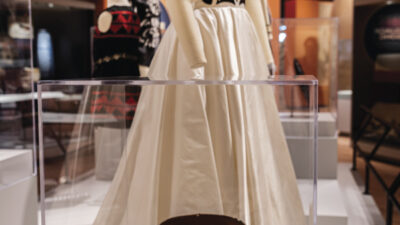
Read Evoking Empowerment Foreground: Jar, Acoma or Laguna Pueblo, ca. 1910. Clay, crushed potsherd temper, mineral and carbon paint, slip. 12 × 11 11/16 inches. Gift of Juan Olivas. MIAC Collection: 12024/12. Background: Loren Aragon (Acoma Pueblo), Ancestral Awakening, 2019-2022. Photograph by Tira Howard.

Evoking Empowerment

By Lillia McEnaney As visitors enter the Arts section of the Here, Now and Always at the Museum of Indian Arts and Culture, they are greeted by a large platform exhibiting several dresses, evoking the vision of a high fashion runway show. Alongside the dresses are historic ceramics, decorative footwear, and mixed-media purses. Central on this platform is a strikingly voluminous couture gown with terracotta and black design elements along its bust.

Categories: Framework, Indigenous arts and cultures

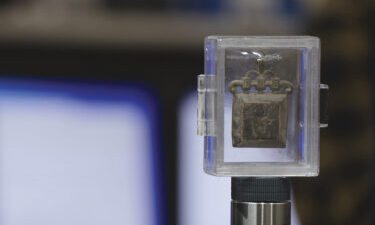
Read Inside Out A copper medallion found at Coronado Historic Site was one of the items examined with confocal X-Ray fluorescence (XRF) technology by scientists at Los Alamos National Laboratory.

Inside Out

By Hannah Sherk Los Alamos National Laboratory typically calls to mind cutting-edge advances in national security, but a recent project had its scientists looking back to a nearly 500-year-old conflict. LANL chemists, in a partnership with archaeologists from the Coronado Institute, are using high-tech instruments to examine artifacts from a long-buried battle.  In 2018, after sixteen months of careful searching, a metal detector survey unearthed a trove of artifacts at Coronado Historic Site in Bernalillo.

Categories: Archaeology, New Mexican history

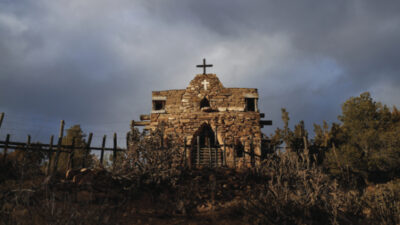
Read This Old House Known as La Capilla de San Ysidro Labrador, this small family chapel was built in 1928 by Lorenzo López, who used rocks gathered from his property and mud from the nearby acequia to construct the walls. Photograph by Simone Frances, 2020.

This Old House

By Paul Weideman Santa Fe’s history lives in its buildings— in the places where people lived, worked, played, studied and worshipped during the past several centuries. Many of the buildings are wonderful in themselves; as examples of adobe construction, for instance. And in both the buildings and their people, we realize the importance of historic preservation. One esteemed survivor is the Otero-Bergere House on Grant Avenue.

Categories: Essays and memoir

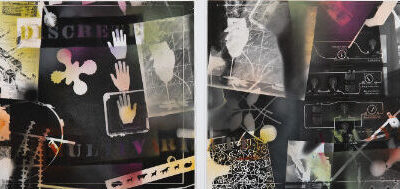
Read Embroidering the Canon Thomas J. Barrow, Discrete Multivariate Analysis, 1981. Gelatin silver print photograms with automotive lacquers and epoxy enamel. 16 × 19 ¾ in. Collection of the New Mexico Museum of Art. Gift of Frank and Patti Kolodny, 1990 (1990.1.1ab). © Thomas Barrow. Photograph by Cameron Gay.

Embroidering the Canon

By Emily Withnall When an eclectic scattering of artists across the United States began pushing the boundaries of what photography could be in the 1960s and ’70s, they did not collectively name themselves. Organizing their movement would have been the antithesis of what they were trying to do. Though it is impossible to fully capture the range of approaches each artist took in creating their work, they were each trying to challenge the idea that photography was a window into reality.

Categories: Visual art

Read Clay Community Kathleen Wall (Jemez) discusses her choice of pottery in the video portion of the Grounded in Clay exhibition, directed by Adam Shaening-Pokrasso.

Clay Community

By Almah LaVon Rice Their heads are tilted back, casting praise skyward. Eyes closed to everything but rapture, their mouths are OOO’d in song or supplication. Six clay figures—Mary, Joseph, the shepherd, and three wise men—arc around five smaller figures: a donkey, cow, two sheep, and in the center, Baby Jesus in a manger. This ca. 1982 Nativity set made by renowned Walatowa/Jemez potter Mary Elizabeth Toya invokes the humble, earthen place where the divine Son rose; in this work the ground under the feet is shaped and enshrined as ceramic art—immanence and transcendence are one.

Categories: Indigenous arts and cultures

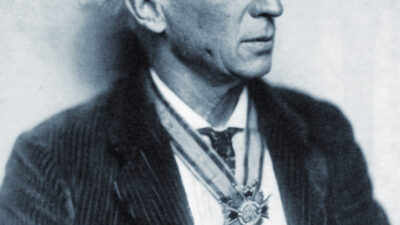
Read Hunting Miss Deuel Early Southwestern archaeologist and photographer Charles F. Lummis, 1917. Photograph by Mojonnier Photo. Courtesy the Palace of the Governors Photo Archives (NMHM/DCA), neg. no. 007700.

Hunting Miss Deuel

By James E. Snead On September 1, 1912, Charles Fletcher Lummis—author, “anthropologist,” and impresario of the American West—made a note in his diary. “Hunting Miss Deuel,” he wrote; “en vano.” Lummis coded his journals in what might today be called “Spanglish,” and this particular scribble referred to Elizabeth Deuel, whom he had met two weeks previously. Deuel was a new student at the School of American Archaeology in Santa Fe, and Lummis one of the leaders of the institution.

Categories: Archaeology, Southwestern history