

Contributors

For over a century, El Palacio has been a forum for voices exploring New Mexico’s art, archaeology, history, and landscape. Explore the writers, photographers, historians, and scientists whose perspectives have defined the magazine’s pages—past and present.

Almah LaVon

Almah LaVon (opens in a new tab) (they/them) is a writer and fairy marsh monster living in Dionde:gâ. They write creative nonfiction and short fiction engaging unfettered Black imagination and dreaming a new world many-petaled. Almah is a recipient of the Exposure Artists Program First-Time Grantee Award from The Pittsburgh Foundation.They were selected for the global Orange Tangent Study grant in 2022. They were awarded the 2022 Fable Grant, an initiative led by New York Times-bestselling author Adrienne Young.

Monuments of Mutuality

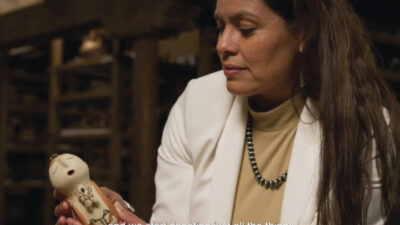
The documentary begins with a close-up view of an apparent snowscape. The camera eye sweeps slowly across what must be packed snow, glittering in the sunlight of the Southwest. Text surfaces on the screen, revealing haunting lines that confirm what we must be seeing: In the field of white snow I starve for the love of my own people. Yuki Shiroki No Ni Nikushin No Ai Ni Ue.

Driven

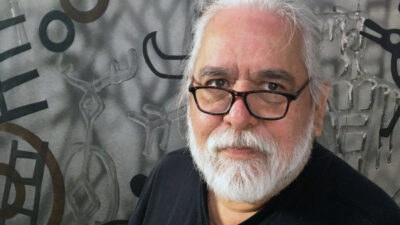
By Almah LaVon Rice Erased from history. Neglected. Overlooked. Hidden. Makes Critical Race Theory haters tremble. These are the words and phrases that alight on photographer Ron Tarver’s mind when he considers the popular iconography of the Black cowboy. “I tried to publish a book in the ’90s [about Black cowboys] and could not get anyone interested,” recalls Tarver, whose photojournalism in The Philadelphia Inquirer garnered a joint Pulitzer Prize in 2012.

Clay Community

By Almah LaVon Rice Their heads are tilted back, casting praise skyward. Eyes closed to everything but rapture, their mouths are OOO’d in song or supplication. Six clay figures—Mary, Joseph, the shepherd, and three wise men—arc around five smaller figures: a donkey, cow, two sheep, and in the center, Baby Jesus in a manger. This ca. 1982 Nativity set made by renowned Walatowa/Jemez potter Mary Elizabeth Toya invokes the humble, earthen place where the divine Son rose; in this work the ground under the feet is shaped and enshrined as ceramic art—immanence and transcendence are one.

Glass is the Memory of Light

By Almah LaVon Rice Where does glass come from? From the Phoenicians, ancestors of the alphabet in modern-day Lebanon, Syria, and Israel. Or perhaps the Sumerians, inventors of the cuneiform, were the first fashioners of glass in what is now southern Iraq. It could have been the ancient Egyptians—creators of papyrus, whose daughter is paper. What seems more certain: Naturally occurring glass is the clear-eyed child of the meteorite.