



Contributors

For over a century, El Palacio has been a forum for voices exploring New Mexico’s art, archaeology, history, and landscape. Explore the writers, photographers, historians, and scientists whose perspectives have defined the magazine’s pages—past and present.

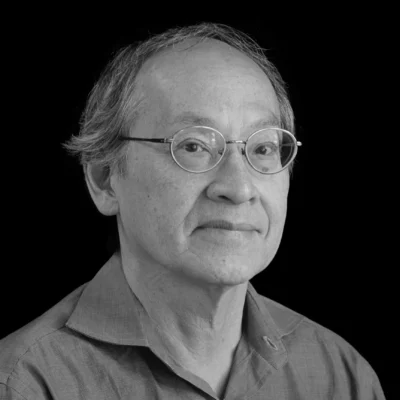
Steven J. Yazzie

Steven J. Yazzie (opens in a new tab) is a multidisciplinary artist working across painting, installation, video/film, photography and community collaboration. Yazzie is a member of the Navajo Nation and a veteran of the Gulf War, serving honorably with the United States Marine Corps, 1988-92. He received a BFA at Arizona State University and was named 2014 Outstanding Graduate for the Herberger Institute for Design and Art; Yazzie was a Community Scholar for the Interdisciplinary Research Institute for the Study of (in)Equality, University of Denver, Colorado, 2019-20; Additionally, Yazzie was a founding member of Postcommodity, an Indigenous arts collective, and the co-founder of the Museum of Walking. Yazzie’s notable exhibitions include the National Gallery of Art, Washington D.C; Museum of Modern Art, New York, NY; National Museum of the American Indian, New York, NY; Museum of Contemporary Art Denver, Denver Art Museum, Colorado; National Gallery of Canada, Ottawa, Art Gallery of Ontario, Toronto, Canada; Phoenix Art Museum, Scottsdale Museum of Contemporary Art, and the Tucson Museum of Art in Arizona. Yazzie was selected for the 2025 Sharjah Biennial 16, UAE. He lives and works in Denver, Colorado.

Symphonies in the Skies

By RoseMary Diaz Growing up in Santa Clara Pueblo, I listened to my grandmother tell the stories of our Tewa ancestors. From her I learned about how the Old Ones came from the north and built their homes in sandstone cliffs and atop high desert mesas of the Southwest; how they nurtured close relationships with the land and the animals and plants who also call it home; how they learned to read the weather and the seasons, hunt, and plant crops of beans, squash, and corn in a rainbow of sacred colors; how they shaped a rich legacy of language, song, and dance; and how they developed complex cosmocentric ceremonial and religious constructs that continue to define Tewa culture and belief today.