
Cruising the Mother Road
I found my first taste of freedom crisscrossing cornfields shadowed by windmills in rural Indiana in a hand-me-down Oldsmobile. Burnt CDs from friends and lovers made my small-town life feel cinematic.

New Mexico Department of Cultural Affairs welcomes you to subscribe and support our state’s cultural treasures.
I found my first taste of freedom crisscrossing cornfields shadowed by windmills in rural Indiana in a hand-me-down Oldsmobile. Burnt CDs from friends and lovers made my small-town life feel cinematic.
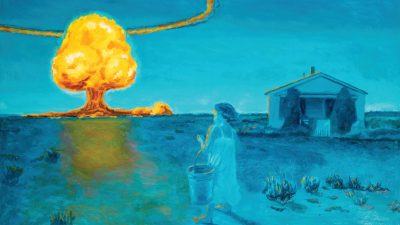
“Dear Journalist,” the letter starts. “You have been tasked with investigating recent deaths linked to alleged creature sightings in the Tularosa Basin area. It is speculated that these deaths have been occurring in Southern New Mexico ever since ‘the sun rose twice’ last year.” These are the initial instructions for a 3D point-and-click video game called El Sol.
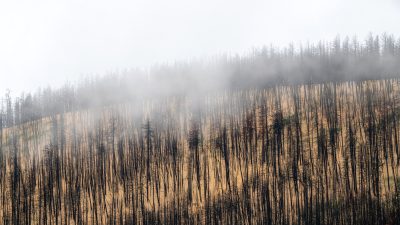
In April 2022, the largest and most destructive wildfire in New Mexico history, known as the Hermit’s Peak/Calf Canyon Fire, erupted in the Santa Fe National Forest.The wildfire originated from two U.S.
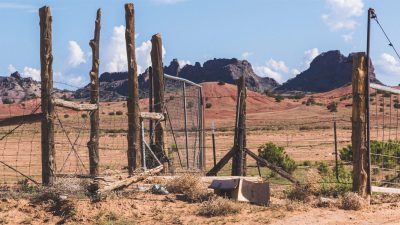
My mother was adopted through the Indian Adoption Project, a federal program that ran from 1958 to 1967 and was designed to assimilate Native children by placing them with white families.
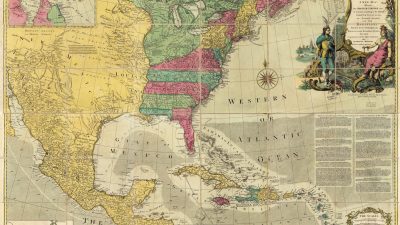
It is known today as New Mexico, a place where time is recognized as “immemorial.” Here, the footprints of people in motion, likely left 23,000 years ago, remain impressed upon the land.
![Four people with backpacks stand on rocky terrain, looking and pointing toward the horizon under a cloudy sky with sparse desert vegetation. [gen-ai]](https://elpalacio.org/wp-content/uploads/2025/12/Corrected-Oryx-Photos-89.jpg)
As the desert transitions from deep blacks to dim greys and blues, we creep through the mountain pass. We leave the city lights behind us and roll into the dark nothingness.
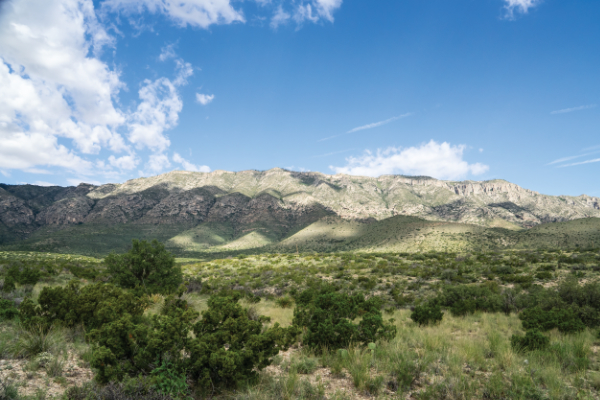
Talking about ancient life and the Paleozoic Era (252 to 541 million years ago) in New Mexico elicits various unexpected responses. Oh, cool! The ancient Puebloans. Well, no. A little further back.
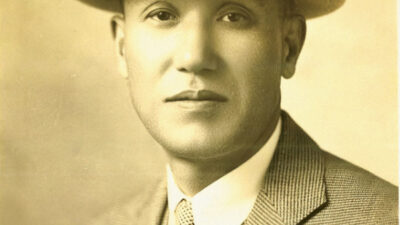
Pearl Harbor, Honolulu, was attacked at 7:55 a.m. Hawaii time. It was 10:55 a.m. in Seattle on Sunday, December 7, 1941, which also happened to be my fourth birthday. My mother often talked about that day, telling of the two tall white men who entered our home that evening: the FBI.

The engraving on the side of the cup is painstakingly scratched out of the silver metal. The top line reads “PNM”—the Penitentiary of New Mexico. Below are two simple statistics that together tell a brutal story with remarkable concision.

Remembering the Animas River helps me forget, at least for a moment, the challenges, fears, and feelings of inadequacy I experienced in my childhood. Memoria praeteritorum bonorum. My own set of rose-colored glasses.