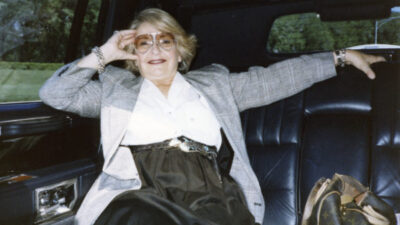
Read We Like Your Digs, Your Style, and Your Art Elaine Horwitch, circa 1986. Photograph courtesy Julie Sasse.

We Like Your Digs, Your Style, and Your Art

By Julie Sasse Elaine Horwitch was a major force in contemporary art in the Southwest from the late 1960s until her death   in 1991. She was responsible for launching the careers of hundreds of artists from the Southwest and the nation.  She promoted the integration of fine art and crafts as well as contemporary Indigenous, Latino, and Southwest art within global art contexts.

Categories: Featured, Visual art
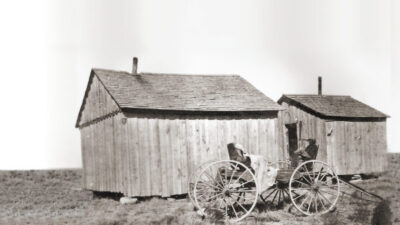
Read Blackdom in the Borderlands Scene in Blackdom, undated. Courtesy Historical Society for Southeast New Mexico.

Blackdom in the Borderlands

Editor’s Preface With widespread reporting on racial disparity in the United States in 2020 has come a renewed interest in a New Mexico site not often discussed: Blackdom, an all-Black settlement in the southeastern corner of the state, founded in 1903 and occupied until the 1920s. Historically, conversations about Black people project the intentions of others and obscure deep analysis of Black folks.

Categories: Featured, Southwestern history

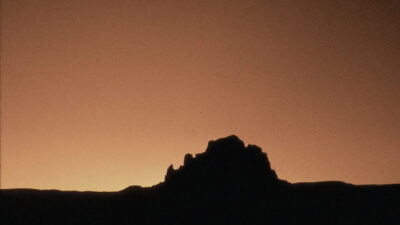
Read Common Ground Red sunset, Rio Puerco Valley, New Mexico. Photograph by Larry Crumpler.

Common Ground

By Julia Goldberg A dry climate with warm days and cold nights. Harsh spring winds. A landscape informed by long-ago volcanic eruptions. These are a few of the characteristics that describe New Mexico. They also describe Mars, and the connection between the terrains has informed Dr. Larry Crumpler’s work as a geologist for many decades. In November, Crumpler, the New Mexico Museum of Natural History and Science’s research curator of volcanology and space sciences, was named one of only a handful of scientists selected by NASA as part of the science team for the Mars 2020 Perseverance rover mission, the objective of which is to better understand the geology of the planet and look for signs of ancient life.

Categories: Featured, Landscape and environment, Natural history

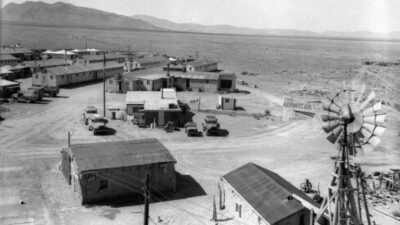
Read Whatever Decided Them Base Camp for Trinity Site was located on the Dave and Ross McDonald Ranch and was ten miles southwest of Ground Zero. Photo courtesy of WSMR.

Whatever Decided Them

By Molly Boyle THEY CAME TO THE LUSH, vast land east of Las Cruces from places like Texas, Oklahoma, Socorro, and Magdalena in the waning years of the nineteenth century. To them, the Tularosa Basin looked like prime ranching country, sided by the Sacramento Mountains in the east and the San Andres and Oscura ranges to the west. In the wet years of the 1880s, when people trickled into the basin with herds of cattle and sheep, native grasses grew to the height of a horse’s shoulder.

Categories: Farming and ranching, Featured

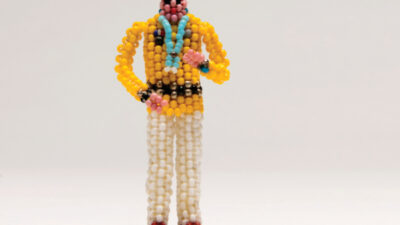
Read Collaboration, Multivocality, and Authority Sheila Antonio (Navajo), figurine, ca. 2000. Glass seed beads and leather. 2 ½ × 1 ¾ × 1 ½ inches. MIAC Collection: 59954/12. Gift of Yara and Gerald Pitchford. Photograph by Addison Doty.

Collaboration, Multivocality, and Authority

by Felicia Garcia and Lillia McEnaney When the Museum of Indian Arts and Culture opened its flagship exhibition in 1997, it did so with a purpose. Here, Now and Always was to be an exhibition different; an exhibition where Native people in the Southwest were the curators, the narrators, and the authority on themselves. Rooted in Edmund J. Ladd’s (Zuni Pueblo) affirmation that “I am here.

Categories: Indigenous arts and cultures

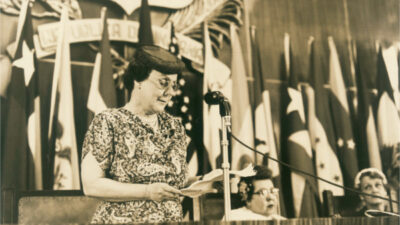
Read Los Derechos de las Mujeres Bertha Lutz speaks at the end of the assembly of the Inter-American Commission of Women, Trujillo, Dominican Republic, 1956. Courtesy Brazilian Federation for Women’s Progress and public domain.

Los Derechos de las Mujeres

BY CASSANDRA E. OSTERLOH, MA, MLS IN JULY 2019, on a visit to the Smithsonian’s National Portrait Gallery to see the exhibition Votes for Women: A Portrait of Persistence, I was disappointed to notice the absence of Latinx women in the gallery. I already knew about New Mexico suffragists like Nina Otero Warren and Aurora Lucero Lea, who had fought for the women’s vote.

Categories: New Mexican cultures

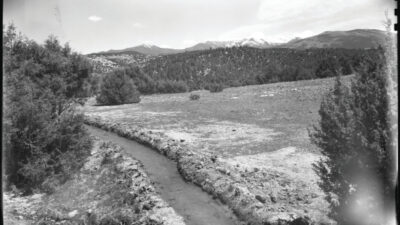
Read ¿Dónde Está Tu Querencia? Acequia (irrigation ditch) possibly near Cordova or Truchas, New Mexico, ca. 1925–1945. Photograph by T. Harmon Parkhurst. Courtesy the T. Harmon Parkhurst Collection, the Palace of the Governors Photo Archives (NMHM/ DCA), neg. no. 069231.

¿Dónde Está Tu Querencia?

BY DR. MATTHEW J. MARTINEZ Querencia: Reflections on the New Mexico Homeland (University of New Mexico Press, 2020) provides an insightful collection of essays that serve as a testament to the beauty of our state. And indeed, Querencia could not be more timely, as New Mexico continues to struggle amidst a global pandemic, threats to sacred sites, and strained community relations played out by removal of statues and monuments.

Categories: Uncategorized

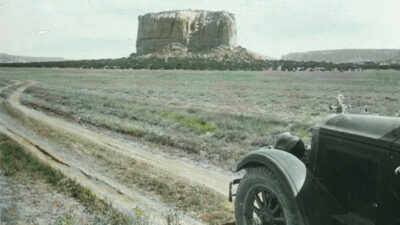
Read Come Downstairs and Say Hello Automobile on road to Enchanted Mesa near Acoma Pueblo, New Mexico, 1926. Photograph by Frank Shoemaker. Courtesy Palace of the Governors Photo Archives (NMHM/DCA), neg. no. LS.2094.

Come Downstairs and Say Hello

BY CHARLOTTE JUSINSKI Issues of El Palacio don’t typically have a theme, but sometimes one emerges organically. I guess it shouldn’t be that surprising that I subconsciously assembled a book full of innovators this spring. For better or for worse, 2020 made us all innovators. These last twelve months, day by day, we’ve had to figure next steps out ourselves, and simply have faith that this work will pay off in a brighter future.

Categories: Editor's Letter

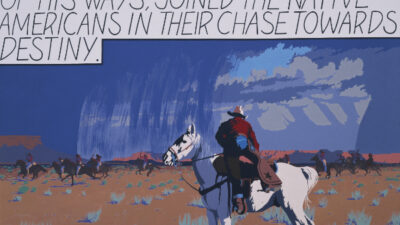
Read The Southwestern Connection Billy Schenck, Cliff, 1990. Oil on canvas. 50 × 55½ inches. Collection of the New Mexico Museum of Art. Gift of Bill Schenck, 2005 (2005.17.1).

The Southwestern Connection

BY ROBIN BABB Whenever Billy Schenck came by Elaine Horwitch’s gallery in Santa Fe, the whole staff stopped what they were doing to talk to the handsome cowboy painter. Wearing his beat-up old cowboy boots and with a bandana always hanging out of the back pocket of his blue jeans, Schenck cut quite the figure amidst the refined Santa Fe art world.

Categories: Framework

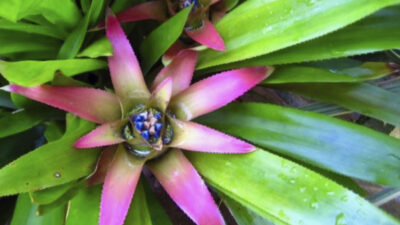
Read Spring 2021 Poetry Selections Bromeliad-Eve Bessier

Spring 2021 Poetry Selections

Curated by and with photography by Eve West Bessier I am honored to showcase voices from the southern region of our state. I have chosen poems that speak to the theme of spring as a movement from darkness into light. The transition is not always fluid. Light and darkness interchange back and forth before spring ultimately blooms. EWB TortugasTurtle MountainBy

Categories: Poetry