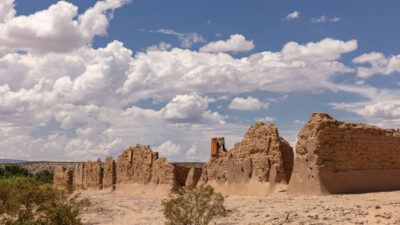
Read Down to Earth The south side of the Fort Selden barracks. The base of these walls had preservation work completed in 2021 which has helped strengthen the overall stability of the walls. Photograph by Tira Howard.

Down to Earth

So much that could have gone wrong in 1865 at Fort Selden Military Reserve somehow didn’t. Soldiers outfitted with inferior tools and a lackadaisical spirit, occasionally enlivened by one officer’s proffer of whiskey, nevertheless managed to stack adobe bricks into walls and hoist vigas to the ceilings. Once constructed, the fort withstood the vagaries of life on the southern frontier of New Mexico Territory.

Categories: Essays and memoir

Read Soft Launch color photograph of woman with glasses smiling

Soft Launch

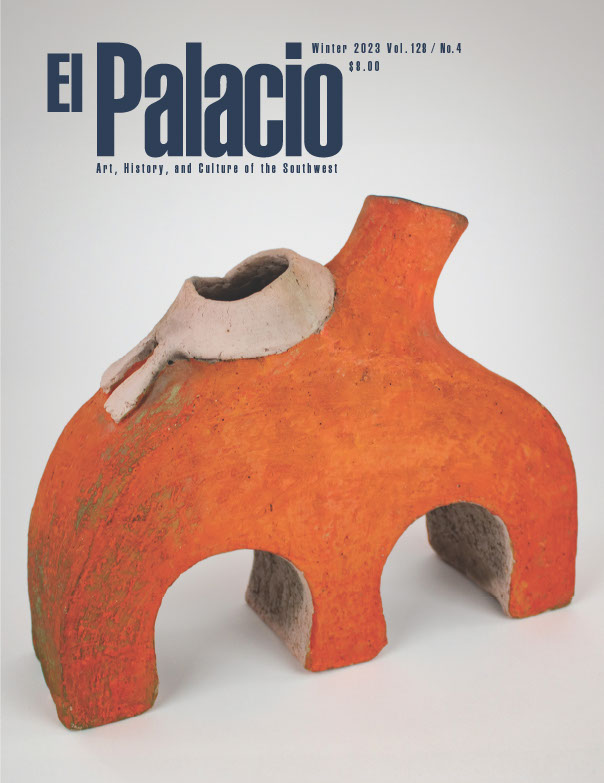
It is fitting that this issue of El Palacio Magazine is filled with so much dirt—from Rick Dillingham’s clay vessels, the melting adobe walls at Fort Selden, and the dusty Great North Road near Chaco Canyon. Dirt is everywhere, of course, but in New Mexico, it seems pervasive. The wind has a way of carrying it into hidden corners and crevices.

Categories: Editor's Letter

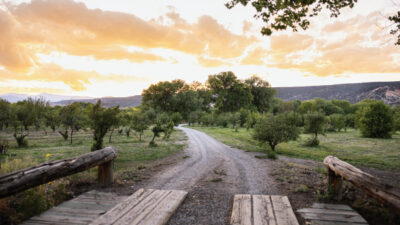
Read Apple Glow Photograph by Tira Howard

Apple Glow

BY BRANDON BROWN In late September, Tira Howard and I chased the light around Los Luceros Historic Site. Tira works on contract for the Department of Cultural Affairs and frequently takes gorgeous photos of our museums and historic sites. You might recognize her work from former El Palacio editor Charlotte Jusinski’s story on Bosque Redondo Memorial in the Summer 2022 issue.

Categories: Framework

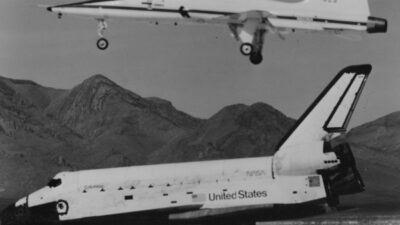
Read Celestial Petroglyphs and  Chimpanzees in Space The only space shuttle to ever land in New Mexico, Columbia

Celestial Petroglyphs and  Chimpanzees in Space

By Cathy Harper and Michael Shinabery More than twenty years later, the Space Trail continues to evolve as unknown sites are added that tickle the adventurous fancy of travelers from near and far. A link on the New Mexico Museum of Space History’s website takes curiosity seekers to a statewide map marking fifty two sites across the Land of Enchantment, and each is directly related to space research, exploration, and development.

Categories: Essays and memoir

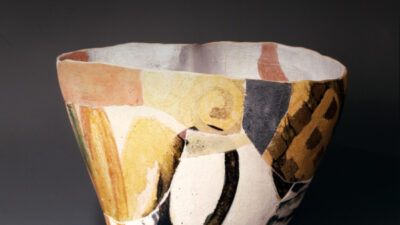
Read Cowboy Boots and Cow Pies, Clay and a Soup Spoon: Kidney-shaped vessel

Cowboy Boots and Cow Pies, Clay and a Soup Spoon:

By Maurice M. Dixon, Jr. In the spring of 1974, while firing some newly crafted clay vessels, an incident radically changed James Richard (“Rick”) Dillingham II’s artistic trajectory.  Retrieving the fired vessels from his friend and noted Albuquerque ceramicist Billie Walters’s backyard kiln, the tall, lanky, bearded Dillingham was dismayed to discover that one of his prized pieces—a marginally burnished globe whose upper body was ornamented with regularly spaced rows of perforations—had cracked in the firing or while cooling.

Categories: Featured

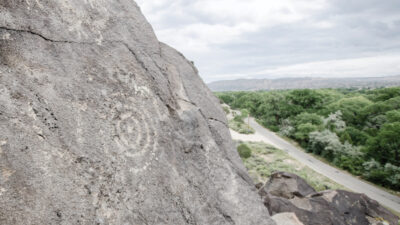
Read Sacred Geographies Of Northern New Mexico Petroglyphs of a war club, concentric circles, and a partial human figure on the lower right overlook the northern Rio Grande Valley on Mesa Prieta.

Sacred Geographies Of Northern New Mexico

By Matthew J. MartinezPhotography by Jim O’Donnell To us, these petroglyphs are not the remnants of some long-lost civilizationthat has been dead for many years … they are part of our living culture.What is stored in the petroglyphs is not written in any book or to be found in any library. We need to return to them to remind us of who we are and where we came from, and to teach our sons and daughters of it.— Herman Agoyo, (Kaafedeh)Former Governor, Ohkay Owingeh and All-Indian Pueblo Council Chairman These words provide breath and spirit in the continued work of the Mesa Prieta Petroglyph Project (MPPP), which will celebrate its 25th anniversary in 2024.

Categories: Featured

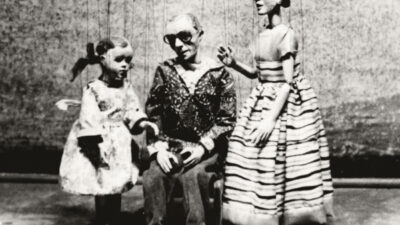
Read No Untroubled Worlds: Baumann family marionettes, ca. 1959. Courtesy of the Palace of the Governors Photo Archives (NMHM/DCA), neg. no. HP.2011.07.003.

No Untroubled Worlds:

by JenniferLevin Gustave Baumann is best known for color woodcuts depicting Southwestern landscapes—gorgeous compositions of chamisa, piñon, mountains, and sky. He came to New Mexico from the Midwest in 1918 and fell in with other legends of the era like John Sloan, Mary Austin, and Will Shuster—with whom he collaborated on creating the first Zozobra. Credited with helping create the modern era of American Southwestern art, he and his friends often depicted scenes of Pueblo life and Hispanic Catholic iconography.

Categories: Featured

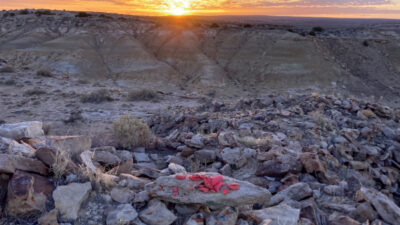
Read An American Pilgrimage: Sunrise on the Acropolis. Broken pieces of Kira Enriquez’s ceramic vessel remain after the author’s funerary ceremony in honor of Scott Tsoodle.

An American Pilgrimage:

By Scott Robinson The North Road has been on my backpacking bucket list for years. Only one person, adventurer-journalist Craig Childs, documented walking the entire length of the North Road nearly two decades ago in House of Rain: Tracking a Vanished Civilization Across the American Southwest. When I learned that my childhood friend, Scott Tsoodle, had recently passed away, I began making plans to hike the North Road as a way of saying goodbye.

Categories: Essays and memoir