Read Returning to the Body Woman with short brown hair and glasses, wearing a light jacket and white top, standing outdoors in front of leafy green trees, smiling.

Returning to the Body

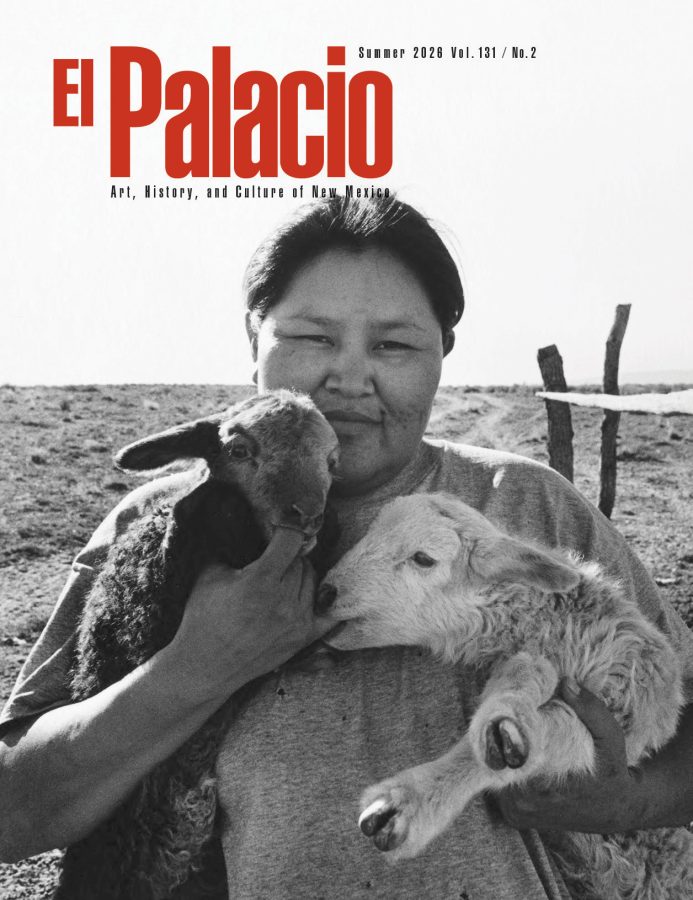
While editing this issue of El Palacio, I spent a lot of time thinking about the body. Work has always been central to the American identity and in the West this work has—and continues to be—rooted in hard, physical labor. It’s the kind of labor that does not allow you to forget about your body. In New Mexico, as in many other places, this labor has often been deeply entangled with questions of race, class, nationality, and colonialism.

Categories: Editor's Letter

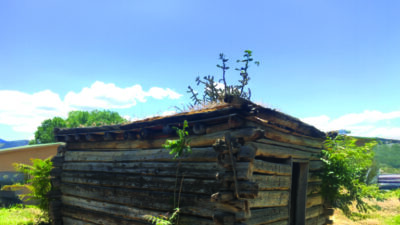
Read Los Molinitos de la Gente A small, weathered log cabin sits on bare ground with plants growing on its roof and sides under a clear blue sky.

Los Molinitos de la Gente

After the Spanish introduced wheat to the Americas, molinitos (small gristmills) in New Mexico played a major role in the agricultural economy for centuries. Wheat, in its ground form as flour, was a staple during the Spanish colonial period of the fledgling Province of Nuevo México. Whole kernel flour could spoil, so it was baked into bizcochos (hard tack) that dried easily and kept for months.

Categories: Featured

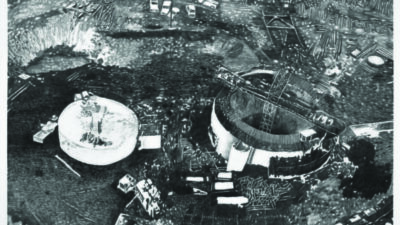
Read Roads of the Dead A black and white aerial view of a construction site with circular structures, scattered materials, vehicles, and uneven terrain.

Roads of the Dead

I’m going to Spaceport America. To access the spaceport, I’ll have to cross the Jornada del Muerto, a desert basin cut by a hundred-mile road. I calculate and the Jornada del Muerto is longer than the distance between the edge of space and my body on land. Trace one expanse, maybe you’d carve across another. The Jornada has been mapped many times, including by Google.

Categories: Uncategorized

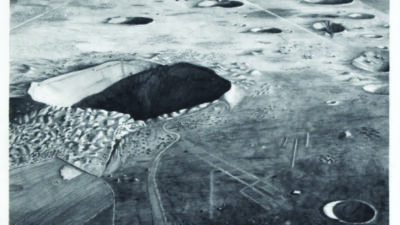
Read The Shapes of Space A grayscale aerial view of a barren landscape with scattered craters of various sizes, distant mountains, and cloudy sky overhead.

The Shapes of Space

Space is a shapeshifting throughline in Daisy Atterbury’s book The Kármán Line. There’s space as in I need some—a lover pulling away. There’s space misread as emptiness, as in the vast expanses of deserts and oceans, open space where governments detonate practice bombs. The space of the page flows and breaks around prose, poetry, and numbers. Above all else (literally) lies outer space, all stars, infinity, and awe, transcending the line between humanity’s illusory borders and the infinite free space beyond.

Categories: Uncategorized

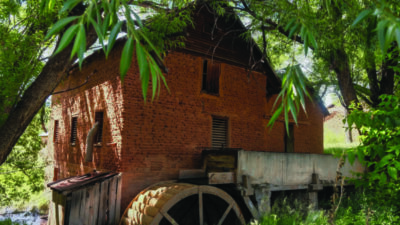
Read A Visit to La Cueva A brick watermill with a large wooden wheel is surrounded by green trees and foliage, with sunlight filtering through the leaves.

A Visit to La Cueva

Northern New Mexico is full of unexpected surprises, like a stunning vista around a bend in the highway, or a crumbling adobe building at a fork in the road. With history nestled in the valleys and tradition perched atop every mountain, the ties to this land stretch back through triumph, turmoil, and time. In one of these valleys, partially hidden behind a cluster of trees along a two-lane road, is La Cueva Mill and its adjoining farm.

Categories: Framework

Read Strike and Struggle A large crowd of people, mostly women, sit closely together indoors, raising their fists in unison, suggesting a protest or rally.

Strike and Struggle

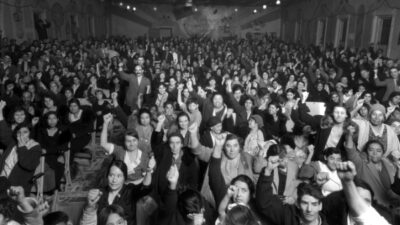
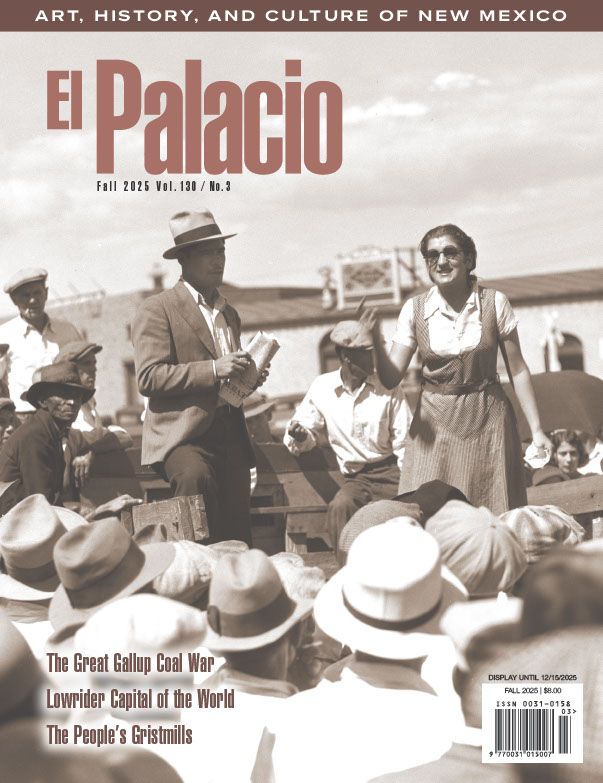
When violence erupted in early 1935 after the Gallup American Coal Company attempted to evict striking miners from its coal camps, Robert Minor, the famous union activist, raced to Gallup, New Mexico, from New York to help. It would be his first and only trip to Gallup, and he would barely make it out alive. Minor hoped to lend his celebrity to the cause of the Gallup miners.

Categories: Featured

Read Aztlán lowrider mural

Aztlán

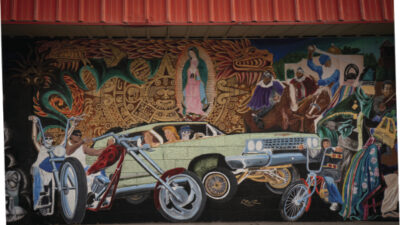
The City of Española, New Mexico, officially turns one hundred years old this year. But the land and people of the valley tell a deeper story—one that slips past the barbed-wire borders of time, place, and stereotype, refusing to be hemmed in by the bias of public imagination. The centennial fiestas in September offer more than municipal commemoration—they are an opportunity to honor nuestra querencia: our belonging to the land and lifeways that have sustained valley communities for millennia.

Categories: Featured