
The power of imagination is what propels new realities, helps us to survive difficult times, and allows for the recreation of relationships and systems. The essays and articles in this issue touch on these ideas in one way or another.
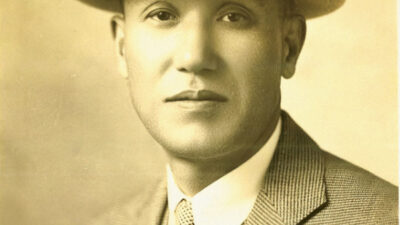
- Nikki Nojima Louis writes a deeply moving, award-winning essay about her experience in WWII-era Japanese American Internment Camps as a young child and of losing her father to the Internment Camp in Santa Fe.
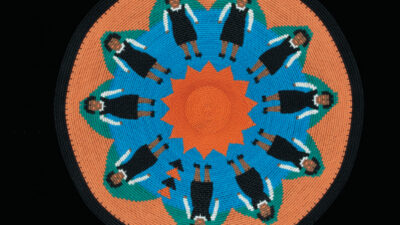
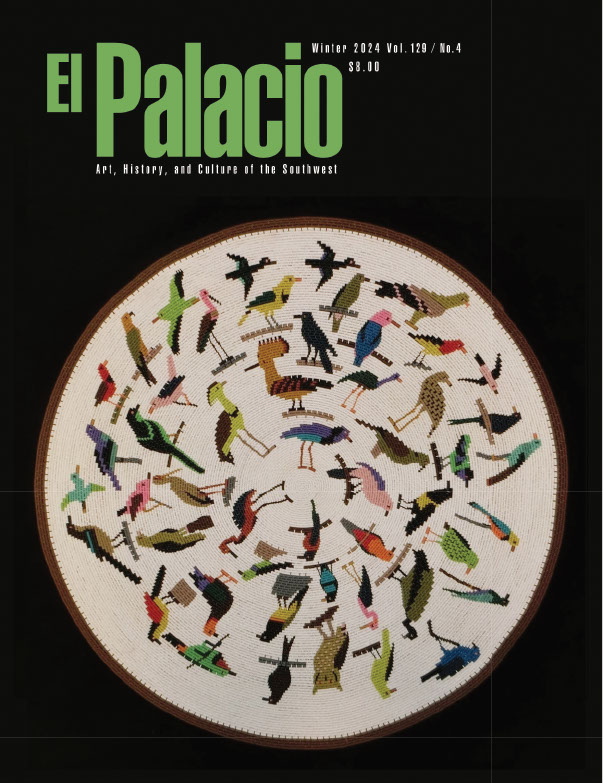
- Coauthors Elizabeth Perrill, Lillia McEnaney, and Muziwandile Gigaba, write about the Zulu telephone wire weaving art that was a part of the iNgqikithi yokuPhica/Weaving Meanings: Telephone Wire Art from South Africa exhibition at the Museum of International Folk Art that was born from survival during Apartheid.
- A profile of New Mexico rancher Tiffany Sanchez, written by Leah Romero, reveals the way adaptive technology can help people living with disabilities return to their work in agriculture. Sanchez was one of many people featured in the AgrAbility exhibition about adaptive technology in agriculture at New Mexico Farm & Ranch Heritage Museum.
- Joelle Mendoz’s double profile of Raven Chacon and Candice Hopkins and their score Dispatch invites readers to consider the power of deep listening.
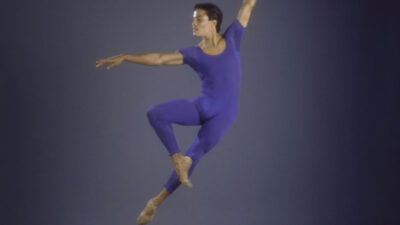
- Ungelbah Dávila’s profile of one of the 2024 Governor’s Awards for Excellence in the Arts recipients, Jock Soto, recounts his story of growing up in Gallup and his journey to becoming a New York Ballet Company dancer.
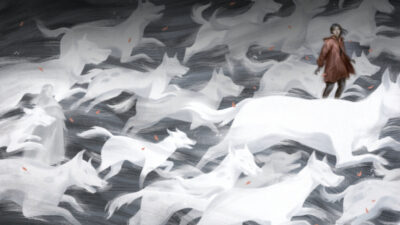
- Timotéo Ikoshy Montoya II’s article weaves a profile of Lipan Apache science fiction writer Darcie Little Badger with his experience at the Sci Fi & Sci Fact exhibition at New Mexico Museum of Space History to reflect on Indigenous Futurisms.
![Black and white striped tubes intertwine and overlap, forming an abstract, hypnotic pattern with a sense of movement and depth. [gen-ai]](https://elpalacio.org/wp-content/uploads/2024/12/nick-fewings-FKh5ARZOODI-unsplash-400x225.jpg)