
I found my first taste of freedom crisscrossing cornfields shadowed by windmills in rural Indiana in a hand-me-down Oldsmobile. Burnt CDs from friends and lovers made my small-town life feel cinematic. On the worn leather seats, I came out, I made out, I ran away, I came home, I made homes. Like many queer and trans people before me, I found freedom in the thrum of my tires on asphalt and gravel: safety in flight. And for us, there was no road like the Mother Road, Route 66.
Every year, my family would sojourn from Indiana up to Chicago in a belated Great Migration, going to the metropolis to buy Black hair products harder to find in our neck of the woods, and to peek through museum windows. A blue highway sign with checkered flags stands across the street from one of my favorite respites, The Art Institute of Chicago, labeling it as the beginning of Historic Route 66. Route 66 begins and ends in massive cities known for their queer communities, from Chicago’s Boystown (where I stood and cried in chunky sandals and a tie-dye dress at my first Pride Parade) and ending in Los Angeles (where I stood and swayed in a lover’s arms in the moon-pulled tides of the Pacific).
Being a majority-minority state with a small population, we’re often overlooked, but New Mexico’s queer and trans scene has always been critical to our state’s “live and let live” culture. The urban centers at each end of the Mother Road can’t hold a candle to the unique queer and trans life that’s survived and thrived where it cuts across the Land of Enchantment.
In 2026, the U.S. is celebrating Route 66’s centennial. You’d be hard-pressed to find a city or town dotting the Southwest that doesn’t claim to be on Historic Route 66. This is especially true in New Mexico, where two separate routes were created. In 1926, the original Route 66 ran from Santa Rosa to Santa Fe and then down to Los Lunas. The later Route 66, established in 1937, ran the width of New Mexico, covering 535 miles of the original 2,400-mile highway connecting the state from east to west.
The ambitious project, fueled by soaring car sales and 1920s legislation aimed at connecting America’s highways, led to the birth of the fondly nicknamed Mother Road. The road, decommissioned in 1985, was essential for Dust Bowl migrants fleeing arid fields, post-war families seeking adventure after catastrophe, and for the U.S. military to move resources and munitions across large swaths of the country. It also served (and serves) as an essential lifeline for queer and trans folks finding themselves, seeking adventure, and for many of us in New Mexico, discovering home.
New Mexico has the largest stretch of Route 66 slicing through its center. Cities that dot the former superhighway in New Mexico include Tucumcari, Santa Rosa, Santa Fe, Pecos, Moriarty, Grants, Gallup, and Albuquerque. Nine sovereign pueblos are either on or just off both iterations of Route 66: Kewa, Cochiti, San Felipe, Sandia, Isleta, Santa Ana, Laguna, and Acoma, and it runs along the southern edge of the Navajo Nation. The entire Route 66 cuts through 1,372 miles of stolen Native land, and for many non-Indigenous travelers of the highway, a road trip along it would often be their first exposure to one of the twenty-five tribal territories it winds through. People seeking economic opportunities or freedom often stopped in these communities, commodifying and flattening distinct cultural traditions—including Indigenous gender identities and roles that don’t neatly fit into binary colonial understandings.
In the early 2000s, I carried a tattered copy of Kerouac’s On the Road in my Oldsmobile; the quote “Nothing behind me, everything ahead of me, as is ever so on the road” was my mantra. A decade later, on one national tour with my band, I picked up a battered copy of my old sacred text, the teenager in me thrumming with excitement to revisit the words as I crisscrossed the nation as a musician—I felt like I had made it. I managed to get through about four pages before finding myself disenchanted with Kerouac. Unlike him, I get followed in small-town stores and have to weigh how safe it is for me to use public restrooms in states that forbid trans people from using the public facilities that match our true selves—sometimes refusing to use the facilities to the point of infection.
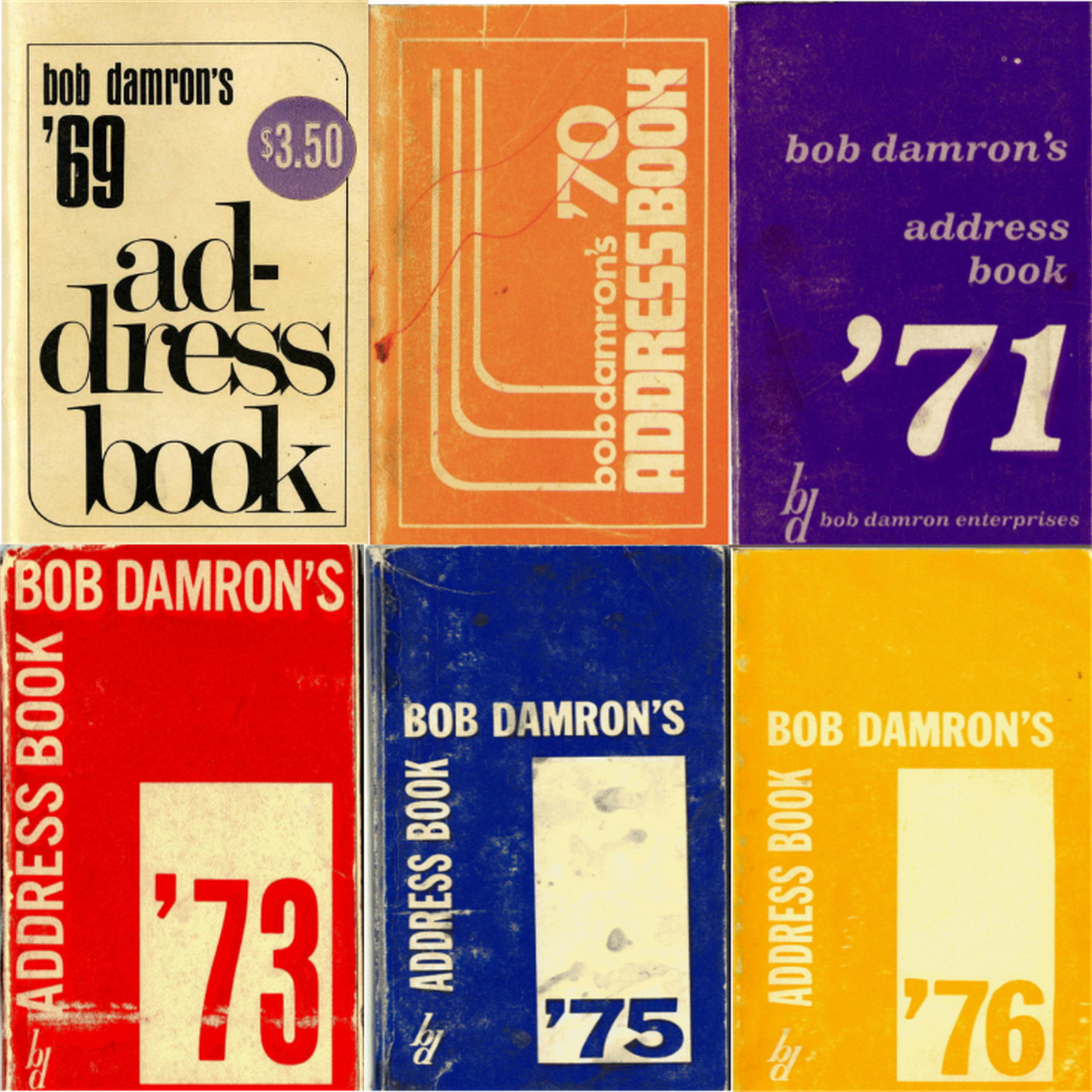
Navigating the road as a marginalized person, especially thoroughfares as popular as Route 66, holds the lure of freedom and the reality of precarity in equal measure. Growing up, I knew which towns I needed to avoid when the sun hit the horizon, and touring as a trans musician, I would use the app Refuge Restrooms to find safer spaces to pee. Before smartphones, guides beyond our guts and word of mouth helped Black and queer travelers move as safely as possible along the Mother Road: The Negro Motorist Green Book and Bob Damron’s Address Book (guides for gays), both listed spots of safety in the Land of Enchantment.
Danger and Deliverance: Minorities Finding Freedom and Safety on Route 66
At its inception, Route 66 connected a still-segregated nation. Black life in New Mexico has long existed in the margins of dominant narratives. While the state did not have as intense Jim Crow laws as other parts of the U.S., anti-Black and anti-Asian housing covenants shaped New Mexico. Additionally, while there is scant evidence of official sundown towns in New Mexico, Taos allegedly kicked out all of its Black residents in 1932.
Victor H. Green created The Negro Motorist Green Book in 1936 to help Black Americans navigate the country’s new highways as safely as possible. Green had a team travel the nation to find which businesses were either Black owned or at least Black friendly as segregation, de jure and de facto, still ruled the nation. Route 66 could prove treacherous for Black travelers, with several hotels and tourist traps not only unfriendly to us but Klan owned (using names with three Ks like Kozy Kamp Kottages to signal this). The book was published until 1966, shortly after the passing of the Civil Rights Act.
There are very few listings for New Mexico for the entirety of the publication of the The Green Book. Although Albuquerque was more multiracial than many of the other states Route 66 passed through, only 6 percent of the one hundred motels along Albuquerque’s slice of Route 66 welcomed Black guests and made it into The Green Book. What strikes me about New Mexico’s Green Book entries is that while we weren’t welcome in over 90 percent of the motels, loving and safe Black family homes were listed in the guide as a safe place for Black travelers to rest for a night or two. Our Black community, while small and often cast aside, has and will always have each other’s backs—much like our small and mighty queer and trans family.
Gay travel guides existed before the 1969 Stonewall Rebellion, cluing in travelers, mostly gay men, to clandestine cruising spots, safer motels, and underground gay clubs. One of the more popular guides was Bob Damron’s Address Book. It’s unclear if Damron, a white San Francisco resident, was directly inspired by The Green Book, but his publications are frequently called “the gay Green Book.” Bob Damron was a bar owner and fixture in the thriving San Francisco Castro District who sought to catalogue and document gay spaces. The first year he created the guide, he allegedly traveled to over two hundred spots across thirty-seven states to document places where he felt safer as a gay man.
Mapping the Gay Guides, spearheaded by Dr. Amanda Regan and Dr. Eric Gonzaba in 2019, digitized the thousands of entries from the forty-plus years of Bob Damron’s Address Books, creating an easily searchable map for historic gay haunts. The creators of the project note that the guides, which ran as late as 2021 despite stiff competition from the internet, are far from a complete picture of the LGBTQIA+ scene in any given town; the guides favored coastal locations and places catering primarily to gay men. Damron lists addresses of gay spots with a key to denote who frequents the spot: Black, Western/cowboy types, or HOT—meaning “dangerous, usually fuzz.”
The guide didn’t use the word “gay” until 1999, leading readers to decode what was being advertised and hopefully shielding clientele from any homophobes who stumbled upon it. The creators of Mapping the Gay Guides felt some hesitancy in explicitly naming and potentially exposing historic and current gay haunts and clientele saying, “While we expect that the vast majority of visitors to the site will use it as intended…we cannot guarantee that this information will not make some of these historical sites potentially unsafe in the present.”
Damron’s books contains entries for New Mexico from 1965 to 1989. The guide swells from a meager six entries to forty-two in the thirty-year span, demonstrating both a growing queer population and acceptance. Looking at the 1989 entries, it’s incredible to see how many brick-and-mortar establishments catered to our community. Bookstores, wilderness tours, helplines, and gay cafes made it clear that while New Mexico may not be a coastal outpost, our queer community is strong. The scholars behind Mapping the Gay Guides note, “We believe the stakes of this project are high. The vast majority of venues listed in the early decades of [Bob] Damron Address Books no longer exist.” Across the United States, gay bars have shuttered—the numbers decreasing 45 percent from 2002 to 2023.
People blame the rise of dating apps, the pandemic, and, ironically, the growing acceptance of LGBTQIA+ folks for driving down the need for our own spaces. It feels trite to say that this is an interesting and terrifying moment for the queer, and especially the trans, community. Despite that, I’ve noticed an increase in queer and trans spaces, both permanent and pop-ups. Queer and trans dance parties, softball and bowling leagues, bar takeovers for open-mic nights. Apps and social media can help connect people, but I think these aren’t quite enough anymore. We need the warmth of each other and the bolstering bravery that comes from safety in numbers. In an era of attempted erasure, we find each other and build community to remind ourselves and each other that we belong, we matter, and we are not going anywhere.
Damron’s guides have proven to be essential for filling in the gaps in the archive, especially in the early to mid-1900s. While we know New Mexico was home to many coastal queer bohemians like Georgia O’Keeffe, being out as queer or trans was not just largely frowned upon, but outright illegal. We dove into official physical archives to find images for this piece with the help of brilliant researchers, and I was amazed at the difficulty of sourcing pictures of queer and trans life. Openly labeling a bar along Central Avenue as gay was out of the question, and photos of queer lovers splitting a shake at a soda counter not something easily found in institutional archives. Luckily, queer people have been holding onto their own stories and helped fill gaps in the archive with loving personal photos and mementos.
It is heartbreaking to look at the Mapping the Gay Guides map of Albuquerque, where almost all of the original establishments listed lay on or right off Route 66, and see only one establishment still standing in its original home. The Albuquerque Social Club, or the SOCH as most of us call it, has been a bedrock in the queer and trans community since 1983. It continues to host watch parties, Dyke Night, leather nights, voguing, and line dancing with the Outlaws. Nearby, Sidewinders carries on their queer legacy in a new location.
Given the small but mighty overlap between the Black and queer slices of our population, spaces in New Mexico explicitly for Black queer and trans folks are truly a gift. One person filling this gap is Shawna Brown, founder of The Syndicate and executive director of Downtown ABQ Mainstreet Initiative and Arts & Culture District. In her sixteen years in Albuquerque, Brown has seen queer life flourish and flounder and rise again along Route 66. As the seasons of the queer scene continued to change, Brown noticed that there weren’t a lot of folks that looked like them at LGBTIQA+ events and spaces. In 2018, she created the space that she and many Black queer and trans people before her have long craved, saying, “The Syndicate was created out of a need for us to have a space to freely live our best lives. A space where code switching isn’t necessary . . . For Us By Us.” The very first Syndicate kickback took place along Route 66, and many of the beautiful events since uplift Black and queer life along Albuquerque’s Mother Road. I love imagining a closeted gay man in the ’60s traveling on the Mother Road, flipping through his Green Book and finding a secret Black queer oasis in Albuquerque.
Cruising Central
I entered New Mexico in a cave. My college orchestra was wandering through the Southwest on our annual tour, and I had tucked myself in the back row of the bus between a large double bass and a window looking out on the alien terrain. I was reading This Bridge Called My Back: Writings by Radical Women of Color for the first time and slowly felt years of shame and confusion slough off with each turn of the page. I was attending a college that was over 90 percent white and traveling the country playing music by dead white men for an audience soon to join their ranks. Unlike On the Road, I found my experience, my struggle, reflected back to me in this core text of women of color feminism. I saw queer women of color understand what it meant to stand at the intersection of so many identities labeled as less-than, and still demanding to take up space, to be heard. I felt my shoulders broaden, I felt the years of exhaustion from living in predominantly white and straight environments catch up to me, I felt ready to start existing without apology. I could not decouple reading this book that changed my life from the place where I found it. Scooting along Route 66, a bass rumbling ominously above me, I felt peace, I felt home. I moved to New Mexico six months later.
I was beyond excited to finally live in a place with real-life gay bars. My first month in Albuquerque, I put on my most masculine top, called a cab, and headed down Central Avenue to Effex in Downtown Albuquerque. I paid the absurd cover charge and slid into the sleek, monstrous, three-floor bar, where an unholy trinity of different sound systems played different beats. I hugged a wall and stared at the crowd.
Bunnie Wells Cruse has worn many crowns throughout her life in Albuquerque. Cruse is the Queen Mother of the Imperial Sovereign of New Mexico, has served on the boards of nearly every LGBTQIA+ organization in our state, and has spent decades providing on-the-ground mutual aid for our community, especially for her BIPOC trans sisters. She’s now a realtor who helps scores of queer and trans people achieve the dream of safe, stable housing. Like me and countless other queers, Bunnie has found herself and her community along Route 66. Her family came to Albuquerque as part of the military in the 1980s, and she admits life on the base was quite sheltered. She graduated from Highland High School on Central and continued her education further east on Route 66, joining the daily queer and trans cruise.
With her new friends from beauty school, Cruse hopped in cars and took a well-worn path: up Silver, down Morningside, taking a left on Central, a left on Copper, and back to Morningside. Morningside Park in Nob Hill has long been a hub for queer and trans life in Albuquerque, largely because of the history of the cruise (both in cars and alleged surreptitious meetups in bushes). While lowriders and well-loved chariots slowly meander Central every Sunday evening, the queer cruise was a daily activity when we had to “actually leave our house to find community,” says Cruse. The cruise slowly started to fizzle out in the early 2000s as gay bars shuttered and gay websites and apps grew.
Cruse notes that the cruise was about much more than finding sex for the LGBTQIA+ community members who were under twenty-one. She has memories of researchers walking from group to group on the cruise, asking folks to fill out surveys about HIV and AIDS for five bucks. The surveys conducted on the cruise in the ’90s helped create much-needed data and research that led to the establishment of MPower Albuquerque in 1997—a space for queer and trans youth offering HIV education, support groups, and skill building.
Cruse remembers several gay bars along Central that she and her gang used to hit, including the Albuquerque Mining Company (AMC), the Ranch (later Sidewinders, which is still alive and well in a different spot on Central), and Foxes. While she was underage, Cruse would hang out in the parking lots of the bars waiting for her friends, and the Albuquerque Mining Company manager, Paul, took a shine to her. As soon as she turned twenty-one in 1994, Paul hired her as a bartender and said, “You could work in a gay bar safely for the rest of your life.” He knew how hard it was and is for trans people, especially trans women of color, to find and maintain work in safe and supportive environments.
StormMiguel Florez, creator of the documentary, The Whistle, an important window into lesbian, queer, and trans life in Albuquerque from the 1970s to 1990s, remembers many of the same bars. He says Route 66 was “definitely gay. There were gay bars along Central from Wyoming Ave to 57th Street. That is ten miles of gay bars from one end of town to the other.” Florez, a Chicane trans man, moved through the world as a lesbian when he lived in Albuquerque and notes that many of the bars were aimed at gay men, but lesbians and queer women still carved out spaces for themselves. Florez says that whenever a queer women’s band took the stage in a straight bar, it became a lesbian bar for the night. Similarly, queer women took over downtown Central each year for a lesbian music festival called WIMINFEST, which Florez says “completely lesbified Central between 5th Street and 2nd Street” for over twenty years. While queer women often created their own spaces, tensions within the queer and trans community were present, with Florez remembering a brawl between queer men and women at the Albuquerque Mining Company that ended with several in the ER, highlighting the presence of misogyny even in our attempts at queer utopia.
Fairly early in her life inside the bars, Cruse noticed regulars disappearing and quickly learned they were dying from complications of AIDS. She asked to attend their funerals and was surprised to learn that many of them did not have a service or burial—no one wanted to claim their bodies. So, Bunnie started a tradition: every week or two weeks, the Albuquerque Mining Company would turn into an ad hoc funeral home with a potluck table always holding a slow cooker filled with something Bunnie’s supportive mother made. Sometimes all they knew about those who died were their names and drink orders. These people found themselves and camaraderie along Route 66, receiving their last rites under the neon lights.
Inspired by Cruse, I used the privilege I have as a U.S. citizen to work with a motley crew of other trans New Mexicans and progressive churches to help trans and gender non-conforming asylum seekers dumped in the desert right off of Route 66 outside the Cibola Detention Center. Stranding trans immigrants is a policy decision that underestimates New Mexico’s queer community and our capacity for organizing. We’re not Chicago, we’re not Los Angeles—but the queer and trans folks of New Mexico are a tight-knit bunch that doesn’t leave anyone behind. It was an honor to house some of these women, to take them on shopping sprees, and to escort them out of cages and onto, hopefully, final safety along Route 66.
Pride on Route 66
Albuquerque’s Annual Pride March is the only one in the nation with a path along Route 66. What was once a highway dotted with secret holes-in-the-wall for queer connection is now the largest stage for queer and trans celebration every year. We celebrate Pride every June in honor of our rebellious ancestors who stood up to police brutality at the Stonewall Inn in Greenwich Village in the summer of 1969. In 1976, the local queer and trans affirming congregation at the Metropolitan Community Church and Juniper, a club born out of LGBTQ+ student activism at The University of New Mexico, joined forces to hold the first march for gay rights in New Mexico with a gathering of about twenty-five brave participants.
Albuquerque Pride begins every year with a candlelight vigil in Morningside Park—a fitting place for any good cruise to start—and stretches over two miles, ending at EXPO NM. We hold up pictures of those we lost in the community in the past year, usually as the Gay Men’s Chorus serenades the crying crowd with songs from queer classics like The Wizard of Oz and Rent. As the vigil and the march trace the path of so many queer and trans travelers and seekers, it reminds us of the history baked into the Mother Road under a century of turning tires. The memorial reminds us of the precarity of living our lives out and proud, often holding the portraits of those we lost to direct violence like murder, medical neglect, or the poverty that often accompanies being too gay, too trans for a country getting bolder in its hatred of our community.
The night before the 2023 Morningside Park memorial, I was the target of hate. I was getting ready to take a nap on my couch with my dog Mahler. I had just come home from visiting my partner, who was selling their art at a Pride market, wearing a cheeky shirt that read “homosexual tendencies.” Mahler kept clawing at me until I finally sat up to see what she needed. Then glass broke, along with my brain, as I saw my neighbor standing at my window, the butt of the AK-47 he’d used to break it pointing at me. I screamed, then ran. Somehow, I survived. I had planned to attend the memorial the next day, but I couldn’t get past the eerie realization at how close I’d been to joining the dead commemorated that year.
The days and weeks that followed were a surreal blur as I picked at the scabs I got jumping my back fence and dodging eight bullets—the only physical reminder that someone tried to murder me and a miracle compared to the destruction wrought on my property by the military-grade weapon. Based on what my attacker told the police, I believe more than a kernel of the assault was because of my identity as a Black trans and queer person, and the growing open homophobia and transphobia of mainstream culture. I didn’t attend any Pride events that year—the first time in my adult life.
My attacker doesn’t represent New Mexico, doesn’t represent the heart and solidarity running through the Mother Road here. Right away, fundraisers popped up for me to cover the repairs to my house and the wild and weird expenses that piled up as I tried to claw my way back to normalcy. My name was uplifted at a Two-Spirit Pride prayer held under Route 66 on the banks of the Rio Grande, vendors at Pride markets donated a percentage of sales to me or shared my fundraisers at their booths, and drag queens sashaying down Central sent me the tips picked from boozy crowds. I didn’t join the march that year; I was far too jumpy for large crowds for a long while.
While I couldn’t march down Central past the ghosts of old gay bars, the smiling faces of the newly out at their first Pride, or the old-timers looking on proudly, I was there in spirit. The slow squeak of hundreds of float tires and the proud pounding feet of thousands of New Mexicans marched into my broken heart fixing what they could, reminding me I was never alone. The murder attempt was the ultimate opportunity to impose absolute isolation—a feeling not new to me as a Black trans person in this country—and it had a wildly opposite effect. I felt connected, I felt held, I felt the sense of community I struck out on the road to find over a decade ago.
Queer Route 66 in New Mexico is different. It’s smaller and mightier. Scrappy with something to prove, and with love to spare. As we survive the end of the world again and again— from anti-sodomy laws making our furtive encounters illegal, to the inaction of the government around the AIDS epidemic almost erasing a generation, to the attacks of the current federal administration on us—New Mexico’s queer and trans family aren’t budging. In fact, we’re growing as our status as a sanctuary state draws others down the Mother Road to chase freedom.
New Mexico’s Mother Road brings you through the desert. It’s an alien landscape for those of us arriving here from the uniform corn fields of the Midwest or the oceans of the coast. It’s easy to underestimate the desert and to see the hostility, the wide-open skies as a place devoid of life. Those who know this Mother Road and her beautiful expanse through our wild desert know what it means to be resilient. We know that with deep roots and connected systems, we don’t just survive, we thrive.