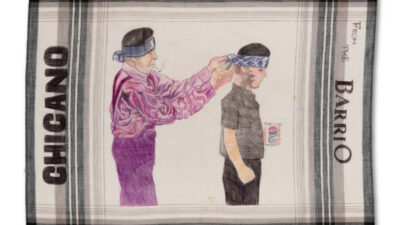
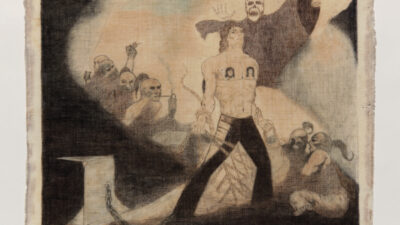
Read Rebellious Unidentified Artist, Locuda (date unknown), ink on handkerchief, 12 ¼ × 12 ¾ in. National Hispanic Cultural Center Art Museum Permanent Collection, 2019.30.42. Photo by Addison Doty.

Rebellious

By Julio Estevan Mendez ¿Quien lo cura? ¿Quien lo cura? I lost all sense of identity and gained a false sense of pride; what I got left with was a bunch of… duda. My doubts became manifest, taking advantage of my insecurities. I let the devil rule and make the fool of what I had best.  Mi familia. Rebellious against the world and its conformities, I strayed from the path of light, only to be bound by the chains of flesh.

Categories: Framework
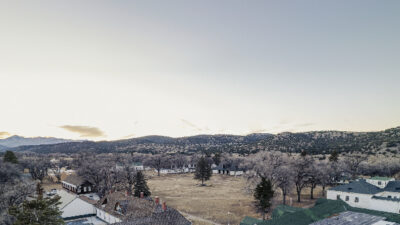
Read Historic Site Conversations:  Aerial view of the Fort Stanton parade ground with the Visitor Center/ Museum on the left and the Barracks/Dining Hall on the right in the foreground. Both structures, which were originally barracks, and the parade ground date to 1855. The Sierra Blanca Mountains can be seen in the distance and are a part of the Mescalero Reservation. Photo by Tira Howard.

Historic Site Conversations: 

New Mexico Historic Sites hired Dr. Oliver Horn as the new regional site manager to oversee the operations of Fort Stanton and Lincoln Historic Sites. Recently, Olivers at down with Historic Sites’ historic preservation and interpretation specialist, Dr. C. L. Kieffer, for a conversation about their shared passion for history, preservation, and interpretation at Fort Stanton—the largest historic site in the state. C. L.

Categories: Interviews, New Mexican history

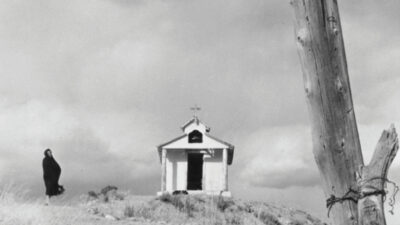
Read Tinieblas Capilla de Santa Rita, Penitente chapel near Chimayo, New Mexico, ca. 1955, New Mexico Tourism Bureau, New Mexico Magazine Collection. Courtesy of the Palace of the Governors Photo Archives (NMHM/DCA), HP.2007.20.562.

Tinieblas

By Leeanna Torres “Dónde estás?” asked Papa over the phone, and after explaining I’d just left the house, headed his way, he quickly insisted, “Pues, para aquí at the capilla!” in our commonly spoken nuevomexicano Spanglish. The day was the start of the sacred Catholic Triduum that begins at sundown on Holy Thursday and concludes at sundown on Easter Sunday.  “Ya estoy aquí, ven...” Papa explained.

Categories: Essays and memoir, Featured, New Mexican history

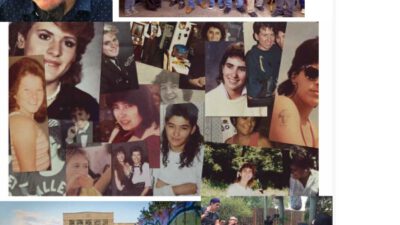
Read The Sound of Community: StormMiguel Florez. Photograph by Gordon Garcia. · Women reunite and reminisce about their community and being out in high school in the 1970s and 1980s. Production still from The Whistle, 2019. Courtesy of StormMiguel Florez. · Collage of Albuquerque lesbian youth in the 1980s. The Whistle, 2019. Courtesy of StormMiguel Florez. · Director of Photographgraphy, Annalise Ophelian; Director, StormMiguel Florez; Participant, Michelle Martinez. The Whistle, 2019. Photograph by Jai James. · i like girls. Production still from The Whistle, 2019. Courtesy of StormMiguel Florez.

The Sound of Community:

By Lazarus Letcher Early in his documentary The Whistle, StormMiguel Florez muses about his LGBTQIA+ friends who grew up in other parts of the country in the ’70s and ’80s who always say, “I didn’t know anybody like me.” Florez retorts, “Albuquerque was packed full of queers back then!” Later in the film, we see a woman holding a scrapbook. It shows the wear and tear of being well-loved over many years.

Categories: Featured, New Mexican history

Read Look Long color photograph of woman with glasses smiling

Look Long

Throughout the eight years I lived in Montana, I wrote essays that were essentially love letters to New Mexico. If you had asked me in high school if I wanted to stay, my answer would have been a resounding “No.” But I was born near the red willows on the banks of the Rio Grande and raised in the seam between the Great Plains and the foothills of Hermit’s Peak.

Categories: Editor's Letter

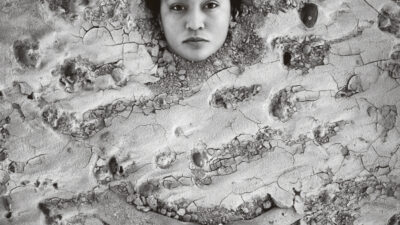
Read A poem to acknowledge that the land itself — along with the people whose language, culture and religion were born of it — is rarely acknowledged Cara Romero, Sand & Stone, 2020. Photograph. 19 × 12 ¾ inches. © Cara Romero. Courtesy of the artist. All rights reserved.

A poem to acknowledge that the land itself — along with the people whose language, culture and religion were born of it — is rarely acknowledged

BY CMARIE FUHRMAN — CMarie Fuhrman is the author of Camped Beneath the Dam: Poems and co-editor of Cascadia: Art, Ecology, and Poetry, and Native Voices: Indigenous Poetry, Craft, and Conversations. She has published or forthcoming poetry and nonfiction in multiple journals and anthologies. CMarie is an award-winning columnist for the Inlander and Director of the Elk River Writers Workshop. She is Associate Director at Western Colorado University, where she teaches nature writing.

Categories: Poetry

Read Love Pa’ Mi Gente Shine Through Me Unidentified Artist, Chicano Beauty from the Barrio, date unknown. 15 1/2 × 16 in. National Hispanic Cultural Center Art Museum Permanent Collection, 2019.30.130. Photo by Addison Doty.

Love Pa’ Mi Gente Shine Through Me

By Jimmy Santiago Baca There was a time when you would have never caught me in a museum. At most, I had maybe visited a cultural display for el Día de los Muertos at our local community center. I had other things to do besides pay an entrance fee I couldn’t afford. Can you imagine my wife asking me where the groceries for the money she gave were and me saying some stupid thing like, “Ah, yes my dear, well, I visited the museum”?

Categories: Essays and memoir, Featured, New Mexican cultures

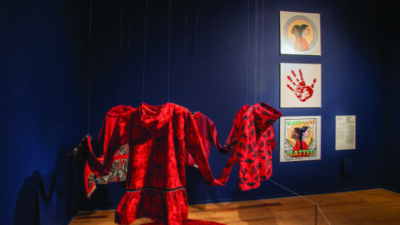
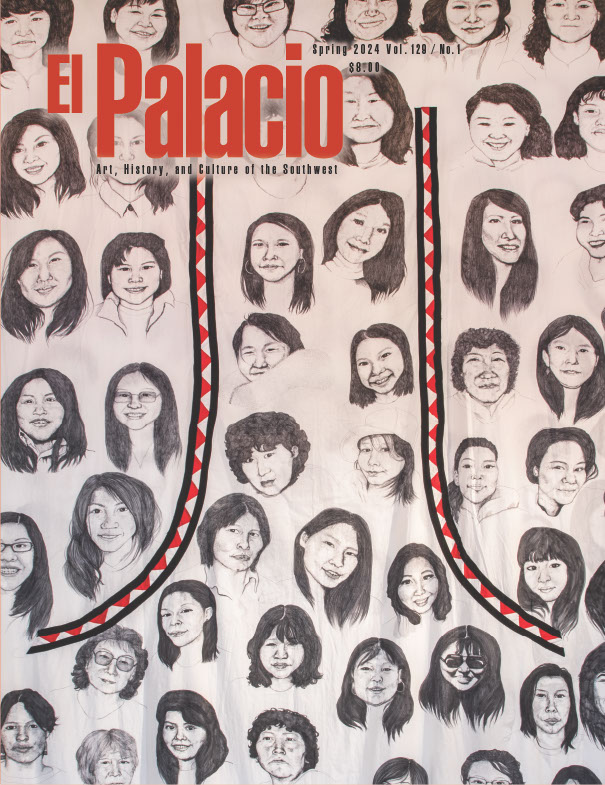
Read Grief’s Outline, Memory’s Shape Bobby Qalutaksraq Brower (Iñupiaq, Utqiag˙vik), Melissa Ahnoorik Ahlooruk Ingersoll (Iñupiaq, Nome), Cassandra Tikasuk Johnson (Unalakleet), Jackie Qataliña Schaeffer (Iñupiaq, Kotzebue), Beverly Tuck (Unangaxˆ, St. Paul Island), Healing Stitches, 2021. Cotton and polyester. Sarah Ayaqi Whalen-Lunn (Iñupiaq), Solidarity, No More Stolen Sisters, and Black Lives Matter, 2020. Digital illustrations on aluminum. Photograph by Blair Clark. Courtesy of Museum of International Folk Art.

Grief’s Outline, Memory’s Shape

BY ANNIE WENSTRUP Amber Webb’s Memorial Qaspeq is a permanent work in progress. Webb is a Yup’ik artist from Dillingham, Alaska, and she draws portraits of Indigenous women on an oversized qaspeq. She adds portraits to the garment as she learns the names and identities of Indigenous women who’ve been killed throughout Alaska and the Pacific Northwest. At over ten feet tall, the qaspeq’s proportions suggest the scope and scale of the Missing and Murdered Indigenous Peoples (MMIP) crisis.

Categories: Featured

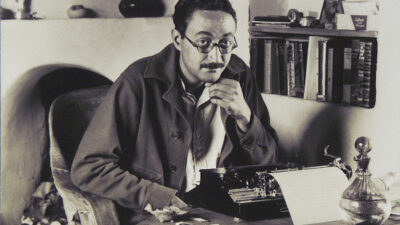
Read Jean Toomer’s Search for Identity in Taos Jean Toomer, Taos, New Mexico, circa 1935. Courtesy Jill Quasha. Copyright the Estate of Marjorie Content.

Jean Toomer’s Search for Identity in Taos

Mysterious, mercurial, hard-to-pin down sociologically or racially—and even described as being unbearably vain and pretentious—why is Jean Toomer important? My attention turned to him shortly after I became the 2021-2023 poet laureate of Santa Fe. I researched Toomer while looking for Black literary precursors, given that he is one of the few figures in African American literature who has written about this region.

Categories: Essays and memoir, Featured