A New Frame for New Mexican Art

BY RAY MARK RINALDI

WHAT DOES IT MEAN FOR A PIECE OF ART TO BE NEW MEXICAN?

Does it have to be created in the state? Or made by an artist who was born, or spent significant time, in New Mexico? Could it be produced somewhere far away by someone who never set foot within the state’s borders, but qualify because the subject matter is a person or place or idea connected to its centuries of history?

That is an essential question for curators at Vladem Contemporary, the satellite space for recent work that the New Mexico Museum of Art will open on September 23, 2023. It will use all of those criteria to fulfill the institution’s ambitious mission of showing “the art of New Mexico to the world,” as Executive Director Dr. Mark A. White puts it.

But how that answer is refined over time will define the institution and how visitors and residents alike connect to it; and how everyone from critics to casual art fans come to regard the stature of New Mexico’s art—or at least its contemporary art, which would include, under another impossible-to-pinpoint term, anything made in the later part of the twentieth century and right up to the current moment.
Photograph by Benjamin Irons.

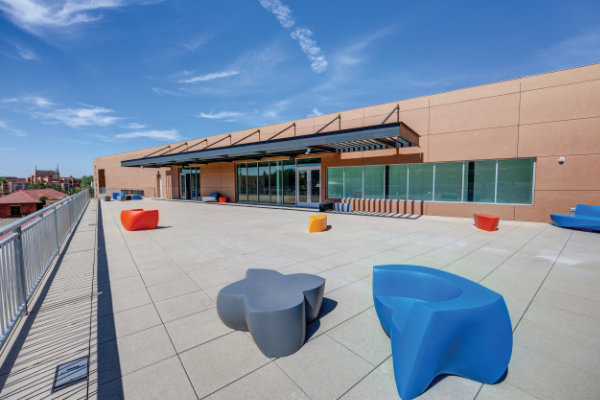
It helps that Vladem Contemporary, which will bring nearly 10,000 square feet of new indoor exhibition space to Santa Fe’s Railyard Arts District, gives the New Mexico Museum of Art plenty of room to work through the concept. Curators will also have the opportunity to program art in the 2,800 square feet of courtyard, roof deck, and entryway space that are part of the project.

Vladem Contemporary stands in contrast to the main headquarters of the New Mexico Museum of Art, a Pueblo Revival-style structure that opened for business on the Plaza back in 1917. That building, with its stucco walls and protruding vigas, was designed by Isaac Hamilton Rapp and William Mason Rapp to resemble the adobe churches that have long existed throughout the region.

The original museum’s galleries, a series of modest spaces with relatively low ceilings, divided between multiple levels, were made for an era when two-dimensional works, like paintings and weavings, dominated what was shown in museums. The art and the ornate, detailed architecture are inseparable.

By comparison, Vladem Contemporary’s exhibition rooms are open and free-flowing, with high ceilings and walls to accommodate art that is in vogue today, such as multi-media, three-dimensional installations that can take any shape, or video art that can be projected on walls. It is more of what curators call a “white cube,” a space that retreats into the background and “lets the work speak for itself as a singular piece that doesn’t necessarily exist within or rely upon the context of the building for its success,” according to Assistant Curator Katie C. Doyle.

The new museum’s opening exhibition, Shadow and Light, makes the most of that space, and takes an early stand toward defining what makes a piece New Mexican. The group show is a wide survey that takes a step back in time, starting with work from artists affiliated with the Transcendental Painting Group, which formed in 1938 and included names like Emil Bisttram and Florence Miller Pierce, who integrated an ethereal spirituality into their portraits and landscape paintings.

The exhibition goes on to trace how the natural light of New Mexico may have influenced artists that followed, and includes a slew of well-known names, including Agnes Martin, Larry Bell, Judy Chicago, Ron Cooper, Nancy Holt, and Charles Ross, all of whom lived, worked, or traveled at least part-time in New Mexico.

Other artists, who are more recently entering the prime of their careers, round out the offering, including ceramist Virgil Ortiz and installation artist Leo Villareal.

What brings the past and present together, according to the museum, is a shared desire among the artists to “capture and express more than mere naturalistic representation in their artwork”—a quality of contemporary art in general, but one that is affiliated particularly with New Mexico.

Light is essential to that idea, and it has been central to the output of the artists featured—from Bell’s pieces made of glass, to Ross’s work made entirely of refracted light, to Villareal’s installations constructed from thousands of LED nodes that flash on and off, creating a set of infinitely changing patterns.

A NEW BUILDING FOR SANTA FE

In a sense, Vladem Contemporary takes the New Mexico Museum of Art back to its roots. As White points out, founding Museum of New Mexico Director Edgar Lee Hewett actually conceived the original place as a contemporary art museum. It showed and collected objects from its own era and gave studio space to artists of its day to create new work, something that actually drew talented painters and sculptors to New Mexico and contributed to its reputation as an art haven.
E l P a l a c i o 35
Photograph by Tira Howard.

It was a novel approach to how a museum could operate, though over time, that art transitioned from cutting-edge to historic. Because the museum had collected so many works from the first part of the twentieth century, that era became the focus of its public displays.

“As we became an older institution, we began to feel beholden to our history and the exhibition of that history, and it became increasingly difficult to continue to work with contemporary artists,” White says. “We just didn’t have the space.”

Vladem Contemporary—named for Robert and Ellen Vladem, who contributed $4 million to the project—will be all about the “now,” with programming possibilities not only in its galleries, but in new classrooms and public areas. There is also a considerable increase in storage space, an important addition that will allow the museum to collect more works over time, an effort it had put largely on hold. “Really, this is another huge asset for us to continue to move forward, and to really step into the future,” said Doyle.

Like its predecessor in the early years, Vladem Contemporary will endeavor to support artists who are working in the present. Vladem Contemporary will bring in five artists a year for residencies of two weeks or longer. They will work in specially designed studio spaces that have been incorporated within the building. The residencies will involve projects done in collaboration with local community groups and schools.
Photograph by Tira Howard.

“We are purposely looking to bring in artists who have international reputations, as well as national, regional, and local reputations,” says White. “That will give us the opportunity 

to really think about luring people here, very much as Hewett did back in the early part of the twentieth century.”

That idea—of embracing the past but not clinging to it—applies to the architecture of the new building, as well. The Vladem site, which sits near the northern end of Railyard District at South Guadalupe Street and Montezuma Avenue, is just half a mile from the original museum, which connects to the city’s iconic Plaza. But the two buildings are worlds apart in some ways.

The Plaza pays tribute to the city’s history, while the Railyard District is all about its present, with galleries, the popular farmer’s market, a station for the Rail Runner Express commuter train, and the innovative Site Santa Fe contemporary art museum.

“Between us, and then Site Santa Fe on the southern end, and then all of the galleries and cultural institutions in between, that forms a really sort of interesting community dedicated to contemporary culture,” says White.

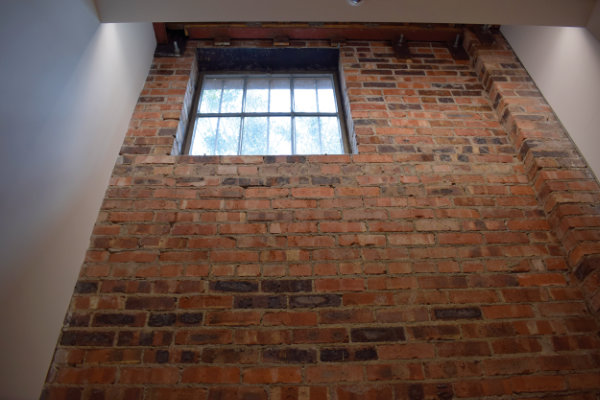
The new museum’s design is unique. Conceived by the architectural team of DNCA + StudioGP, it is essentially a new building constructed on top of an old one. The original structure, built originally in 1936 by the Charles Ilfeld Company and then became the Joseph F. Halpin Records Center and Archives, is a brick-and-steel warehouse that has been converted into what is now the first story of Vladem Contemporary. The new structure, with all of the fresh gallery space, was positioned over it and forms the second story, a design gesture that lead architect Devendra Narayan Contractor likens to “cupping one hand over another.”

But the forms of the structures do not align; instead, the top cuts across the bottom at an angle of about 15 degrees. From a conceptual standpoint, the setup seems off-kilter, but there is logic behind the move: The existing building is oriented to the grid of the adjacent railroad tracks, as Contractor notes, and the addition is aligned with the newer grid of the surrounding city streets.

“So the new building conceptually shelters the old building, as opposed to just stacking up on it,” Contractor says.

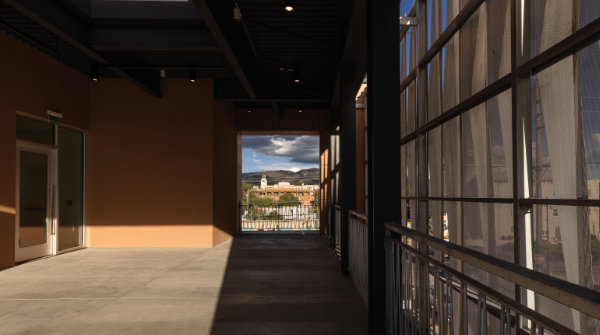
The museum will have two entrances. One faces downtown toward the existing art museum on the Plaza, and the other faces the evolving Railyard District, a choice meant to embrace both old and new Santa Fe.

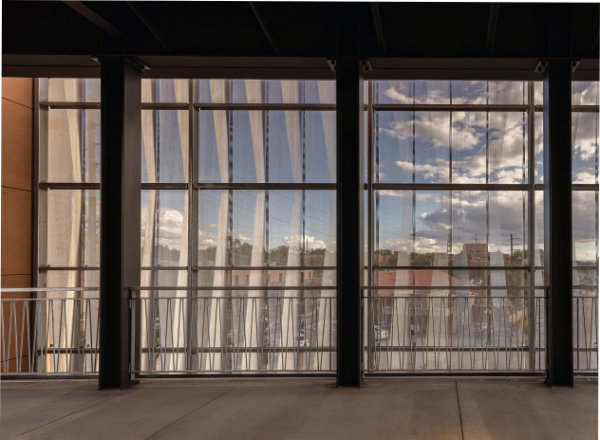
The building is also different than many tomb-like structures built recently to house art museums in that it allows in light. Portions of the wall of the top building are given over to large windows, which act as a clerestory device, opening up the former warehouse space below to sunshine.

ACCESSIBLE ART

Vladem Contemporary will have art both inside and outside. The more formal exhibitions in the gallery spaces, such as Shadow and Light, will be up for as long as one year, with some reshuffling of works to keep things interesting for repeat visitors.

But the exterior will be a canvas for showing art that changes frequently, and all for free. Villareal’s piece, for example, is installed in the ceiling of the building’s breezeway at the south end of the building, and will change constantly with patterns directed by custom-made software the artist has developed himself. The piece will follow rhythms but also offer moments of surprise, as the artist put it.

It will be visible twenty-four hours a day to anyone who passes by. “People are attracted to light,” says Villareal. “I have described my work as these digital campfires that can gather people together.”

Some of the art placed in the interior of the building will be visible from the outside through glass walls. There will also be video art projections that could start in the early evening and continue through the night. “We want to be able to show things that are recent as well as things that are historic, with a wide variety of approaches,” says White.

Additionally, the museum will have a Window Box Project, a small gallery visible from the sidewalk that will function like the storefront of retail shop. The offering will feature three installations a year and, notably, will “be focused entirely on emerging New Mexican artists,” White says.

TO BE NEW MEXICAN

But what does that mean, exactly? How will the museum define the term “New Mexican”? Certainly, curators have their criteria, and geography is one of them—but they say they want to remain open-minded, letting the stories of the artists lead the way toward defining who fits the term and who does not; the intention is not to keep artists out, but to let new voices in.

By contrast, the residencies for artists who will spend two weeks at the museum working with community groups will open to candidates internationally—though maybe the things they make at Vladem Contemporary will count as “New Mexican.”

To be sure, artists, including those in the opening exhibition, have their own way of identifying as New Mexican, and those things can go deeper than checking the official borders.
Photograph by Beau Sniderman.

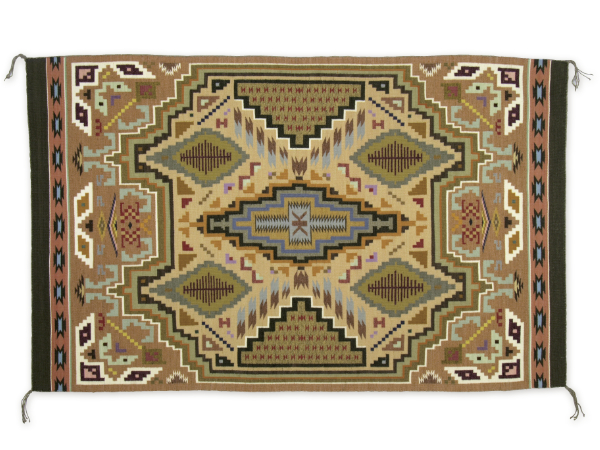
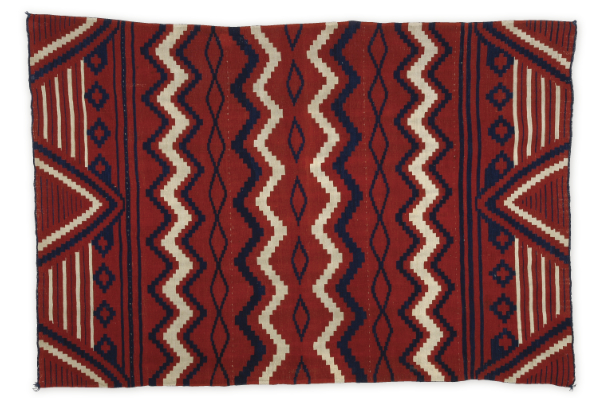
Villareal said he feels the influence of New Mexico in his art when he thinks of a Navajo rug that was in his childhood home that he was particularly fascinated with. The rug was woven into changing patterns and colors, a characteristic that mirrors the light installations for which he has become famous. He boils things down to their basic code, he said, though he “can’t help but think of things as pixels.”

Virgil Ortiz, another star of the opening show, feels his New Mexican-ness keenly, he says. He attributes that partly his physical environment at Cochiti Pueblo, where he was raised, and to his family who taught him how to pull clay out of the earth and shape and process it, over weeks at a time, into art objects, a tradition that has existed in the region for centuries.

But there are also factors influencing his work that “are way bigger than me,” he says—distinct things that he feels in the soul of the land, or maybe the people who inhabit it, and how residents like him are taught to understand the place where they live.

“When I’m creating these pieces,” Ortiz says, “I am talking to our ancestors and just being one with that and letting it do its thing.” It is ethereal but real, he believes—and undeniably New Mexican. 

Ray Mark Rinaldi is an arts journalist based in Denver and Mexico City. He contributes regularly to the New York Times, Hyperallergic, Opera America, and other publications. For the past decade, he has served as the art critic for the Denver Post.
Ray Mark Rinaldi (opens in a new tab) is an arts journalist based in Denver and Mexico City. He contributes regularly to the New York Times, Hyperallergic, Opera America, and other publications. For the past decade, he has served as the art critic for the Denver Post.
Tira Howard (opens in a new tab) is a portrait, lifestyle, and fashion photographer based out of Santa Fe, New Mexico. Her work can be seen in V Magazine, Cowgirl Magazine, Table Magazine, New Mexico Magazine, El Palacio magazine, Pasatiempo, Cowboys and Indians Magazine, The Santa Fe New Mexican magazines, The Santa Fe Reporter, Western Art & Architecture Magazine, and Edible New Mexico Magazine.

Adobe Vistas

By Carlyn Stewart and C. I. Kieffer
Photographs by Carlyn Stewart

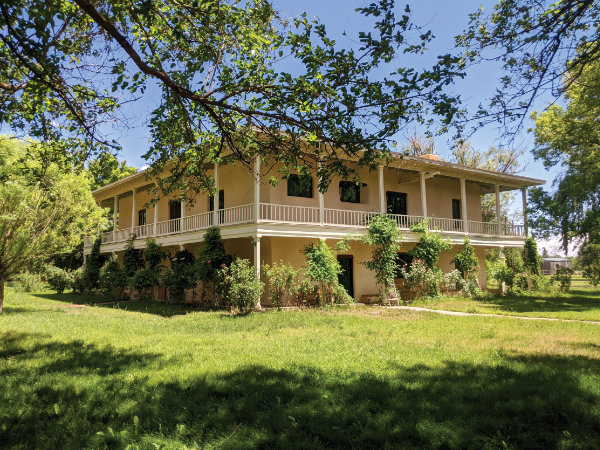
On a beautiful fall day in Northern New Mexico, you can take an easy drive and visit Los Luceros Historic Site in Alcalde, just north of Española between Santa Fe and Taos. While you are there, make sure to pick an apple from the historic orchard. Walk among the golden cottonwood leaves, down the dirt road, until you come to a large two-story building. Go ahead, open the green door of the hacienda—the “Great House”—and be greeted by a rush of cool air and a feeling like you’ve stepped back in time. Follow the rocky path on the bottom floor, past the staircase, all the way back to a room on the left which is decorated in a Spanish Colonial style. Here you will pass beneath a wooden Douglas fir tie beam in the doorway which was dated to at least 1805, or perhaps an even earlier date of of 1775.Though research is ongoing in this magnificent building to further pinpoint construction dates, it is interesting to think of all that doorway beam has seen. During the lifetime of that Douglas fir tree, it would have seen droughts and wet years, been passed by coyotes and mountain lions, then sheep and horses, and it would have witnessed the constant changes brought about by human innovation.

When the beam was finally installed in the building, it’s likely that it was part of a new addition to an already standing building which only had one story and a couple of rooms. Over the years it would have observed the house transform from one story to two, from outdoor kitchen to indoors; witnessed the addition of plumbing and electricity; and most importantly, it would have watched over the lives of numerous families and individuals who all left their mark on the property.

Like this beam, every bit of the architecture in this house and the nearby almacén (storehouse) has the potential to tell us something new about its history. In 2020, Los Luceros Historic Site was awarded the National Park Service’s Save America’s Treasures grant to preserve and stabilize key structures representing the cultural heritage and contributions of Northern New Mexico’s diverse ethnic and social groups, giving us the chance to learn more about one of New Mexico’s “hidden gems.”

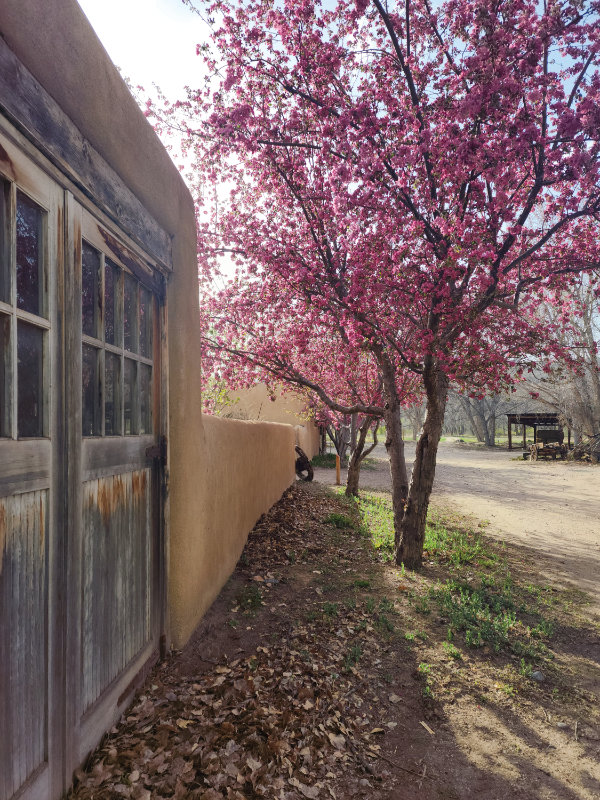
These crab apple trees were planted in the 1940s to help pollinate the dwarf apple trees. Apples have likely been grown here since the 1700s.

A DEEPER HISTORY OF LOS LUCEROS
The history of Los Luceros is deeper than many realize. Numerous individuals have lived on the property, with many generations of prominent Northern New Mexico families tying into its history. However, it is important to note that the land was originally fertile agricultural land cared for by the Tewa-speaking people of Phiogeh (“flicker place”) Pueblo. They grew corn, beans, squash, amaranth, and other crops, built structures, and used complicated systems of irrigation. Descendants of those who lived at Phiogeh still live in the area today at 

Ohkay Owingeh Pueblo with oral histories that say a group also migrated to Hopi Pueblo in Arizona.In 1703, Sebastián Martín Serrano and his brother-in-law Antonio Sisneros were the recipients of the 51,000-acre land grant on which Los Luceros’ 148 acres are located today, given to them by the Spanish Crown, as was common practice in Northern New Mexico at the time. After Sisneros died in 1706, Sebastián Martín Serrano bought Sisneros’ portion from his widow. Serrano had the acequia madre (mother ditch) constructed, which the site still uses to water its fields today. Archaeological testing revealed that the hacienda was likely constructed on top of an Indigenous fieldhouse, but when and by whom is still under investigation. 

Soon after Bárbara Padilla (granddaughter of Sebastián Martín Serrano) and Santiago Lucero (a descendant of the Lucero de Godoy family, one of the early Spanish families of Santa Fe) married in the 1700s, the Martín family heirs began to sell their shares of the original land grant, resulting in the Lucero side owning much of the property. Julian Lucero, the nephew of Santiago Lucero and Barbara Padilla, spent much of his time as a young man buying land from Martín and Lucero heirs. By 1827 he had amassed a large land holding which he presided over as Judge of Rio Arriba County from the Los Luceros hacienda with his wife Barbara Antonia Sisneros (great-granddaughter of Antonio Sisneros), whom he had married in 1796.

Thus, the history of Los Luceros extends hundreds of years before the more popularized stories of the property that tend to feature property owner Mary Wheelwright, Diné medicine person and artist Hastíín Klah, artist Georgia O’Keeffe, writer Maria Chabot, and artist Dorothy Stewart. With a history as culturally diverse and deep as that at Los Luceros, it is no wonder that the historic district of Los Luceros was listed on the State Register of Cultural Properties in 1970 and placed on the National Register of Historic Places in 1983. It also means that the site requires more attention and care in terms of long-term preservation and stewardship.

FUNDING THE FUTURE
The NPS grant awarded to New Mexico Historic Sites provides Los Luceros Historic Site with over $450,000, with a promised match of over $750,000 between staff time and state resources. In terms of most grants, $1.2 million is sizeable. However, for preservation and restoration efforts on the scale at which they are necessary at Los Luceros, which features five historic buildings, three of which are currently open to the public, this is not enough for the entire site. In fact, some previous stewards for the site have invested millions for the general upkeep and restoration of the site. Through this grant, New Mexico Historic Sites can not only preserve and stabilize the hacienda and the neighboring almacén for generations to come, but can also find out more about their vast histories. Due to the global surge of the COVID-19 pandemic, much of the progress towards the grant’s goals were delayed until now.

Through the Save America’s Treasures Grant, problems such as moisture, roof stability, and structural issues as well as rodent, plaster, and water damage will be addressed in the hacienda and almacén.

“The hacienda and almacén are both fascinating adobe buildings, full of mystery both in the history of their construction and the history of their use,” says Shawn Evans, the project director for the MASS Design Group, which is working with Historic Sites to create a preservation plan. “We are excited for the improvements to come that will provide for better stewardship, interpretation, safety, and use. The repairs will follow the Secretary of the Interior’s Standards for the Treatment of Historic Buildings and visible changes will be quite minimal. We will know our work is successful when visitors cannot make out exactly what we did. That’s the true beauty of preservation.”

The 5,700-square-foot hacienda is only one of two ranch
houses with two-story wrap-around porches dating to the Territorial Period in New Mexico.
The 5,700-square-foot hacienda is only one of two ranch houses with two-story wrap-around porches dating to the Territorial Period in New Mexico.

NOT THE FIRST, NOR THE LAST
This grant is not necessarily taking a revolutionary approach to the care of Los Luceros. In fact, Historic Sites is joining the revitalizations and restoration history of the property. Charles and Nina Collier purchased the house and five acres in 1959 and bought up the remaining 143 acres from Chabot in 1961. Their first restoration aimed not to modernize, but rather to restore the property to a truer version of itself: They reinforced the foundation of the hacienda, in addition to numerous other improvements to structures and the surrounding landscape (including planting the ever-popular dwarf apple trees).After their deaths, the property changed hands numerous times before 1999, when Frank and Anne Cabot (distant cousins of Mary Cabot Wheelwright) purchased the property and decided to take up the heavy responsibility of restoring the hacienda with the guidance of architect Beverley Spears and adobe restoration specialist Ed Crocker in 2000. When the Cabots were ready to hand over stewardship of the property, several organizations expressed interest.
However, in 2008, it was the New Mexico Department of Cultural Affairs under Governor Bill Richardson that decided to step up to the long-term obligation and privilege to protect, preserve, and maintain the buildings, pastures, and orchard for the enjoyment and benefit of the people of not only New Mexico, but also the United States. In 2019, Governor Michelle Lujan Grisham officially designated Los Luceros as a state historic site, which allocated funding and staff.

LOOKING FORWARD AS STEWARDS
Los Luceros is a place where people from any background can find something to connect to—whether you are a descendent retracing the steps of your ancestors through the Victorian cottage, a student on a field trip meeting the Churro sheep, a mother taking her child to pick apples at the Fall Harvest Festival, a member of the LGBTQ+ community who can identify with the queer history here (read more about that in “Spinster Acts” in El Palacio’s Fall 2019 edition), or just someone who enjoys a beautiful outdoor stroll.

New Mexico Historic Sites takes great pride in the opportunity to care for such a priceless landmark as its devoted stewards. “Our Historic Sites staff has such great passion for the history of their sites and the heritage of New Mexico,” says New Mexico Historic Sites Director Patrick Moore, “that they enthusiastically search out the means to protect our sites and follow through on major undertakings such as this makes me proud and gives me hope that future generations of New Mexicans see the importance of preserving our shared heritage.”

Today, that same Douglas fir branch in the hacienda would observe hundreds of visitors walk the same halls as the thousands before them, it would hear the heartfelt memories and spooky stories that guests share on guided tours, and it would watch as a new generation of stewards continued the work of protecting the building for the future. 

Carlyn Stewart is an archaeologist with the New Mexico State Land Office and was previously the instructional coordinator and then site manager at Los Luceros with New Mexico Historic Sites.

C. L. Kieffer, PhD is the historic preservation and interpretation specialist with New Mexico Historic Sites and is an adjunct assistant professor (LAT) in the Anthropology Department at University of New Mexico. She currently serves as the NPS Save America’s Treasures Grant manager for the Los Luceros project.
Dr. C.L. Kieffer Nail is the registrar at the Museum of Indian Arts & Culture, a division of New Mexico Department of Cultural Affairs. She previously served the department as the Historic Preservation and Interpretation Specialist for New Mexico Historic Sites. Kieffer has nearly two decades of museum experience in collections and exhibitions from previous roles with the Autry National Center, the Maxwell Museum of Anthropology, and the Wheelwright Museum of the American Indian. She holds a bachelor’s in anthropology from the University of California Riverside, a master’s in anthropology from California State University Los Angeles, a master’s in Museum Studies from the University of New Mexico, and a doctorate in anthropology with an emphasis on Archaeology from the University of New Mexico.
Front Foot Leads the Back One

By Charlotte Jusinski

A little over four years ago—on July 29, 2019, but who’s counting—I walked into the office of the editor of El Palacio, and figured it would be my home for the next little while. I was excited to helm the oldest museums publication in the United States, honored that I’d been chosen for such a position—and, I’ll admit, very apprehensive about what lay before me. But I’d been copy editing the magazine under my predecessor, Candace Walsh, for the previous year and a half, so I thought I at least knew the basics of what was ahead.

Of course, if we look at 2019, I think it’s safe to say that none of us knew what was ahead.

I was only in the job for eight months when I was sent to work from home “for two weeks” on March 13, 2020, and I worked out of my home office until January 31, 2023. In that time spent working remotely, I learned a lot—about myself, about magazining, about museums, and about the world. I also learned what’s possible when passionate people put their heads together for a common cause.

Immediately after the shutdown, El Palacio’s publisher and the Department of Cultural Affairs Director of Marketing and Communications Daniel Zillmann, put together a working group of representatives from every institution in DCA. Ostensibly, this group discussed social media strategy, but it served a more nuanced purpose, too: It was 2020, we were largely afraid, our job duties every day were assembled on shifting sands… But we had each other. We leaned heavily on our colleagues across divisions, we “met for coffee” on screens from home to home, we came up with innovative ideas of how to engage the public from afar—and, perhaps most importantly, we became friends.

My colleagues at DCA are some of the hardest-working, most innovative people you could hope to find in state government or anywhere else. And that passion absolutely seeped into El Palacio’s pages. There’s no way I could have put this magazine together through the thick of the pandemic without help from the educators, curators, directors, and others at every museum and historic site in the state.

Many times we thought an exhibit was opening up soon, so I had a writer put together something fantastic—but then some COVID-related complication delayed the exhibition by months, so the story would have to be delayed as well. That would mean I had a story-sized hole in the magazine at the last minute. What could possibly fill it?

All I needed to do was send up my El Pal bat signal to my colleagues and someone would come up with the perfect idea to make the magazine whole again. The editor of this magazine might be the only full-time employee fully dedicated to its pages, but they certainly don’t do it alone.

All that being said—it is with this issue that I bid you adieu. Life has called me elsewhere, and it’s time for me to leave El Palacio in the immensely capable hands of new editor Emily Withnall, whose masterful stories you have been reading in our pages for years now.

It has been a thrill being the editor of El Palacio. Please know that everything I did here I did with a heart full of respect—respect for this magazine, respect for its readers, and respect for the history of New Mexico, this storied state that we all love, honor, and cherish.

Please read this issue and all subsequent ones in good health. El Pal, may you run yet another 110 years. 

History, Science, Mythology, and the First Americans

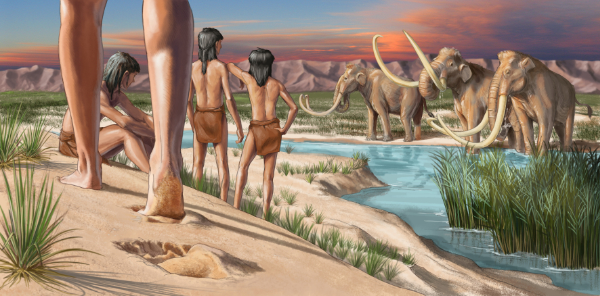
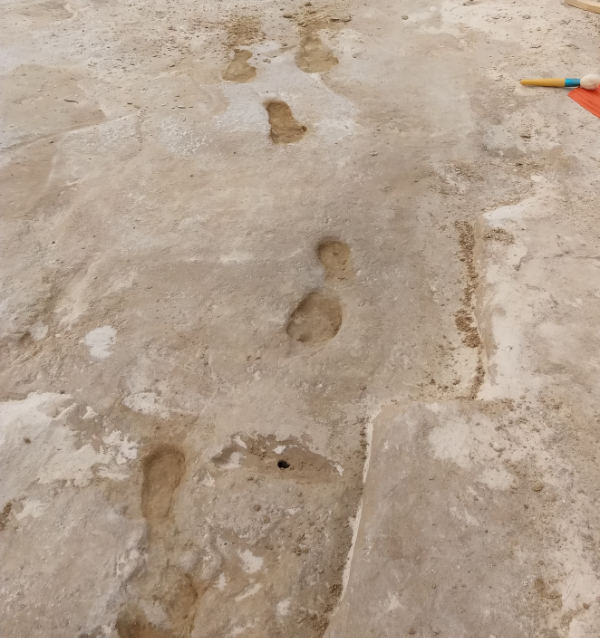
A young woman hurried across the flat, trailing footprints. At times she slipped. At times she stretched to cross a puddle. She carried a child and possibly a container for water, or food, or perhaps a bag of firewood or stones for making tools. The ditch grass, a thin herb growing in the wet lakeshore mud, had gone to seed. As the woman walked, she squished the tiny seeds into the mud. The child she carried squirmed and protested. She stopped, set the child on the ground, readjusted her load, then pulled the toddler back onto her hip and continued the journey.

At the same time, a bear-sized being made its way along the shore, moving perpendicular to the woman and child. When the giant ground sloth (Folivora) encountered the fresh tracks of the woman, it stopped, stood up on its hind legs, and sniffed the air. The animal turned a circle then headed in the opposite direction, perhaps recalling previous unpleasant encounters with human beings. The mammoth (Mammuthus columbi), on the other hand, didn’t care. The 13-foot-tall beast crossed her path fearlessly, without stopping, imprinting its own feet atop those of the woman.

Her path took her about a mile across the lakeshore flats to an unclear destination. There, she stopped, left the child and her load with others, turned, and made her way back along the shore, crossing both the sloth and mammoth tracks, stacking her own prints atop theirs.

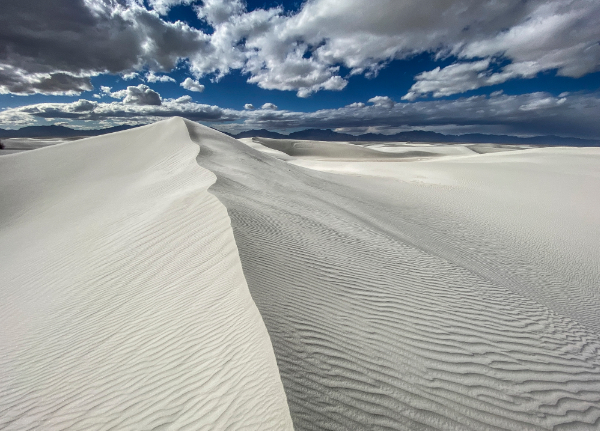
New Mexico’s White Sands National Park holds the largest collection of Ice Age human and animal footprints in the world. Much of White Sands was once a vast, shallow body of water surrounded by savannah-like forests. Archaeologists and geologists call this Lake Otero. During the Ice Age, New Mexico was much cooler and wetter than it is today, and Otero was one of many such lakes throughout the Tularosa Basin. For more than 2,000 years, humans and animals frequented this rich marshland, leaving behind multiple layers of footprints extending over several square miles. There are thousands and perhaps hundreds of thousands of these prints in the area representing mammoths, dire wolves, camels, giant sloths, short-faced bears, and other extinct megafauna.

Many of these prints have been noted as far back as the 1940s and 1950s, but it wasn’t until 2021 that an interdisciplinary team of researchers made a staggering announcement: The human footprints left behind in the lakeshore mud had been dated to between 21,000 and 23,000 years ago.

Photograph by Jim O’Donnell.

“There are no words to express how I experienced it. It’s… breathtaking.” Kim Pasqual-Charlie is a member of the Sky Clan and the first female appointee of the Acoma Tribal Historical Preservation Board. She, along with representatives of dozens of other regional Indigenous nations, visited the area, consulting and often working alongside the archaeologists uncovering the woman’s prints. “To see something representing… no, coming directly from, one of our ancestors… oh, breathtaking is the only word I have!”

If the 23,000-year dates are correct, the ancient footprints once again upend much of what we thought we knew about the peopling of the Americas and how we hear and understand Native American mythologies. It also gives the American public the opportunity to better understand our history and what is, and what is not, good science.

My son began high school in Taos in the fall of 2022. One of his required first-semester courses was The History of New Mexico. In his second week of class, he came home frustrated. “I thought you knew something about archaeology!” At issue was a nearly failed New Mexico history quiz. “You said that Clovis weren’t the first Americans. You said people had been in North America way before Clovis! Now you made me fail my test!” Typical teen.

For the most part, my son was correct. I had explained that the Clovis First Theory was long dead and that plenty of archaeological evidence demonstrated that people had been in the Americas well before Clovis. Humans had arrived in our neck of the woods 20,000 years ago, possibly 30,000 years ago, and perhaps far earlier. But my son’s teacher either didn’t know or didn’t care. The textbook said Clovis First, and so Clovis First it was.

The Clovis First Theory holds that small groups of people made their way from Siberia to North America across the Bering land bridge about 14,000 years ago, when sea levels were low enough to connect Siberia to Alaska. These were the very first people in the Americas, the theory holds, and they made their way south following a 1,000-mile ice-free corridor along the Rocky Mountains into the interior of the continent, dispersing widely and rapidly while creating the first continent-wide culture.

Artist’s conceptualization of Lake Otero at the time the footprints were
made. Again, researchers theorize that the area was at least partially forested.
Image by Davide Bonadonna; courtesy the National Park Service.
Artist’s conceptualization of Lake Otero at the time the footprints were made. Again, researchers theorize that the area was at least partially forested. Image by Davide Bonadonna; courtesy the National Park Service.

In 1929, a road crew working in the Blackwater Draw area near Clovis, New Mexico, came across a mess of giant, ancient bones. Edgar B. Howard, the University of Pennsylvania archaeologist who began excavations at the site, described it as “matted masses of bones of mammoth.” Mixed in with the bones were large, thin, fluted lance-shaped spear points. The points were beautiful, crafted from cherts, obsidians, and jaspers. These are the famed Clovis points, tools unique to the Americas. More than 10,000 Clovis points have been found across the country. They all date to about 12,800-13,500 years ago, a time when the glaciers melted across the continent’s northern latitudes and mountain peaks. Clovis points are distinctive; the technology to make them appeared suddenly and, at the time they were found, there was no accepted human habitation older than Clovis. This led archaeologists to conclude that Clovis points were evidence of the very first humans in the Americas. Clovis First took hold, dominating the archaeological field, making its way into textbooks and teaching materials. This makes sense. It was quite simply the best understanding researchers had at the time based on available evidence. That said, it wouldn’t be going too far to say that Clovis First took on religious-like qualities in some circles.

But for most archaeologists, the Clovis First Theory no longer holds water, and hasn’t for decades.

There is no more vigorous, and at times acrimonious, debate in North American archaeology than the date and route human beings took to arrive in the Western Hemisphere. Over the past few decades, the dispute has spilled into the public consciousness, generating thousands of pop-sci articles, podcasts, radio programs, documentaries, books, and wildly ill-informed conjecture.

The White Sands footprints are an impressive and startling addition to the scientific debate about the peopling of the Americas. Startling, that is, to many archaeologists and the general public. But not at all startling to people like Kim Pasqual-Charlie, descendants of America’s original inhabitants.

For decades, dozens of pre-Clovis sites have turned up throughout North and South America. The oldest accepted physical evidence dates to 15,500 years ago, but some sites hint at much older dates. Radiocarbon dating puts the Monte Verde site in southern Chile at 14,800 years old and possibly 33,000 years old. The Pedra Furada in Brazil has yielded similar dates. The Topper site in South Carolina indicates human habitation going back 20,000 years, as does Bluefish Cave in the Yukon and Cactus Hill in Virginia. Flaked stone tools approximately 30,000 years old have turned up at Mexico’s Chiquihuite Cave. Bones with cut marks found in Uruguay date to 34,000 years ago—and so on. 

All these sites and dates are heavily disputed within the archaeological community.

“Most archaeologists can agree that there are half a dozen or so sites that are reliably older than Clovis,” says Dan Odess, an archaeologist with the National Park Service and a member of the White Sands team. “The problem is, no one seems to agree on which half-dozen are legit.”

In order to accept a site as “legit,” archaeologists seek firm evidence of human activity and that it be undisturbed when found. This could be human remains, footprints, rock art, or groups of artifacts that are clearly human-derived in place within undisturbed geological deposits. It is a high standard, but it makes sense. Random modified rocks and bones without a clear sign of human creation just won’t cut the mustard.

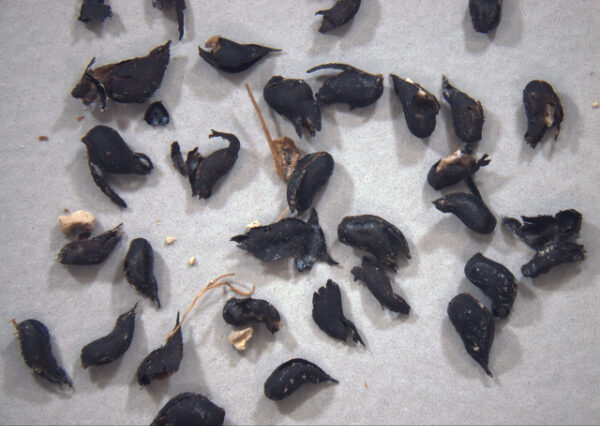
A magnified image of the ditch grass seeds used to date the White Sands prints. Ruppia is a perennial species of aquatic plant native to the Americas and Europe. It typically grows in freshwater bodies like lakes, the rhizome anchoring in wet sediments. Photograph courtesy the National Park Service.

The sites mentioned above are controversial because it is unclear, for example, how the stone tools found in Mexico were made. Most archaeologists doubt they are human-made tools at all. The Pedra Furada tools may have been created by Capuchin monkeys. Apparent cut marks on bones might be caused by modern construction work or falling rock. They could also result from hungry animals. When a site is disturbed for whatever reason, reliable dates from any method can be hard to come by.

This is what makes the White Sands prints so incredible. They are undisputable evidence of human beings. The sediments in which the prints were found were geologically intact and the methods used to obtain the dates were solid.

At first, they were just shadows, says David Bustos, chief of resources at White Sands. The National Park Service knew of potential human prints as far back as 2009. He described how they appeared and disappeared, ethereal, with the blowing sands. Over thousands of years, wet and dry events preserved thousands of prints. The wind filled many of the footprints with different textured sands that made them visible when the winds shifted the gypsum dunes and lake sediments eroded away.
Some of the prints had solidified like plaster cast left to stand out as softer sands around them were blown away. Others, Bustos says, are only visible when the sediments are moist enough to create a contrast with the surrounding sands. “Once we brushed them out, it became super clear what we were seeing.”

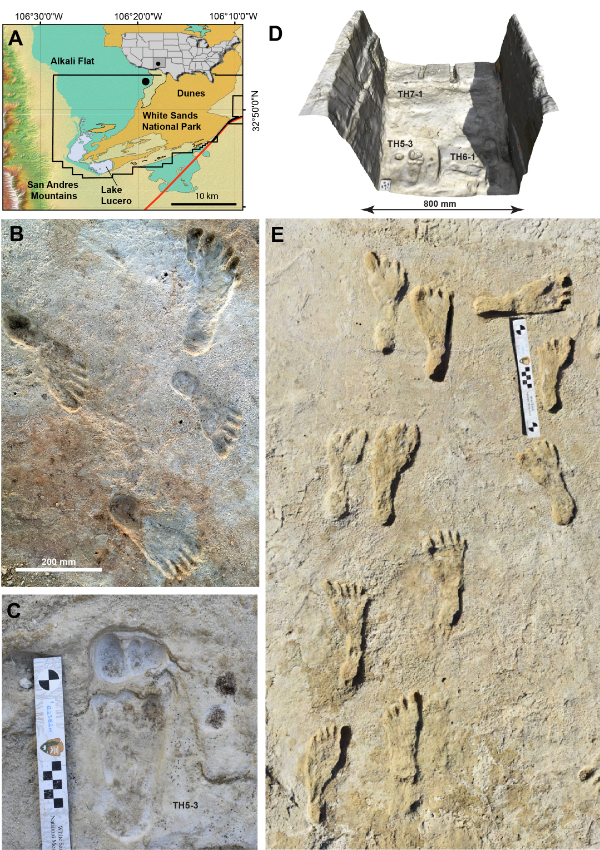
Researchers mapped and modeled the excavation trenches and associated
footprints using 3D technology, the result of which can be seen in the upper righthand
corner, section D. Image courtesy the National Park Service.
Researchers mapped and modeled the excavation trenches and associated footprints using 3D technology, the result of which can be seen in the upper righthand corner, section D. Image courtesy the National Park Service.

Almost immediately, the National Park Service notified associated tribes and pueblos. They arranged for consultation meetings with people like Kim Pasqual-Charlie, her sister Bonnie, Holly Houghten from the Mescalero Apache tribe, and Presley Haeske from the Pueblo of Zuni. In all, thirty-one tribes and pueblos consulted with the National Park Service, providing guidance and monitoring the researchers.

The White Sands team uncovered a relatively small area. They did not want to expose too many prints given how easily they erode. Using fine brushes, they excavated the tracks, photographing and mapping them along the way. There were eleven distinct layers in all. The layers were in chronological order from top to bottom, Bustos explained. Higher up equals younger. Deeper equals older. Each layer had prints of both megafauna and humans, and the sediments had not been mixed. These intact layers suggested the archaeologists might be able to get solid dates from both above and below the
eight track-bearing layers. But they needed something organic for the radiocarbon dating. That’s where the ditch grass seeds came in.

When the young woman hurried across the lakeshore, she pressed the ditch grass seeds into her footprint. It was these seeds that allowed researchers to date the prints.

The radiocarbon dating methods used by experts from the United States Geological Survey to obtain the dates of the footprints analyze carbon-14 isotopes. These isotopes decay at a constant rate over time. By comparing the amount of carbon-14 in the atmosphere to the amount in the plant material, researchers can come to an approximate age of the material.

The dates the White Sands team obtained were astonishing. The prints were an estimated 21,000 to 23,000 years old. The team was able to replicate these dates several times. Further, using dates obtained from ditch grass seeds found above and below the prints, they were able to narrow the window of possible dates and constrain the time window, giving them further confidence in the results.

“The numbers were spot-on each time,” Bustos says. “Of course, with anything of this age, there have been those that would question the dates, but we are pretty confident in what we have.”

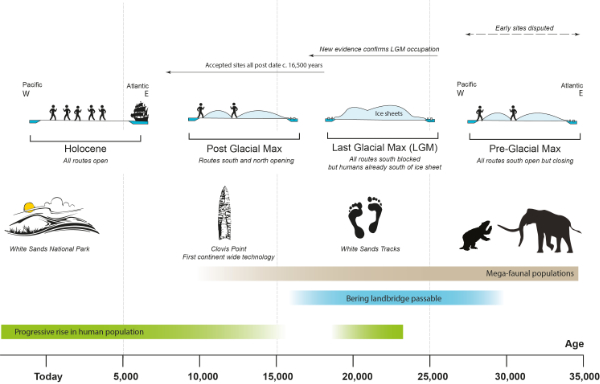
One of the many things that makes these ancient dates so astounding is that the prints were made at a time when the ice sheets were at their maximum. Sea levels were 400 feet lower than today, and glaciers covered twenty-five percent of the Earth’s land surface, reaching as far south as present-day Illinois and Missouri, blocking north-to-south movement
for centuries, if not thousands of years. The ancestors of the people living at Lake Otero must have arrived thousands of years earlier—10,000 to 15,000 years before Clovis. “We were skeptical ourselves,” says Odess. “We were  anxious to avoid falling into the trap of publishing an extraordinary find that would later fall apart under scrutiny. We took our time and made sure we did it right.”

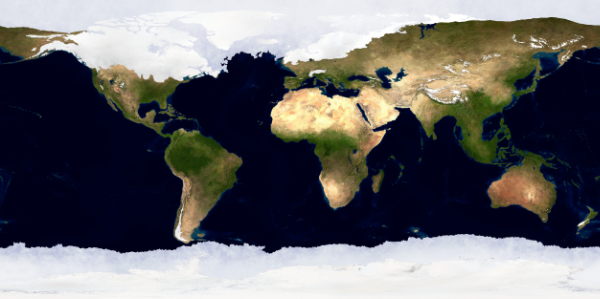
Extent of ice sheets during the Last Glacial Maximum (LGM) at the time the White Sands prints were made. At that time, global sea level was over 400 feet lower than it
is today. Glaciers covered around 8% of Earth's surface and 25% of Earth's land area. During the LGM, pathways to the Americas across Beringia from Asia were blocked,
suggesting that the people who lived at Lake Otero arrived in North America centuries or even millennia prior to the formation of the ice sheets. Some theories hold that
people came from Asia along the ice-free coast, tracing the edges of the mile high ice. Image courtesy the National Park Service.
Extent of ice sheets during the Last Glacial Maximum (LGM) at the time the White Sands prints were made. At that time, global sea level was over 400 feet lower than it is today. Glaciers covered around 8% of Earth’s surface and 25% of Earth’s land area. During the LGM, pathways to the Americas across Beringia from Asia were blocked, suggesting that the people who lived at Lake Otero arrived in North America centuries or even millennia prior to the formation of the ice sheets. Some theories hold that people came from Asia along the ice-free coast, tracing the edges of the mile high ice. Image courtesy the National Park Service.

Along the way, researchers realized that these were more than just prints and tracks. Collectively, they told a story. Or a number of stories. There was the woman and the child moving along the lakeshore in very close proximity to massive mammals. In another location, a scattering of prints suggests humans hunting and killing a giant ground sloth. The sloth turned circles, the humans raced back and forth to surround it, the sloth swiped at them with its long claws. Yet another location hints at children playing in the mud, jumping in puddles, splashing each other. Another set of tracks may indicate people pulling a heavily loaded travois-type contraption across the sand, perhaps carrying meat from a successful hunt. This all remains conjecture—these particular tracks may also indicate someone simply dragging a pole through the mud or, perhaps, a tusk. Or bones. More research may yield an answer.

“You have to see it to believe it,” says Bustos. “Not only are the dates amazing, but these stories imprinted on the landscape show people and extinct megafauna interacting over thousands of years. Adult and baby mammoths, the little ones playing around. Young and adult sloths and the prints of human children just everywhere.”

Odess agrees. “They are just incredibly neat. The tracks people made thousands of years ago are there, and the information we can glean about relationships between people and the animals they encounter is beautiful.”

That the long-debunked Clovis First hypothesis is still being taught in our public schools is troubling. It distorts what and how we think about Indigenous America, how we understand our history as Americans, and how we teach the process of science.

For decades, most archaeologists have accepted that there were sites older than Clovis and, in many cases, much older. Yet some influential archaeologists and the public in general became stuck on Clovis and, even now, brand new articles—not to mention textbooks and teaching materials—continue to posit the Clovis First Theory. Why?

Recently exposed ancient human prints at White Sands. Photograph courtesy the National Park Service.

To start with, it takes a long time for innovations in a scientific field such as archaeology to be accepted, take hold within the field, and find their way into teaching materials. Further, Clovis First is a neat, tidy, easy-to-grasp package perfect to drill facts into heads instead of teaching the complexities of history. But history isn’t neat and tidy. It is complicated. In fact, much of what we teach about American history is just plain wrong, much of it deliberately warped. When it comes to life in North and South America before 1492, almost everything you think you know is at best boring—and at worst, false.

Teaching a dumbed-down version of history keeps us from fully comprehending the world in which we live.
It also bores our children to tears, and sends some home to argue with their fathers.

In their groundbreaking book The Dawn of Everything (2021), archaeologist David Wengrow and the late anthropologist David Graeber wrote that human history is far more interesting, complex, textured, inspiring, shocking, and just plain fun than we are taught. If we would just teach history honestly, they posit, no one could possibly get bored.

There is also a problem within the field of archaeology. Carl Sagan famously reworded Laplace’s principle as “extraordinary claims require extraordinary evidence.” Science can be inherently conservative, skeptical, and slow to integrate and accept new information. This makes sense. Solid evidence must be gathered to help us discern between reliable information and current fads. But, according to Odess, some archaeologists take Sagan’s rejoinder too far, burdening themselves with a myopic view of the world Sagan didn’t intend. A myopic view that has kept archaeologists from seeing what was often right in front of their faces, older artifacts that were not as distinct as the large, beautiful Clovis points.

“He who controls the past controls the future,” wrote George Orwell in 1984. “He who controls the present controls the past.” There is a toxic yet vital debate under way in today’s America. What should we and should we not teach our children about the past? The battle isn’t really about teaching or even history. It is about power.

The stories we tell about the past matter.

For Indigenous Americans, how we think about the past is particularly relevant. Euro-Americans have long justified the genocide of Native Americans and the taking of their land by denying or distorting Indigenous people’s history. If you create a people without history, destroying them becomes easier. Early Euro-Americans refused to see the link between Native Americans and the impressive mounds, monuments, and cities found across the continent. Instead, they claimed, these amazing artifacts were built by Atlanteans, Nephites, mysterious giants, lost Israelites, Irish monks, or even beings from outer space. The modern “ancient aliens” craze is rooted in this historical justification for genocide and land theft.

“In our stories, we migrated from somewhere up north, but we never came over any Bering land bridge,” Pasqual-Charlie laughs. “For us, all Puebloan people were once the same, but we got in trouble and split. We wandered until we came to this place.” She tells me that the White Sands footprints are connecting the dots for her.

According to Pasqual-Charlie, the Acoma language (Keres) has an ancient word for camel. “But how can we have that word if we’d never seen a camel?” For Pasqual-Charlie, seeing tracks of ancient Camelops, a species that went extinct more than 13,000 years ago, was a revelation. “We have that word because, at some point in our past, we had actually seen that animal,” she says. “We grow up listening to our traditional stories, but these aren’t just bedtime stories. These are things that actually happened.”

Indigenous stories have often been dismissed as mere folk tales or mythologies instead of the wealth of historical knowledge they are.

Once upon a time, I worked for a rather well-known archaeologist whose work focused on the American Southwest. She continually—and frustratingly—dismissed all so-called “folk” stories.

“Snakes? In Ireland?” She exclaimed, referring to the tale of St. Patrick driving the snakes from the Emerald Isle. (Somehow, she had missed the point that the snakes were an analogy for those that practiced the old, nature-based religions.) The fact that there were and are no snakes in Ireland was proof enough for her that most folk tales and mythologies should be dismissed—particularly Native American origin stories.

In fact, Native American origin stories are not in opposition to most Western scientific understandings of the peopling of the Americas. Indigenous stories frequently refer to massive walls of ice, strange giant animals, floods released by melting glaciers, rising sea levels, and the re-appearance of lands in the throes of post-glacial regeneration. The Cree people have a saying for “when the ice goes home,” suggesting glacial retreat. The Salish of British Columbia have a mammoth song and mammoth dance. In the Osage oral traditions, there are stories of a battle between giant beasts, mammoths, sloths, bears, and dire wolves. These suggest that Indigenous Americans had, in the distant past, experienced at least one glaciation—if not more.

At White Sands, Native American advisors found artifacts the archaeologists had missed, Pasqual-Charlie explains. “Traditions were passed down since ancient times,” she says. “We Pueblo people could see how stones were deliberately placed on the landscape in forms that may resemble constellations. We do the same thing at Acoma, so I could see them. The archaeologists couldn’t.”

For Lyle Balenquah, an archaeologist and member of the Hopi Nation, the White Sands prints came as no surprise. “This is simply proof of what we were taught as kids. Science is verifying our own cultural history,” he told me. “It is very significant in how we perceive our own history. As a scientist I think the numbers are cool. But as a Hopi? Well, we don’t attach numbers to our history. Dates don’t matter as much as the relationships.”

It is important to remember, Balenquah and others told me, that “archaeology is more collaborative now. Archaeology is now helping the tribes through science. Re-educating the profession has been a relative success, but people still need to realize, the tribal timeframe is slower. We aren’t in a rush. That reflects our longevity.”

“When Native scientists and community members are full participants in the research process, the stories that emerge are not only more respectful but also more accurate,” points out Dr. Jennifer Raff, associate professor of anthropology at the University of Kansas. Raff is also the author of Origin: A Genetic History of the Americas (2022).

The earliest arrivals to the Americas did not see themselves as conquering new lands. Instead, the understating of human kinship with all living things—including and especially the land and waters—meant that these people had been here and had been here since always, says Dr. Joe Watkins, a senior consultant for ACE Consulting, and a visiting professor at Hokkaido University in Japan. Watkins is a member of the Choctaw Nation of Oklahoma.

“You’re talking about two different worlds,” Watkins says. “On the Indigenous side, it doesn’t matter putting dates. Philosophically, we were never anywhere else.”

Only the Euro-American mind, obsessed with terms of ownership, possession, and conquest, can’t comprehend what Indigenous people mean when they say “since time immemorial,” Watkins says. “It doesn’t mean since forever. It means an entirely different way of being with the world.”

“Science, philosophy, history, tribal legends, and stories… they all serve different needs for different people at different times,” says Watkins. “In the West, history has been a way of explaining yourself, justifying yourself. There is an eagerness to find superiority and to define yourself in opposition to others instead of creating your own identity. But for us, I believe, history is a way of recognizing connections and relationships, relationships with non-human people. The Western perspective is largely irrelevant. It is beside the point. We Native peoples have nothing to prove.”

Native stories and the human footprints at White Sands are not the only line of evidence pointing to a deeply ancient Native North America. Recent genetic evidence demonstrates that human presence in the Americas dates anywhere from 15,000 to 30,000 years ago, with the weight of evidence falling around 16,000-17,000 years ago, writes Dr. Raff of the University of Kansas in her book Origin. “The White Sands prints are still quite plausible based on the genetic research,” Raff told me. “But the current data doesn’t give us the full picture, of course,” she says. “I’m always eager for new data.”

Some linguists have pointed to the incredible diversity of languages among Native Americans as evidence of a very early arrival in the Western Hemisphere. This deeply controversial theory holds that languages diversify at a given rate and thus we can estimate when people arrived in the Americas based on that rate of change. The date linguists come up with is approximately 30,000-35,000 years, far older than any archaeological evidence supports. While not totally dismissed among archaeologists, the linguistics theory has been widely seen as not plausible. Still, if the White Sands dates hold, the date of arrival fits closer to the linguistic estimate.

“Linguistic techniques for assessing age are interesting but really hard to assess,” says Daniel Odess of the NPS, “but now, maybe we can’t be so dismissive. White Sands puts archaeology a bit more in line with some linguists.”

On the archaeological end of things, an increasing number of older and older sites are turning up because research methods and technologies have improved—but another big reason is that, finally, archaeologists are looking for them.

New research in Idaho has uncovered projectile points that are, for the moment, the oldest known points in the Americas dating to roughly 16,000 years ago. Interestingly, the points bear a strong resemblance to points found in Hokkaido, Japan, that are roughly the same age. This may not be terribly unusual, however; a recent article in Current Biology points to genetic evidence suggesting “multiple phases of Native American-related gene flow into northeastern Asia over the past 5,000 years, reaching the Kamchatka Peninsula and central Siberia.” This data indicates extensive historical back-and-forth between North America and Asia.

Some of these theories will gain new supporting evidence. Some will not. New ideas will arise and they too will require testing. This is how science works.

“The challenge,” says Raff, “is holding multiple things in your mind at the same time while leaving your mind open to new evidence.”

The 21,000- to 23,000-year numbers for the White Sands prints are not without controversy. Radiocarbon dating was the only method available to the team at White Sands. Dates derived from but one method are naturally less reliable than dates derived using a variety of methods. Further, skeptics argue, aquatic plants like the ditch grass used for the radiocarbon dates can often pick up older forms of carbon from other plant materials. This is known as the “freshwater reservoir effect.” Such contamination can result in dates that appear much older than they should.

But, Bustos says, they accounted for potential contamination. The White Sands team produced hundreds of radiocarbon dates from seeds at different layers in the soil. The dates lined up perfectly with their place in the sediments; that is, younger seeds on top and older seeds at the bottom. If the freshwater reservoir effect was messing with the data, they would have seen a random distribution of dates throughout the sample. They did not.

Some reviewers make the case that, if seed dates are indeed biased by the reservoir effect, they may still be in stratigraphic order, but the obtained dates could be still be off by a few thousand years.

“A lot of our critics haven’t been onsite,” explains Bustos. “We’ve uncovered eleven intact layers, all in chronological order. There was no mixing. The layers extend for miles. Critics are focusing on just one layer and have not accounted for the megafauna prints above the human prints. The mammoth prints above a human print show that the human prints were present before mammoth went extinct.  In some places, there is over one meter of sediment between the human and megafauna prints, demonstrating a great amount of time between the two prints.”

Skeptics of the 21,000-to-23,000-year-old estimate point to other dating methods the White Sands team could use, including stimulated luminescence of the quartz sediments found in the footprints.

“We are keeping our minds open,” Odess says. “New data is always welcome, but even my most skeptical colleagues see what we have as pretty convincing. You just have to give this one credence.”

Because some cling to Clovis First with religious-like fervor, the degree of proof on sites like White Sands must be compelling, acknowledges Odess. “We will never find the perfect site. There will always be doubts no matter how well the work was done. It is important we not get out over our skis and criticize individual researchers. Archaeology is challenging. We are not trying to prove anything. We are trying to understand.”

Dr. Paulette Steeves, a Cree-Métis archaeologist at Algoma University in Canada, says the White Sands prints are young in comparison to what is out there. The author of The Indigenous Paleolithic of the Western Hemisphere (2021), Steeves has compiled an impressive database consisting of hundreds of credible sites throughout the Americas that are older than Clovis and in many cases much, much older, perhaps going back 50,000 or even 100,000 years. “It is mindboggling how much is out there,” she told me. “It’s amazing.”

 Steeves says there is an almost violent reaction in the archaeological establishment to researchers who find or even discuss sites older than the accepted dates. White Sands, she says, should be a warning to those unwilling to see what’s right in front of their faces. “We have to talk about this aggression in archaeology in order to change it,” she says.

But the real treasure, says Steeves, is off the coasts. “Let’s remember: The oldest sites in North America may be under hundreds of feet of water.”

Humans arrived to the Americas in several waves of migration. The Clovis First Theory has been supplanted by new evidence showing human occupation in
the Americas going back 10,000 and maybe even 20,000 years before Clovis. Image courtesy the National Park Service.
Humans arrived to the Americas in several waves of migration. The Clovis First Theory has been supplanted by new evidence showing human occupation in the Americas going back 10,000 and maybe even 20,000 years before Clovis. Image courtesy the National Park Service.

During the Ice Ages, sea levels dropped, exposing hundreds of miles of new shore along both the Atlantic and Pacific continental shelves. Early migrants to the Americas most likely followed these ecologically rich coastlines, meaning that the earliest settlements and sites were flooded as the glaciers melted.

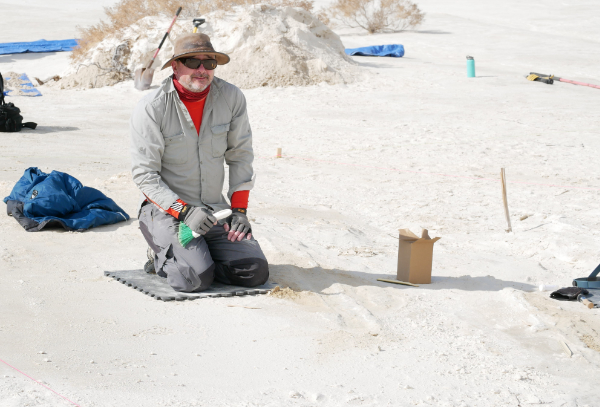
Professor Matthew Bennett of Bournemouth University in the UK, one of the leading world experts on ancient
human footprints, began assisting the White Sands team in January 2017 publishing on the prints in Science in
2021. Photograph courtesy the National Park Service.
Professor Matthew Bennett of Bournemouth University in the UK, one of the leading world experts on ancient human footprints, began assisting the White Sands team in January 2017 publishing on the prints in Science in 2021. Photograph courtesy the National Park Service.

In 1974, a fishing trawler operating some 60 miles off the shore in the Chesapeake Bay pulled up fragments of a mastodon skull. Inside the same net was a human-made stone biface, a tool worked on both sides. The skull was dated at more than 20,000 years old, but the biface remains controversial. The trawler net had dragged along the sea bed for many miles. Was the biface associated with the skull or did it get mixed up with the skull as sea-bed soil layers were disturbed? For now, we can’t know. There is no reliable association between the dated skull fragment and the artifact. Still, the skull and biface hint at what might lie hundreds of feet underwater. “Specialists in underwater archaeology could excavate and document those sites. The cost would be enormous, however,” says Steeves. “But until we do there is no way we can put definitive dates on when people first arrived in the Americas.”

At White Sands, excavations of more prints will be slow. Erosion continues to prove a major challenge. “Many of these areas are eroding rapidly,” says Bustos. “On the western and eastern edges of the old lakeshore we see a lot of wind erosion. Temperature differentials are also breaking down the prints once they are exposed. The National Park Service is particularly interested in preservation. We are working with the tribes and pueblos on this because once the prints are gone, they are gone forever.”

Research on the prints will expand and continue. The White Sands team aims to test its data further and search for older prints. Its members also hope to expand their horizons.

“I do not believe these footprints are unique,” Bustos says. “There are thousands of playas throughout the American South-west that need to be studied. We are at the cutting edge of this research. I believe that, with time, many more places like this will be found. I just hope they can be recorded before they are lost to the rapid soil erosion we see at White Sands.”

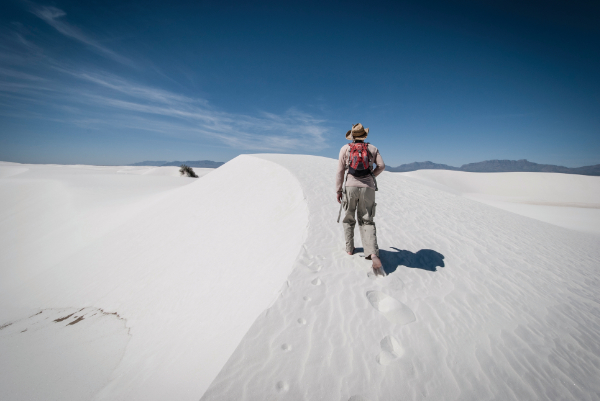
Photograph by Jim O'Donnell
Photograph by Jim O’Donnell

Tens of thousands of years ago, children splashed in puddles along a lakeshore in what is now southern New Mexico. Tens of thousands of years later, my son splashes in puddles on the street outside my home. Tens of thousands of years ago, people left their footprints along a muddy flat. Tens of thousands of years later, I leave footprints across a muddy flat wet from snowmelt. We’ve all left tracks.

“If you are quiet and humble you can feel them and be there with them,” says Kim Pasqual-Charlie of Acoma Pueblo. “What those people left behind is our ability to connect with them and ask for their help when we need. What they left for us is the ability to retrace our own footsteps.”

Special thank you to Dr. David Kilby of Texas State University for elucidating many of the nuances of the White Sands research and Paleoindian research in general.

Dr. David Kilby (opens in a new tab) is a professor at Texas State University whose research focuses on North American Paleoindians, hunter-gathere archaeology, Southwest prehistory, the organization of lithic technology, geoarchaeology, cultural resource management, and applied archaeology. David has a BA from Appalachian State University, an MA from Eastern New Mexico University, and a PhD from the University of New Mexico.

Jim O’Donnell (opens in a new tab) is a writer, photographer, and explorer based in Taos, New Mexico. Jim’s writing focuses on people and ecosystems in flux. From journalism to literary non-fiction to full-on creative fiction, transformation is the thread that binds all his writing. He is the author of Fountain Creek: Big Lessons from a Little River (2025) from Torrey House Press and Who Broke the World (2024).

Sheep is Life

By Rapheal Begay

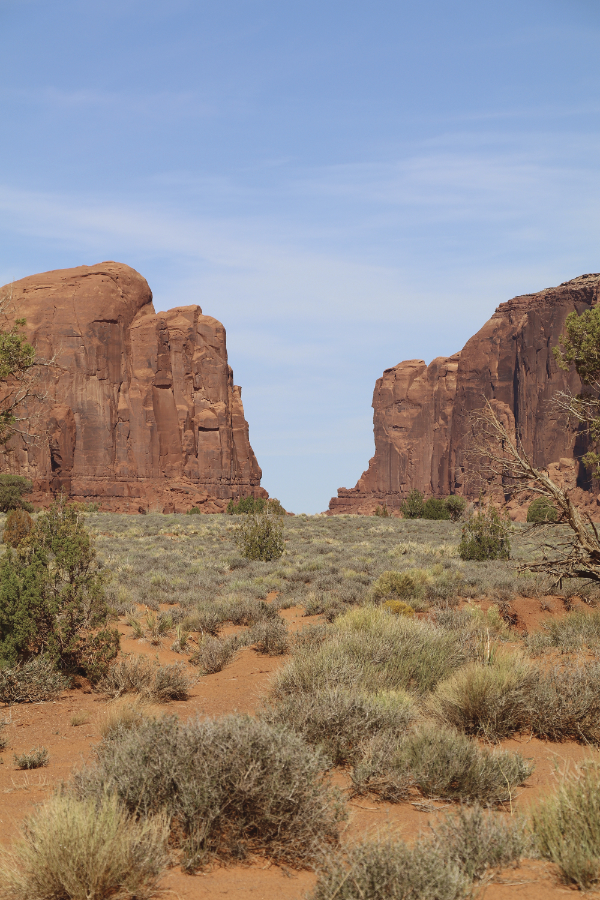
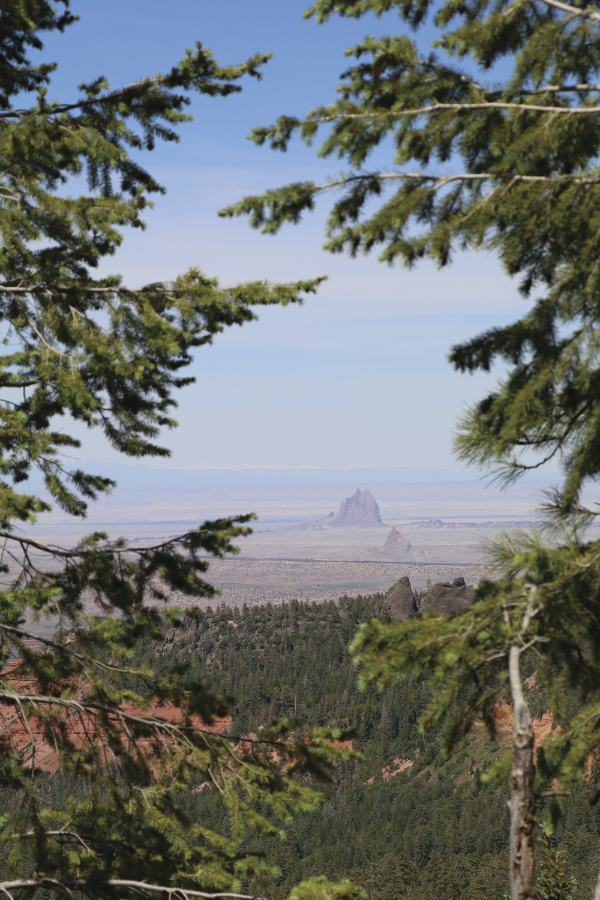
As Diné, we embody a holistic relationship with dibé (sheep), kéyah (land), and hooghan (home). To illustrate, my family homesite in Hunter’s Point, Arizona, happens to be our old winter sheep camp and is a space of origin and belonging that continues to provide sustenance, connection, and healing. Concerning the Diné lifecycle, this image alludes to where my mother buried shitséé’ (my umbilical cord) within the sheep corral. It is the place I return to for direction, inspiration, and strength.

With rolling red hills, fields of sage, and open blue skies, I grew up learning about the significance of herding, shearing, and the butchering of sheep as a means of survival and gathering family. After my grandparents’ passing and the loss of our family flock, the memories of my relatives operate as my foundation and inform the ways in which I relate to shik’éí dóó shidine’é (my family and my people).

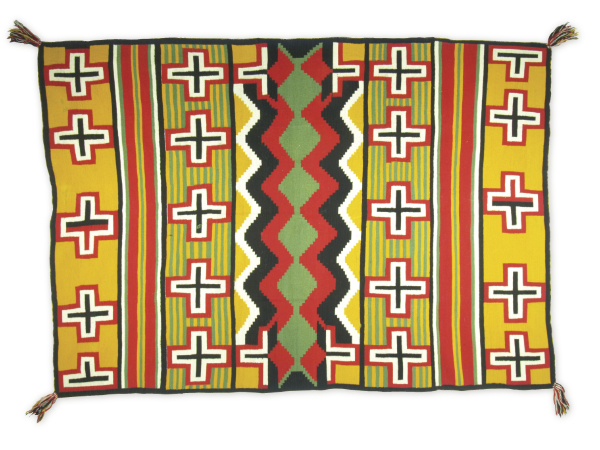
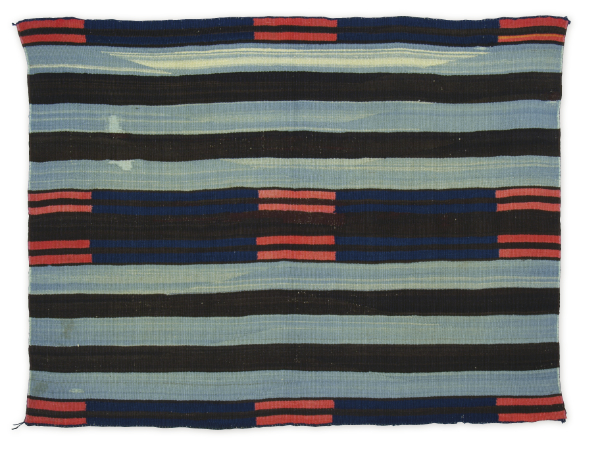
To this day, I continue to hear stories of my grandparents’ reciprocal bond with the natural environment. My grandfather, whom I’m named after, created my grandmother’s loom and weaving tools from wood found in our backyard. While sheepherding, he would also gather dye plants for wool preparation and medicinal plants for ceremonial use. Within the home, my mother and her siblings would assist with the carding and spinning of wool as my grandmother wove her thoughts, prayers, and songs into the designs of her art.

Since its inception, the use and value of Diné textiles have been transformed by the community, traders, and the art market. However, the one thing that remains consistent and universal is the Diné connection to sheep, the land, and our home. As a well-known expression, “sheep is life” reminds us that dibé are natural caretakers of the Earth, and they also provide stability within the homestead. Like a flock of sheep, we as people are natural stewards of our surroundings and the stories we hold and tell. We as storytellers, weavers, and artists embody the teaching of hózhó (to be in balance and harmony with our surroundings), and just like the land, we will continue to change, adapt, and persevere.

Rapheal Begay is a visual storyteller based in the Navajo Nation. His work activates cultural landscape photography and oral storytelling traditions to document and celebrate the Diné way of life. His research and practice include curatorial collaboration and community organizing informed by visual sovereignty and land-based knowledge.

Rapheal Begay (opens in a new tab) is a visual storyteller based in the Navajo Nation. His work activates cultural landscape photography and oral storytelling traditions to document and celebrate the Diné way of life. His research and practice include curatorial collaboration and community organizing informed by visual sovereignty and land-based knowledge.

Looking Back to Look Ahead

By Charlotte Jusinski

Not-so-hot take: There is so much we can learn from the past and from those who came before us. While we didn’t try to give this issue a theme, here at the end, we’ve noticed that every single story herein exemplifies what we can learn from history, whether distant or recent.

Our cover feature this time around is Kate Nelson’s in memoriam of J. Paul Taylor, the legendary educator and legislator and all-around champion of New Mexican culture, who passed away in February. All who knew Taylor can attest to his life of generosity; a true public servant, virtually everything he did was to benefit his community, whether it was his family, the town of Mesilla, or New Mexico as a whole. To live with his leadership as an example is to set ourselves on a course that shows that everyone does better when everyone does better.

Here you’ll find the story of Robert Woodman, a tinsmith who worked in the twentieth century in Santa Fe who may have been completely forgotten, were it not for a box of switchplate covers gifted to author Maurice M. Dixon, Jr. Sometimes it isn’t something grand that brings us back to important figures in the past; sometimes it’s a repository of water-stained patterns for terneplate lighting fixtures that shoves our predecessors into the light.

One of the driving forces of Horizons: Weaving Between the Lines with Diné Textiles, a forthcoming exhibition at the Museum of Indian Arts and Culture, is that it is built for weavers, by weavers; the exhibit’s curators and advisory board are constantly looking at both the history and future of Diné textile traditions to inform how the exhibition is crafted and presented. Dr. Michelle J. Lanteri’s overview of the exhibition puts it all into focus. Also see curator Rapheal Begay’s recounting of the importance of sheep to the Diné in Framework.

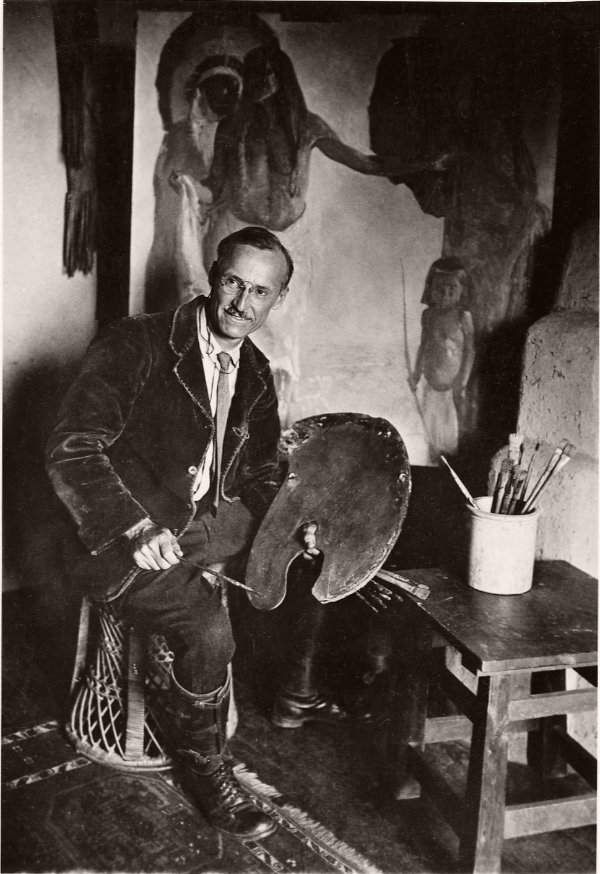
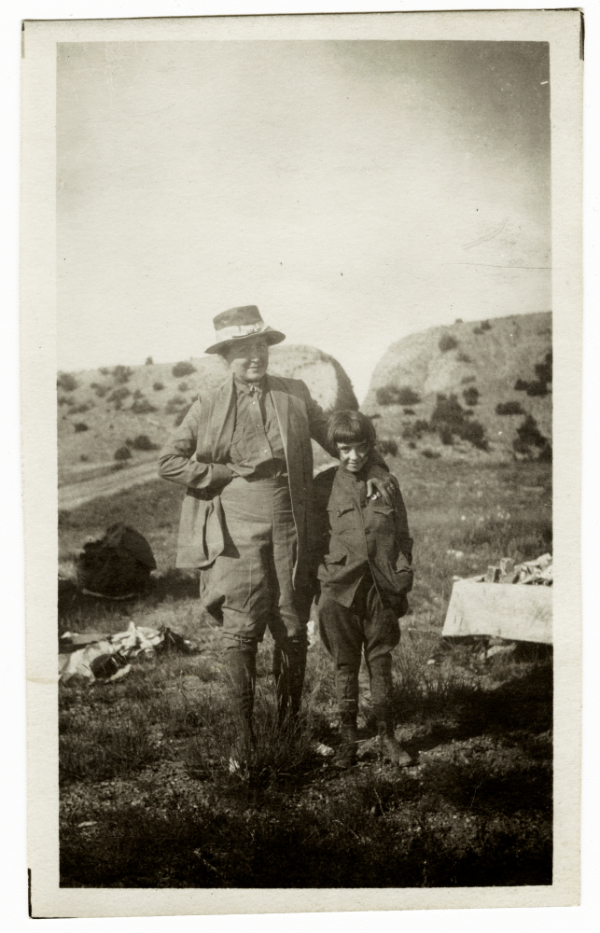
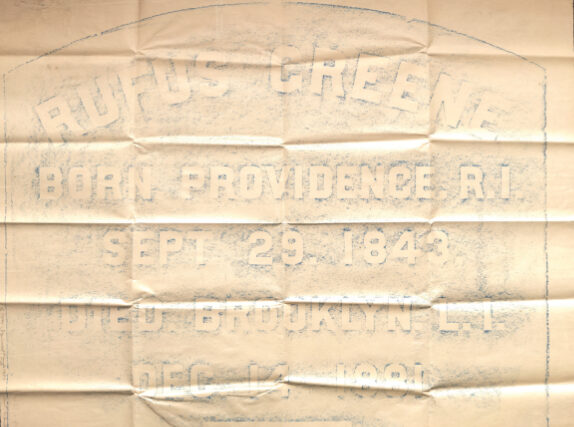
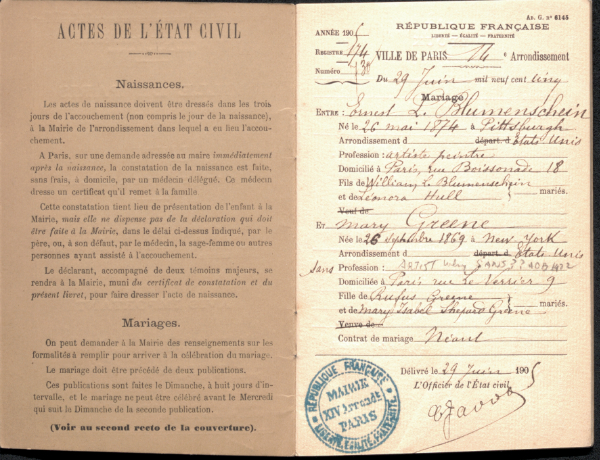
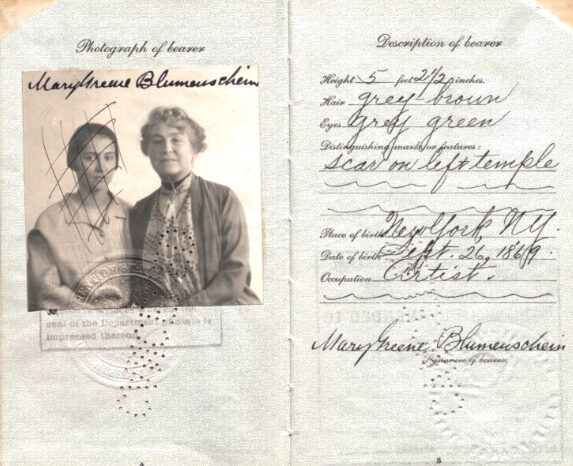
As the first-ever recipient of the Steve Wimmer Southwest History Research Grant, Marcy Botwick explored the Mary Greene Blumenschein papers at the Fray Angélico Chávez History Library at the New Mexico History Museum to learn more about the painter who spent time in Taos, as well as to learn about what Greene Blumenschein’s life can tell us about women’s lives today. Read the results of Botwick’s research here.

When it comes to learning from the past, you can’t get much more “past” than the subject of Jim O’Donnell’s piece about prehistoric human footprints found at White Sands National Park. The footprints have been dated to between 21,000 and 23,000 years ago, upending what we thought we knew about human life in North America. The finding is controversial and fascinating, and O’Donnell offers a thorough rundown.

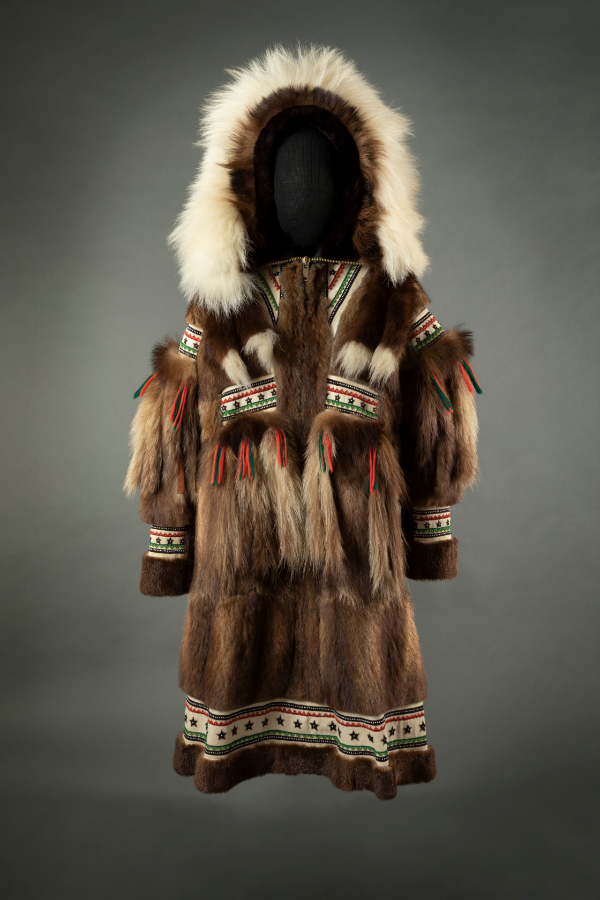
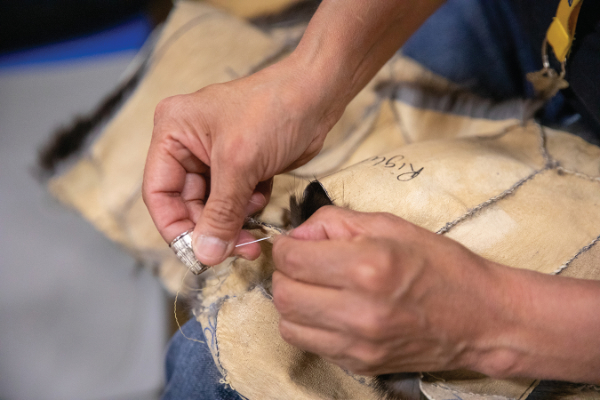
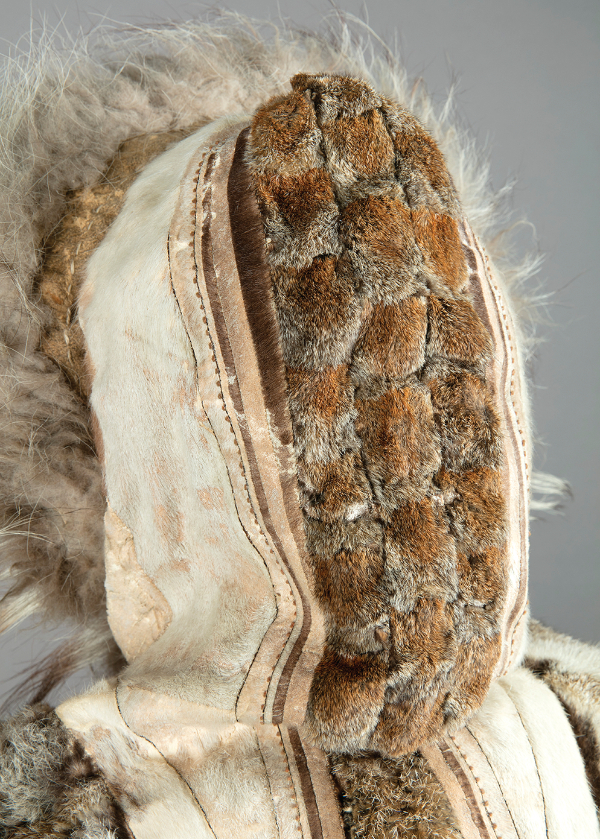
Dr. Nadia Jackinsky-Sethi takes a look at Ghhúunayúkata/To Keep Them Warm: The Alaska Native Parka, on view at the Museum of International Folk Art. Her piece discusses the continuum of craftsmanship among Alaska Native peoples who make traditional and innovative parkas and outerwear, and what tradition can teach current parka-makers about how to keep warm.

Lastly, visit with Dr. Rhonda Dass where the regional historic site manager discusses the last fifty years at Fort Selden Historic Site, and what the next fifty years might hold. For a site that could have vanished, it has held on with the help of adobe preservation efforts and a whole lot of caring staff.

So while it may not be the most groundbreaking revelation ever, the sentiment remains the same: There is so much we can take with us from the past as we innovate again and again. El Palacio celebrates this carrying of tradition every day, and in this issue especially.

Everything Changes

Text and photographs by Dr. Rhonda Dass

Time changes everything. A lot has changed at Fort Selden in the fifty years since it was declared a State Monument and became one of the handful of New Mexico Historic Sites. On July 2, 1973, Gov. Bruce King proclaimed Fort Selden a state monument. The proclamation states that Fort Selden “is now a hauntingly beautiful ruin administered by the Museum of New Mexico for the public benefit.” This summer it will be a challenge to look back at the fifty years of the state’s influence and not see the changes that have happened to the site just north of Las Cruces near the Rio Grande in Radium Springs, New Mexico.

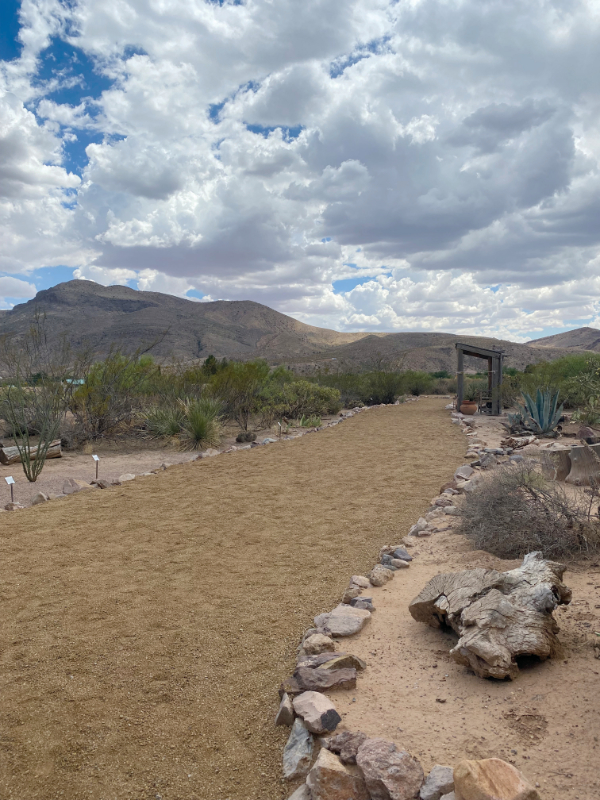
In recent years we have seen drastic changes to the seven-acre site. A new front entrance was constructed framing the southern gates off Fort Selden Road. The gravel pathways and parade grounds received improvements to make them more environmentally friendly and sustainable as well as more easily accessible to visitors. New activity stations dot the grounds and signs await new interpretive text panels.

The real challenge comes in seeing what has not changed.

The moment that Fort Selden became a state monument, a pledge was created by the state and the people who would take on the responsibility of caretaking the site over the years. The ruins are the most obvious feature that exhibits both consistency and change over time. It was predicted shortly after the declaration of the site as a state monument that the ruins would be gone within fifty years. The special status of the site as a historic site has allowed Fort Selden to receive attention that has extended its life. While the walls are showing signs of wear, the continuous attention has kept them from disappearing.

Over the course of its existence as a state monument and historic site, Fort Selden received not only attention to stabilize and preserve its adobe walls, but it also garnered attention for adobe experimentation. Efforts began as early as 1975 to stabilize the ruins. Efforts are undertaken at least once a decade to shore up the basal degeneration. In the 1980s, experimental walls were also constructed onsite to allow for experimentation with different materials to examine the effects different foundations have on the wicking of moisture from the ground to adobe walls. Experiments also included work with varying amendments to plastering mud and cap constructions for the top of the walls. Plans and specifications for the project were developed by New Mexico State Monuments in conjunction with preservationists from the National Parks Service and the private sector. A short time after this ten-year project launched, the J. Paul Getty Conservation Institute began a collaboration with NMSM for the testing and evaluation of high-performance preservatives and chemical systems on additional test walls for which it provided the funds to construct on the eastern edge of the property. These projects not only extended the life of Fort Selden’s ruins, but also provided valuable information for the extended earthen architecture community. The ruins still bear the markers of these projects and provide valuable information for future generations on what could facilitate its care.

In recent years, the gravel pathways and parade grounds received improvements
to make them more environmentally friendly and sustainable as well as more easily
accessible to visitors.
In recent years, the gravel pathways and parade grounds received improvements to make them more environmentally friendly and sustainable as well as more easily accessible to visitors.

The interpretation of the site has long focused on the short history of the existence of the Fort Selden Military Reservation. From its commissioning in 1865 until its final abandonment in 1891, the fort kept more than 1,800 soldiers, including over 400 African American troops known as the Buffalo Soldiers, within its fences. The history and archaeological evidence of a larger narrative has been saved as well.

The mountains that stand guard on either side of the bluff are more green than usual this year with the abundance of moisture over the winter, but still posture as steadfast sentinels to the Mesilla Valley. They watch over what was the Paraje Robledo, and the sign marking the passage of the Camino Real de Tierra Adentro between what is left of the corrals and the administrative building walls. As the final stop on the northward road before the Jornada del Muerto, the former campsite holds evidence of the passage of a major trade route and the overlapping cultures who found rest here during their travels. Visitors regularly come to see the trail and get the stamp added to their collection, marking their own experiences with the remains of the royal road.

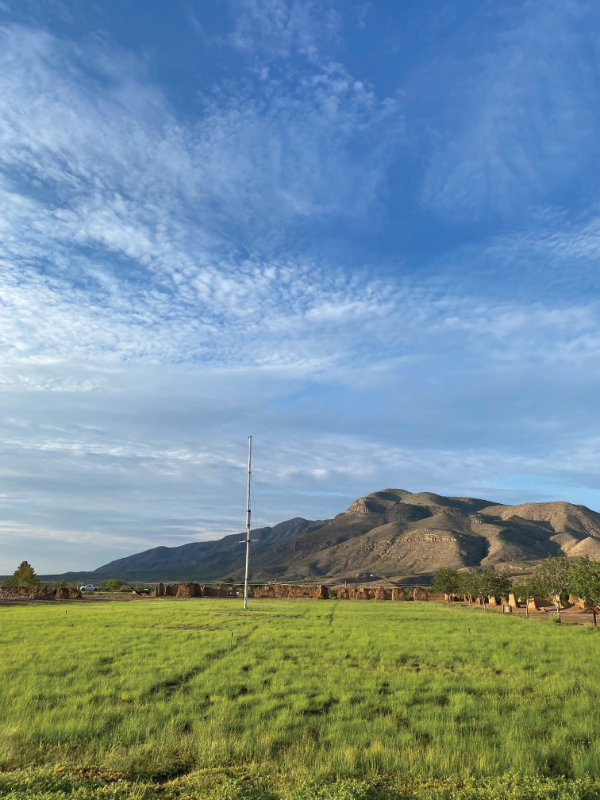
The parade grounds, pictured here in lush monsoon green, ringed by adobe ruins,
are a focal point of a visit to Fort Selden.
The parade grounds, pictured here in lush monsoon green, ringed by adobe ruins, are a focal point of a visit to Fort Selden.

The Rio Grande has changed due to human intervention and shifts in the amount of water available in this arid landscape, but it still brackets the property and provides for the many pecan farms that now encircle the fort. Choosing the site of a former Mogollon encampment near the river meant the fort would always be at the center for growth and human habitation. The town of Radium Springs has added depth to the narrative of how water affects the people of the Mesilla Valley and an added layer of support for Fort Selden, its staff, and the role it plays in the community.

As we begin the second half of a century of state oversight, we dedicate ourselves to continue as the fort has—changing with the times but retaining the foundations and structures that have come before us. We expand our narratives through interpretation and programming based on the historic evidence that the past fifty years has done so much to provide for us. We look forward to new adventures and explorations and even our hundredth anniversary, but always with an eye to preserving and sharing our history.

Come celebrate with us on July 1 as we honor those who have made the past fifty years possible and the next fifty years more probable.

Fort Selden Historic Site is located in Radium Springs, New Mexico, 13 miles north of Las Cruces. For more information about the site and its anniversary celebration on July 1, 2023, please visit nmhistoricsites.org/fort-selden.

A passion for museums and history brought anthropologist and folklorist Dr. Rhonda Dass to New Mexico. She is the southern regional manager for the New Mexico Historic Sites, a trained textile conservator, and baker of incredible scones.

Dr. Rhonda Dass (opens in a new tab) is a former southern regional manager for New Mexico Historic Sites, a trained textile conservator, and baker of incredible scones.

Sharing Our Identity and Keeping Warm

By Dr. Nadia Jackinsky-Sethi

Every time I see a sea otter pelt, I instinctively want to run my hands across it. The sea otter is arguably the warmest fur-bearing animal on our planet, one used historically in Alaskan communities to keep us warm. In the North, we are accustomed to the cold, the wind, the rain, the darkness. We know that to be comfortable and safe in this environment we need to dress for the weather and be prepared. Today we layer wool, Gore-Tex, and fleece to go out in the elements. We also sometimes rely on customary clothing such as fur-trimmed parkas to keep our bodies protected. Animals such as sea otter, seal, arctic fox, wolverine, beaver, reindeer, muskrat, mink, caribou, ground squirrel, eider duck, and many others share their skins so that we may be warm.

Ghhúunayúkata/To Keep Them Warm: The Alaska Native Parka, on view at the Museum of International Folk Art through April 7, 2024, elucidates and illustrates the ways in which parkas express individuality, group dynamics, and artistic aesthetics. The exhibition examines the continuum of Alaska Native parka-making with examples from the Yup’ik, Iñupiaq, Unangaxˆ,        Dena’ina, Koyukon, and St. Lawrence Island Yupik cultures. Also included are Indigenous drawings, dolls, and parka-making tools, as well as historic photographs, to illustrate the contexts in which parkas are worn.

Parkas have been worn in the North for thousands of years. They can serve as symbols of identity and sovereignty; when wearing one, a person is immediately expressing a connection to this region. Historically, people could tell where someone was from based on the design of the parka and the materials used. In some communities, parka-makers use qupak, a decorative pattern used on trim work, to express family or community connections. Other design elements such as tassels, parka cut, and hood design communicate information about specific regional affiliations, gender, and status. When attending events such as the annual Alaska Federation of Natives Convention, a visitor can see the variety of parka designs and the cultural pride that accompanies wearing them.

Esther Norton (Iñupiaq), Qusru aq (parka), 1985, Qikiqta ruk (Kotzebue), Alaska. Muskrat belly, calfskin, wolverine fur, beaver fur, wolf fur, cloth,
beads. 57 ½ × 39 in. Anchorage Museum Collection, 1986.6.1. Photograph by Chris Arend.
Esther Norton (Iñupiaq), Qusru aq (parka), 1985, Qikiqta ruk (Kotzebue), Alaska. Muskrat belly, calfskin, wolverine fur, beaver fur, wolf fur, cloth, beads. 57 ½ × 39 in. Anchorage Museum Collection, 1986.6.1. Photograph by Chris Arend.

Parkas can stand as symbols of resourcefulness. Although today the materials used to make a parka are often purchased, historically every part of the parka came from materials derived from nature. Iñupiaq designer Jackie Qatalina Schaeffer has shared that Alaska Native clothing “takes nature into art and is art inspired by nature.” This is a sentiment that has been expressed in Alaskan clothing for centuries, as garment-makers have always used byproducts from subsistence to create clothing to keep our families warm, but also to express who we are and where we come from through designs that reference the lands, waters, plants, and animals around us. In this way, a parka is linked to environmental knowledge and aesthetics that have been shared and passed on from generation to generation.

Making a parka is an act of love, an embodied practice that uses hands and heart. It is a process that requires care, patience, and time to make stitches even and straight. It requires specialized techniques such as fur-sewing, waterproof stitching, and pattern-making—even today, many parka-makers use individualized patterns to make their garments, sometimes using their hands as a measuring tool. It requires intimate knowledge of the materials that are used; for example, parka-makers know that the fur from a wolverine will not form ice crystals, and has thus long been the preferred material to trim hoods. They know that sinew stitches swell when moist, and so this technique remains in practice when designing garments that will be used in wet environments.

Jenny Irene Miller, Bobbie Gomez sewing,
Qat ut: Northwest Arctic Trade Fair, Qikiqta ruk (Kotzebue), 2019.
Jenny Irene Miller, Bobbie Gomez sewing, Qat ut: Northwest Arctic Trade Fair, Qikiqta ruk (Kotzebue), 2019.

Today, parka-makers incorporate contemporary materials in parkas such as velveteen, corduroy, and synthetic fabric. There is an interest in reviving some of the parka types that are no longer as commonly made, such as those made from bird skins, gut skins, fish skins, and squirrel skins.

In February 2023, I had a chance to visit with Merna Wharton (Yup’ik), who is one of a handful of women who still make parkas using ground squirrel hides. This type of parka was once common in Alutiiq/Sugpiaq and Yup’ik communities. “I make parkas to keep our traditions going,” Wharton said. “It’s fun to look at old models and to create traditional patterns based on them. Squirrel skins are my favorite to work with because the fur is short, it’s light, and it feels good to work with.” For the past few years, Wharton has been working with her mother to experiment with tanning squirrels and sewing the furs into parkas. She explained that the process is very slow. A parka made from ground squirrels requires about 100 hides, each of which needs to be cleaned, stretched, and dried before it is cut to fit a pattern and sewn together. The amount of time it takes to make a squirrel parka may be a factor as to why there are so few squirrel skin parka-makers today. Wharton hopes to be able to help others learn this craft, while also continuing to learn from historical parka patterns that she can access within museums and from family collections.

Iñupiaq or Yup’ik ancestor artist, Qusru aq (parka), ca. 1960. Reindeer fur, wolf fur, beaver fur, calfskin, cotton, cotton thread. 56 ¼ × 45 in.
Anchorage Museum Collection, gift of Fred and Sara Machetanz, 1991.56.5. Photograph by Chris Arend.
Iñupiaq or Yup’ik ancestor artist, Qusru aq (parka), ca. 1960. Reindeer fur, wolf fur, beaver fur, calfskin, cotton, cotton thread. 56 ¼ × 45 in. Anchorage Museum Collection, gift of Fred and Sara Machetanz, 1991.56.5. Photograph by Chris Arend.

Historically, gut parkas were common throughout coastal Alaska as a windproof and waterproof garment. Today a few communities practice this craft using intestines from various sea mammals such as seal, sea lion, and beluga, as well as from bears. Some communities are reintroducing the craft through workshops. For example, in 2021, June Pardue (Alutiiq/Sugpiaq) led a two-week bear gut parka making project in Cordova, Alaska. Pardue explained that making the parka requires knowledge about parka pattern-making, as well as knowing how to prepare the intestines and how to use the sewing threads, which are sometimes made from grass or sinew. She shared that “building this gut parka was a historical event. I had never made one before, but as a child my mother sat me down and showed me how to sew gut and where to put the grass to make a waterproof stitch. When I was asked by [Chugachmiut, a nonprofit tribal consortium based in Anchorage,] if I would help make one, my mother’s hands flashed through my mind and I knew I could do it. Our ancestral memories are there; it’s in our DNA. The ladies I worked with in Cordova were yearning to be Sugpiaq gut-sewers, and it just came naturally.”

Joel Isaak (Dena’ina), Halibut Skin Moto Jacket, 2013, Soldotna, Alaska. Halibut skin, linen. Modeled by the artist. Photo © Brian Adams.

While historically bird skin parkas were made in communities from Kodiak Island and as far north as St. Lawrence Island, today only a few women are making them on St. Lawrence Island and on Nelson Island. The process to make a bird skin parka is time-consuming; it requires harvesting the birds, sometimes using bolas or nets, then tanning each skin and carefully sewing them together. Historically, bird skin parkas were made from the skins of crested auklets, cormorants, eiders, longtail ducks, puffin, and other birds. Parka-makers today experiment with the process of harvesting, tanning, and sewing these again today as a way to preserve traditional knowledge and values. Lydia Apatiki, who is from St. Lawrence Island, has written a bird skin parka-sewing curriculum to document the process so that others will be able to follow in her footsteps. In Tooksook Bay, anthropologist Ann Fienup-Riordan recently worked with local Elder Albertina Dull to document the process of making a bird skin parka using long-tailed duck and king eider skins. The efforts of these women may inspire others to turn to bird skins when starting new parka projects.

Left to right: St. Lawrence Island Yupik ancestor artist, Sanightaaq (ceremonial seal gut parka) (detail), early twentieth century, Sivuqaq (St. Lawrence Island), Alaska. Seal gut, auklet crests, seal fur, cormorant feathers, cotton thread, red ocher. 43 Å~ 54 in. Museum of International Folk Art, gift of Lloyd E. Cotsen, Neutrogena Corp., A.1995.93.986. Photograph by Addison Doty.
Middle: I.upiaq ancestor artist, Qusru aq (woman’s “fancy parka”) (detail), late nineteenth–early twentieth century. Arctic ground squirrel fur, wolf or wolverine fur, hide, wool felt. 59 Å~ 49 in. Museum of International Folk Art, IFAF Collection, gift of Louis Criss, FA.1974.42.1. Photograph by Addison Doty.
Right: I.upiaq or Yup’ik ancestral artist, Atigi or Atkuk (ring seal parka) (detail), 1947-48, Kuuyuk (Koyuk), Alaska. Ring seal fur, wolverine, calfskin, beaver fur, brass, cotton cloth. 49 3 ⁄16 Å~ 19 11⁄16 Å~ 1 15⁄16 in. Anchorage Museum Collection, gift of Neva and Walter Meyers, 2001.14.17. Photograph by Chris Arend.

With fish skins, a handful of people are using this material to construct parkas and other clothing examples, including Marlene Nielsen from Kokhanok and Joel Isaak from Kasilof. Many more makers use the skins for jewelry, doll-making, and boot and bag construction. Both Isaak and Nielsen have taught others their process for tanning the skins, and fish skin-processing workshops are becoming more common throughout Alaska. Like gut skins, fish skins are waterproof and strong, and they derive from an animal that is abundant and harvested in large numbers in Alaska. For artists like Nielsen and Isaak, using this material to construct clothing is a way of connecting with heritage. It is also a way of thinking about how to be resourceful with the animals that we continue to rely on for subsistence.

No matter what material is used, the deep knowledge that is needed to design and construct a parka makes it a meaning-rich garment that holds and passes on history and place-based connections. As Yup’ik scholar Marie Meade writes, a “parka itself will disappear from use and age, but the design will survive. … The idea is your paitaq, your heirloom, the inheritance you can touch, feel, and see. The parka will eventually fall apart, but the idea will never fall apart. It will be sustained. The recording of history, important information, stories, and family history will always be there.” 

Dr. Nadia Jackinsky-Sethi is an Alutiiq art historian based in Kachemak Bay in Alaska. She is a program director at The CIRI Foundation, where she oversees the Journey to What Matters: Increased Alaska Native Art & Culture Program, which supports Alaska Native arts revitalization projects throughout Alaska. She is also a museum consultant and occasional instructor of Alaska Native art history.

Addison Doty is a photographer based in Santa Fe, New Mexico. His images of of artwork are featured in award-winning books, catalogs, periodicals, and exhibits worldwide. For more than twenty-five years, Addison has supported galleries, collectors, artists, and museums.

Nadia Jackinsky-Sethi (opens in a new tab) is an Alutiiq art historian based in Kachemak Bay in Alaska. She is a program director at The CIRI Foundation, where she oversees the Journey to What Matters: Increased Alaska Native Art & Culture Program, which supports Alaska Native arts revitalization projects throughout Alaska. She is also a museum consultant and occasional instructor of Alaska Native art history.

Fragments of the Story: Who was Mary Greene Blumenschein?

By Marcy Botwick

There are many stories waiting to be discovered at the New Mexico History Museum, particularly those tucked safely away in the archives of the Fray Angélico Chávez History Library. The FACHL houses a variety of materials, from old territorial maps to collections of scientists and writers who lived in New Mexico. One relatively unexplored collection is that of artist Mary Greene Blumenschein, who was married to Taos Society of Artists painter Ernest L. Blumenschein. Both he and Mary helped Taos build its reputation as an art colony, a legacy that continues to this day.

Mary Blumenschein passport page; note Helen’s crossed-out name.
Newsprint, circa April 1902, describing Mary’s second-place prize at the 1902 Société
des Artistes Français Salon. Ernest Blumenschein. All courtesy Blumenschein Family
Collection, Fray Angélico Chávez History Library, New Mexico History Museum. Mary
and Helen Greene Blumenschein camping near Kewa Pueblo (Santo Domingo Pueblo),
1919. Courtesy the Helen Blumenschein Collection, Palace of the Governors Photo
Archives (NMHM/DCA), neg. no. PAAC008.002.
Ernest Blumenschein. Courtesy Blumenschein Family Collection, Fray Angélico Chávez History Library, New Mexico History Museum.

Mary Greene Blumenschein was born in 1869 and lived until 1958. Within her lifetime she witnessed powerful social and technological changes, including the invention of the telephone and car, the advent of the railway and road systems, two World Wars, and rapidly changing roles and expectations for women and men. She lived in Brooklyn, New York City, Paris, and Taos at different times in her life. Her life story and experiences as a working mother, wife, and partner reflect dynamic historical shifts that are relevant and familiar to women and families today.

As evident in items from the FACHL archives, Mary negotiated changing expectations of women over the course of her lifetime. Some changes were based on when she lived, and others on where she lived. In some instances, Mary was at the forefront of new opportunities for women, and in other cases she chose a more traditional path.

I pieced together Mary’s story during visits to FACHL, where I learned firsthand that reading an archive is a bit like excavating and sifting through an archeological dig site. The individual items look like just so much old stuff when you first uncover them. However, when these small shards and broken bits are puzzled back together and fit with additional context, they reveal new ways to understand historical experiences and stories.

Mary and Helen Greene Blumenschein camping near Kewa Pueblo (Santo Domingo Pueblo), 1919. Courtesy the Helen Blumenschein Collection, Palace of the Governors Photo Archives (NMHM/DCA), neg. no. PAAC008.002.

I was able to dig deeply into Mary Greene Blumenschein’s archive thanks to the Steve Wimmer Southwest History Research Grant. This fund was established to honor the long-time head concierge at La Fonda hotel, who was a passionate advocate and enthusiast of Santa Fe and New Mexico. The grant was begun in 2021 with Wimmer’s bequest and is still growing through additional fundraising and donations. It provides graduate students or independent researchers with access to the New Mexico History Museum collections to study a person, event, or aspect of the state’s multi-faceted history. It also provides funding and hotel stays at the historic La Fonda so that scholars who do not live in-state can stay during their studies. I would like to thank the museum for this invaluable support in furthering my research.

Mary Shepard Greene Blumenschein kept a tattered piece of newsprint describing her second-place prize at the 1902 Société des Artistes Français Salon for her entire life, though she moved often and did not retain many boxes of memorabilia (see page 62). The photograph shows Mary in front of her prize-winning painting, Une Petite Histoire, in the Paris apartment she shared with her mother Isabel. The article text notes her groundbreaking achievement as one of only a few American women to have won a Salon award at that time, crediting “the indomitable will and courage with which she has steadfastly pursued her aim to become a great painter.” Mary was indeed only the third American woman to win at this most important Salon and was, therefore, in select company.

Mary’s father died when she was 12, leaving her mother to raise her as a single parent—but he left a large estate that allowed Isabel and Mary to continue their lives comfortably. A rubbing of his headstone is included in the family archive. Courtesy Blumenschein Family Collection, Fray Angélico Chávez History Library, New Mexico History Museum.

Mary’s parents, Rufus Jr. and Isabel Shepard Greene, were members of Brooklyn’s growing upper class during the Gilded Age, or late Victorian era. She was their only child, born on September 26, 1869, to a home on Van Buren Street. By the time she was in high school, her family had moved to a townhouse at 273 Ryerson Street, a more fashionable section of Brooklyn also called its “Gold Coast.” According to census records and papers in the FACHL archives, her grandfather Rufus Greene was a wealthy importer with a private shipping company. The company sailed barks and schooners to Mozambique, Madagascar, and other East African locations to trade gunpowder for hides, ebony, tortoise shell, ivory, gum copal, beeswax, and red peppers. Mary’s father was part of the family business; he listed his occupation as “African Goods” in the 1875 New York State Census. Unfortunately, Mary’s father died when she was 12, leaving her mother to raise her as a single parent.

A handmade 1889 Class Day Book from Adelphi Academy, where Mary attended high school, is direct evidence of her time at the school and pairs with family anecdotes. Most of Adelphi Academy’s early archives were destroyed by a flood and cannot be consulted to confirm her experiences there. But this small document tells us more than just where Mary went to school; it shows that she was educated at a progressive institution. Adelphi was one of the only coeducational high schools in the New York metropolitan area at a time when most schools were for boys or men only. Adelphi was influenced and supported by forward-thinking leaders including industrialist Charles Pratt, orator Henry Ward Beecher, and publisher Horace Greeley.

Handmade 1889 Class Day Book
from Adelphi Academy, where Mary attended
high school. Courtesy Blumenschein Family
Collection, Fray Angélico Chávez History
Library, New Mexico History Museum.
Handmade 1889 Class Day Book from Adelphi Academy, where Mary attended high school. Courtesy Blumenschein Family Collection, Fray Angélico Chávez History Library, New Mexico History Museum.

Rufus Jr. left a large estate that allowed Isabel and Mary to continue their lives comfortably. According to probate records, Isabel inherited directly, and retained full guardianship of Mary. Isabel was therefore able to manage the family finances without intervention by a male executor, a new recognition of women’s intellect and skill made possible by the passage of the Women’s Property Act in 1848, thirty-three years earlier. Prior to this bill, a man, oftentimes a relative, would have been named executor and Isabel’s access to the inheritance would have been controlled by this outside mediator. Isabel and Mary retained their financial agency and independence because the laws had changed. These same statutes were an important step towards all women’s legal independence and eventually women’s suffrage. The necessity for its adoption and the subsequent fight for women’s right to vote are visceral reminders that women in the late 1800s were not treated as or considered full citizens.

Helen and Mary Greene Blumenschein at San Francisco de Asís
Mission Church, Ranchos de Taos, New Mexico, 1913. Courtesy the Helen
Blumenschein Collection, Palace of the Governors Photo Archives (NMHM/
DCA), neg. no. PAAC008.001.
Helen and Mary Greene Blumenschein at San Francisco de Asís Mission Church, Ranchos de Taos, New Mexico, 1913. Courtesy the Helen Blumenschein Collection, Palace of the Governors Photo Archives (NMHM/ DCA), neg. no. PAAC008.001.

Mary and Isabel were a united mother-daughter team until Isabel’s death in 1917. After Rufus’s death in 1881, Isabel remained unpartnered, and her daughter became the sole focus of her attention. Mary lived with her mother until she married Ernest Blumenschein at the age of 30, and Isabel was an actively involved grandmother to Mary’s daughter Helen. The studio photograph of Isabel and Helen on page 66 was taken the year before Isabel died. In it, Isabel’s clothing clearly marks her identification with the Victorian era and its ideas that women were to always be modest, refined, and chaste.

Victorians felt that men and women were designed as companions, and that their behaviors and attributes were meant to counterbalance each other. Women were responsible for the home and domestic life, and men for roles outside the home, including business and politics. Women were meant to act as taming elements to men’s more competitive nature. Mary was raised in this era and understood some of her role as a woman in its terms. However, social dynamics were shifting by the end of the nineteenth century as a result of laws like the Women’s Property Act in 1848 and the fight for women’s suffrage. Though Isabel taught Mary to be reserved and ladylike, she also showed, by her own example, that women could manage as heads of households coordinating both the finances and the parenting alone.

Mary and Isabel moved to Paris in 1892 so that Mary could continue to study painting. Eleven years later, in 1903, Mary met her husband Ernest Blumenschein at the American Art Association of Paris. Between 1890 and 1922, this social and professional organization was the gathering place for American expatriate artists, one that art historian Emily Burns describes as the “nexus of U.S. art practice in France, a place where hundreds of American artists met and exhibited.”

Stores around the main square at Taos, New Mexico, have covered sidewalks. Courtesy Library of Congress LC-DIG-fsa-8a29229.

Art, their identities as artists, and their friendships with other artists remained important to both Mary and Ernest throughout their lives. Their wedding on June 29, 1905 reflected these relationships. A newspaper clipping in the archive describes it as “one of the prettiest weddings the American artist colony has recently seen,” adding a list of guests that highlighted artists Raphaël Collin, Elizabeth Nourse, Susan Watkins, and Frederick Carl Frieseke.

After they married, common work continued to unite Mary and Ernest. Letters and photos show that for the first thirteen years of their marriage, they worked side by side in shared studios both in Paris and New York. From 1905 to 1909, they stayed in France, practicing their painting and advancing their careers abroad. In 1909, they moved to New York shortly before their daughter Helen was born on November 21. In New York, they maintained their affiliation with other artists as active members of the National Academy of Design, a prestigious organization where members could participate in exhibits and compete for prizes. Ernest also helped to found another renowned artist organization in 1915, the Taos Society of Artists.

Portrait of Helen Greene
Blumenschein and Grandma Shepard
Greene, Brooklyn, New York, 1916.
Photograph by Wynn and Mersereau.
Courtesy the Helen Blumenschein
Collection, Palace of the Governors
Photo Archives (NMHM/DCA),
neg. no. PAAC008.004.
Portrait of Helen Greene Blumenschein and Grandma Shepard Greene, Brooklyn, New York, 1916. Photograph by Wynn and Mersereau. Courtesy the Helen Blumenschein Collection, Palace of the Governors Photo Archives (NMHM/DCA), neg. no. PAAC008.004.

Their marriage license (page 67) is fairly standard with the exception of the question of Mary’s “Profession,” which has the word “Sans” handwritten before it. The penmanship on the form does not match either Mary or Ernest’s hand, so it was likely written by the clerk in the civil office where they were issued the license. Did the clerk assume Mary was not working and it was not corrected? Why would Ernest or Mary have left out her profession as an artist? Enough women worked outside the home that the form had a specified place for their profession. Unfortunately, it is hard to decipher now why Mary’s work is not credited to her on this license. Helen also noticed this discrepancy and clearly questioned it as she sorted through her parents’ papers. Note the short sentence in pencil in the line where Mary’s profession should have been: “ARTIST why SANS?? HGB 1972.”

Mary and Helen took their first trip to Taos, New Mexico, in 1913. They set off on the long journey from Brooklyn to visit Ernest, who was spending his fourth consecutive summer there painting and sketching. There were a few possible train lines to the Southwest then, all of them long and difficult, and none went to Taos directly. The steep Rio Grande Gorge and mountains made it too difficult to lay track and cut the route. Research has not yet revealed which train line Mary and Helen took in 1913, but it is certain that it took several days on the train. Other photographs in the archives show that they finished the trip by stagecoach. This took another day of travelling rough dirt roads through canyons and passes before arriving in the front range of the Sangre de Cristo mountains.

By 1913, Ernest Blumenschein was already deeply attached to the town of Taos; he had dreamed of moving there since his first visit in 1898 with fellow artist Burt Phillips. Blumenschein wished to create an Anglo artist colony in the Native and Hispano town. He wrote of his initial life-altering experiences there in a May 1926 article in El Palacio titled “Origin of the Taos Art Colony,” commenting, “No artists were here then. No artists were in Santa Fe. It was 1898. And in that year, we two rovers who had met in Paris at the Académie Julien, decided that we had found what we had traveled long to reach.” Blumenschein described his “first powerful impressions” of “the vastness and overwhelming beauty of the skies; terrible drama of the storms; peace of night—all in beauty of color, vigorous form, everchanging light.”

As much as Ernest loved New Mexico, Mary remained unsure, and the 1913 trip was ultimately a failure. Mary and Helen stayed in Taos for only one week. The family story, as told in Helen’s autobiographical book Recuerdos: Early Days of the Blumenschein Family, is that her mother was concerned about a diphtheria outbreak, was unhappy with lodging in a boarding house, and was worried that they had little access to fresh milk or vegetables. I would suggest that Mary’s stated concerns masked a more complicated response, which can be seen in the photograph on page 65.

Looking at the picture, one would never guess that Mary and Helen had recently taken a long difficult trip to a remote place. Mary is immaculately, if inappropriately, dressed in a beautiful white suit, including a large feathered hat. Her clothing seems an odd choice to visit the dust and heat of the mountains and high desert. 

Mary had no doubt heard much about Taos from Ernest, but this picture reveals what she had not heard or understood about the remoteness of the town. Ernest may have relayed the beauty of the place, but perhaps not its cultural distance from the life to which she was accustomed in large cities like Brooklyn and Paris. Few letters or documents have yet been found to reveal their feelings about the 1913 trip; however, two subsequent events provide strong indications of her complete discomfort. First, Mary was willing to undertake the very long, difficult journey back to New York City only one week after arriving for what was expected to be a longer stay. Second, though Ernest spent more time in Taos each year after 1913, Mary and Helen did not visit again until the summer of 1919, six years later. 

Mary and Ernest’s marriage certificate from June 29, 1905. Courtesy
Blumenschein Family Collection, Fray Angélico Chávez History Library, New
Mexico History Museum.
Mary and Ernest’s marriage certificate from June 29, 1905. Courtesy Blumenschein Family Collection, Fray Angélico Chávez History Library, New Mexico History Museum.

What was Mary doing with her time in New York and Brooklyn in the years between 1910 and 1919? She was raising Helen with Ernest, or as a single parent during his months in Taos, and she was working with increasing popularity as an illustrator and painter. These ten years, when Mary was between 40 and 50 years old, were her most financially successful as a working artist.

In 1914, the year after the failed trip to Taos, Mary illustrated an internationally best-selling book: Bambi by Marjorie Benton Cooke. The novel was first released as a serial in American Magazine between April and October before being published by Doubleday, Page & Co. later that same year. Mary created thirteen illustrations for the magazine version, nine of which were reprinted in the first edition of the book. Bambi was translated into Danish, Swedish, Finnish, and Spanish, and later editions and translations contain many of those pictures.

The brochure created to promote the book shows a bookstore window display featuring Mary’s illustrations of the main characters, Bambi and Jarvis. The brochure names Mary as the illustrator and describes her work as “some of the best color drawings we have every had for a story. Everyone is delighted with them.” Though couched in vague complementary advertising language, Mary’s inclusion in this brochure highlights the important role of the illustrator in selling popular literature at that time.

Image from a brochure created to promote the book Bambi features Mary’s
illustrations of the main characters, Bambi and Jarvis. Courtesy Blumenschein Family
Collection, Fray Angélico Chávez History Library, New Mexico History Museum.
Image from a brochure created to promote the book Bambi features Mary’s illustrations of the main characters, Bambi and Jarvis. Courtesy Blumenschein Family Collection, Fray Angélico Chávez History Library, New Mexico History Museum.

Marjorie Benton Cooke’s written works and Mary’s artwork reveal a similar understanding of women’s place in the professional world in the early twentieth century. Benton Cooke, like Mary, was a well-known cultural figure during her prime whose work is not studied or interpreted now. From 1903 until her untimely death in 1920, Benton Cooke wrote twelve novels, four plays, and one book of poetry. Four of her works were made into silent films. She was also a popular speaker who performed monologues on women’s right to vote and wrote articles for the National American Women’s Suffrage Association. Her stories, including Bambi, were popular for their light and humorous tone and for the way they examined relationships between men and women.

While Benton Cooke was an avowed first-wave feminist, feminist ideals in the early twentieth century were fundamentally different than women’s rights movements later in the century. Both Benton Cooke and Mary understood themselves as “New Woman,” a phrase widely used then in magazines, movies, books, and other locations of popular culture. It adapted Victorian feminine ideals of purity, gentleness, and domesticity by adding expectations of professional and/or academic accomplishment to them. Mary spells out her understanding of gendered standards in a May 1915 interview for Every Week Magazine:

Perhaps it is true, as many people assert, that women’s work is less daring and strong than men’s; but at the same time it is certainly more personal, spirited, and decorative. I believe there is such a thing as the woman’s point of view. Women see different things than men, and they see them differently. Women are not exactly more sentimental; but they are sentimental at different moments and for different reasons.

Being “spirited,” “decorative,” and “sentimental” were all considered attractive female traits, while men were valued for being “daring and strong.” Similarly, Benton Cooke’s heroine Bambi was praised by contemporary critic Grant M. Overton for “gayety, courage, tenderness, wit.” Both Mary and Benton Cooke understood that their skills and accomplishments were meant to remain within a woman’s sphere. Mary finishes the interview with a statement that defines her artistic scope as focused on the female: “Personally, I love to paint young and pretty girls: not the merely ‘pretty girls,’ but the ideal American type of young womanhood, compounded of audacity, intelligence, and charm.”

Mary and Helen finally returned to Taos in 1919, when Mary was 50 and Helen was 10. A series of letters between Ernest and Mary document the planning and aftermath of this trip. The letters, held in the Smithsonian Archives of American Art, also provide insight into the Blumenscheins’ relationship fourteen years into their marriage. The letters read like today’s emails and text messages; they are personal and intimate. Dramatic world events, like the 1918 flu pandemic and World War I, are rarely mentioned, though those events clearly formed an important backdrop against which the Blumenscheins’ lives unfolded. A letter from Mary to Ernest might begin with news of Helen’s grades, then discuss visits to the National Academy of Design, and then finally consider practical issues of trip planning and finances. The two often said how they missed each other’s company, and they addressed each other as “Best Beloved” or “Ma Cherie.” Some communications were breezy and light in tone while others, particularly the negotiations about the 1919 summer trip, were clearly more fraught with hopes and expectations. 

Since 1910, Ernest had spent his summers in Taos. In 1919, he moved to Albuquerque in January to spend the rest of the winter painting in the Southwest. He lived at the Alvarado Hotel, writing to Mary that it was “a corking good hotel run by Harvey—and the meals are A1.” In March, he bought the family’s first car so that they could go camping that upcoming summer. Ernest’s excitement about both the car and trip is palpable in a March 3 letter where he writes, “I have bought a Ford!! and feel tremendously important,” adding, “I will begin to learn to handle same, in a day or two—and by May 1st, when I hope you will join me, I should be a pretty fair driver.” He then explains in detail what clothing Mary will need for camping and life in Taos. Given Mary’s priorities and choices in 1913, these instructions can be seen as important advice.

The camping outfit [for the car]—tent, mattresses, cooking utensils will probably cost another $50.00 but Albuquerque can supply everything we need. Get your khaki colored riding suit in B’klyn. You can get a ready made one and have it altered to fit you. Get a good warm sweater apiece for nights are cool even in August. … Don’t bring too many changes of clothes, except for Taos, when you may care to dress. For while travelling in the Ford we’ll not change our outer garments except on Sundays!

View of the Mission Church of Ranchos de Taos, 1934. Photograph by
James M. Slack. Courtesy Library of Congress HABS NM,28-RANTA,1--2.
View of the Mission Church of Ranchos de Taos, 1934. Photograph by James M. Slack. Courtesy Library of Congress HABS NM,28-RANTA,1–2.

The photograph on page 63 shows that Mary followed his advice for this trip. She is wearing the recommended “khaki colored riding suit” with a small straw boating hat for sun protection, rather than the formal white suit and large hat of 1913. Mary smiles sideways at the camera looking bemused, hand on her hip as if daring the photographer, presumably Ernest, to take that casual snapshot of her dressed in pants. Though she never did learn to enjoy the rigors of camping and the outdoors, during the summer of 1919, Mary did learn to love life in the town of Taos.

In August 1919, Ernest and Helen went on a second camping trip while Mary stayed in town. This father-daughter excursion was the first in a lifelong series of summer camping and sketching expeditions. Between 1922 and 1929, Mary and Helen spent their winters in Brooklyn where Helen attended school but when they came back to Taos in spring, Ernest and Helen would take off for the mountains and streams. Even into Helen’s adulthood, she and Ernest would spend time together camping, fishing, sketching, and adventuring in the outdoors while Mary rested in their home in Taos. Mary sent a note with food and other supplies to Ernest and Helen’s campsite on August 2, addressing them as “Ernest and Pucker Doodle” and describing how much she was enjoying her time alone. She wrote, “I am going to the hotel for my meals and am having a quiet and restful day. … I feel quite like an unmarried lady without husband and child.” In Taos, she was able to relax and find respite from her busy city life. The small town became a place where she could, as the family referred to it, “hibernate.”

Mary faced family and career complications after Helen graduated from the Packer Collegiate School for Girls in 1928. Rather than go to college, Helen chose to follow in the footsteps of her parents and study art in Paris. Mary chose to act as her daughter’s escort and chaperone in Europe, as had her own mother Isabel in 1892. Mary’s passport confirms details from their time in Europe and shows how male-centered expectations influenced standard practices in the passport process before 1930.

Mary’s daughter Helen was still considered a minor in 1928, and therefore did not need a passport of her own. The cross-hatching through Helen’s image on page four reflect changes to Mary’s passport as a result of Helen turning 19. Courtesy Blumenschein Family Collection, Fray Angélico Chávez History Library, New Mexico History Museum.

Stamps in the passport show that Mary received the original visa to live in Paris on December 6, 1928, for both herself and her daughter. Helen was still considered a minor in 1928, and therefore did not need a passport of her own. In the 1920s, after WWI and as a result of pressures from the League of Nations, passport processes were in flux as different entities sought to establish international standards for identity papers. The seal impressed into the bottom of Mary and Helen’s picture was indeed a new security requirement begun in 1928. The cross-hatching through Helen’s name on page two (see page 62) and her image on page four (see right) reflect changes to Mary’s passport as a result of Helen turning 19. Marks in the passport on page six show it was officially amended to reflect Helen’s aged-out status on August 24, 1929.

According to Craig Robertson, author of The Passport in America, joint passports for married couples were standard practice before WWI. Before 1920, children, and even servants, were also considered part of a man’s household and did not need their own documents when travelling as a group. This practice maintained the false convention that women did not travel alone without a husband or other suitable male relative. Post-WWI, passports were less restrictive but still demonstrated Victorian assumptions of men’s primary role as the public representative of the family.

Mary’s passport from 1928 shows that a husband could sign on behalf of his wife, implying that a married woman was still considered part of a male household rather than an individual when travelling with her husband. That passports were still family-based for minor children is also shown in the amendments to Mary’s document. Until 1925, married women were also required to use their husband’s surname on their passport even if they did not do so in everyday life. Feminist activists including journalist Ruth Hale, anthropologist Margaret Mead, and aviator Amelia Earhart objected to this practice, creating a national debate about the legal implications of women’s surnames. By 1925, married women had gained the right to use their maiden names, though official practice required that it be followed by the phrase “wife of.”

Mary avoided that dilemma, as she had used both surnames—Greene Blumenschein— since her marriage to Ernest in 1905. She signed paintings created after she was married with either her full name or MGB. From our perspective, this choice may seem small, but in 1905, it was a departure and sign of how Mary felt about her career and status as a working person. In contrast to the marriage license and even though her career was diminished by 1928, Mary noted her occupation as “Artist” in the passport—a signal that she still considered herself a professional artist.

Mary and Helen lived in Paris from December 1929 until April 1931. Ernest visited them for a trip in 1930 when they travelled to Germany to meet extended members of his family. Mary had virtually stopped painting between 1920 and 1929, focusing instead on supporting Helen in school and learning to make jewelry. Mary continued to focus on Helen in Paris, ensuring that her daughter learned art in the Beaux Arts tradition. Helen studied at the Académie Julien, where her father had studied in the late 1800s. While abroad, Mary took up sketching and painting again, inspired by her daughter’s lessons.

In 1931, Mary finished a large project titled Daphne and Apollo,
measuring approximately six feet wide by four feet tall. The painting was cut
at some point, and the right side of it, featuring Daphne, is now framed and
hung at Taos’s E.L. Blumenschein House and Museum. This image, found
during a December 2022 visit to the FACHL archive, is a color sketch of
the finished painting, and is the first published that shows the entire picture.
In 1931, Mary finished a large project titled Daphne and Apollo, measuring approximately six feet wide by four feet tall. The painting was cut at some point, and the right side of it, featuring Daphne, is now framed and hung at Taos’s E.L. Blumenschein House and Museum. This image, found during a December 2022 visit to the FACHL archive, is a color sketch of the finished painting, and is the first published that shows the entire picture.

In 1931, Mary finished a large project titled Daphne and Apollo that is a stark departure in style from her earlier illustrations and paintings. In scale, it is one of her largest and most ambitious works, measuring approximately six feet wide by four feet tall. The painting was cut at some point, and the right side of it, featuring Daphne, is now framed and hung at Taos’s E.L. Blumenschein House and Museum. Why or when the painting was cut and what happened to its other section is still being researched. The image above, found during a December 2022 visit to the FACHL archive, is the first published that shows the entire picture.

From 1922 to 1929, Mary learned to make jewelry and studied gold and silversmithing at the Pratt Institute. This work changed her painting style. Tracings and pictures show that her jewelry was influenced by the Art Deco movement, Egyptian archeological finds, and Native American design. In this painting, she translated these styles to canvas depicting bold, simplified, and flattened shapes. The subject matter for the painting was not new to Mary but was a return to the myths and fairy tales that had long held her interest. The painting shows the moment in the Greek story of the river nymph Daphne when she is turned into a laurel tree by her father to avoid Apollo’s amorous pursuit.

Mary returned again to mythic stories in several works painted after 1931. In 1932 she painted Acoma Legend, which also displays a flattened mural style. It is based on a Pueblo story of how the courtship and marriage of Cochin, a beautiful Acoma woman, caused winter and summer, two opposing forces of nature, to form the truce that we now know as the seasons. (Acoma Legend is owned by the Albuquerque Museum and can be seen in its online collection at albuquerque.emuseum.com.) When she was in her eighties, Mary created a set of illustrations for One Thousand and One Nights (also known as The Arabian Nights), which were never published but are also displayed at the museum.

Piecing together and interpreting items from Mary Greene Blumenschein’s archive is part of a larger, more complex biographical project; however, even this brief introduction helps shed light on her individual experiences and those of other women who combined careers and families in the Victorian era and the early twentieth century. Professional women, like Mary and Marjorie Benton Cooke, were in constant negotiation with gendered expectations and limitations; those with children had additional tensions balancing jobs and family. While not singular, Mary was one of few women in the early twentieth century who, in part because of her many privileges, could choose to have both a career and a family. Her experiences show that combining the domestic and the professional was and always has been challenging. They also show that in all of these complicated dynamics, some families who lived one hundred years ago mirror those of today far more than one might expect.

Archives like Mary’s help us understand the history of why we have different expectations for men and women. They contain remnants of experiences that are both different from and similar to our contemporary moment. Old passports, imperfect snapshots, and faded newspaper clippings can seem like unimportant stuff, but they are tangible reminders that lived experience is not linear. Timelines overlap and real lives are messy and complicated. Photographs and ephemera act as idiosyncratic texts that help us see individual lives within a context of larger social patterns, values, and trends when examined closely and purposefully interpreted. The items archives protect reflect both the small and large historical moments that influence and help us understand our lives and experiences today. 

Marcy Botwick is currently a librarian at the University of New Mexico. Like Mary, Marcy also emigrated from the New York area and maintains strong connections both here and with her eastern roots.

Marcy Botwick (opens in a new tab) is a librarian at the University of New Mexico. She is experienced in collection management, cataloging, readers advisory, programming, planning, archival processing, display, and education. Marcy holds a BA in Comparative Literature from Hamilton College and a Masters in Library and Information Sciences from Rutgers University.

A Diné Horizon

By Dr. Michelle J. Lanteri

A horizon connects multiple planes of existence by way of light, and experiencing horizons—whether literal or metaphorical—is a commonality shared between beings. Horizons: Weaving Between the Lines with Diné Textiles, an exhibition which opens on July 16, 2023 at the Museum of Indian Arts and Culture in Santa Fe, or O’gah’poh geh Owingeh (White Shell Water Place), on the traditional lands of the Tewa-speaking peoples, offers audiences immersion into connections between land and weaving through the themes of storytelling, identity, kinship, and community. Co-curated by Rapheal Begay (Diné) and Dr. Hadley Jensen in collaboration with a Diné advisory board, Begay says it presents visitors with an exhibition shaped by Diné weavers and for Diné weavers through a single premise: “We wove for each other.” Reflecting this way of being, the community-oriented methodology of Horizons facilitated a co-curation process with Diné weavers who guided the project throughout every stage of its development.

Rapheal Begay (Diné), Spider Rock (Tseyi—Canyon de Chelly, Chinle, AZ) (detail), 2021. Digital photograph.
Courtesy the artist.
Rapheal Begay (Diné), Spider Rock (Tseyi—Canyon de Chelly, Chinle, AZ) (detail), 2021. Digital photograph. Courtesy the artist.

Through a marriage of weavings and photography, Horizons unites these art forms to reflect Diné knowledge systems and ways of being. The combination of this media allows viewers to see the places from which the weavings emerge, to bridge the exhibition with its home and origin of Dinétah—the people’s traditional homelands. The pairing also facilitates a kind of immersion for Diné weavers, the project team, and museum visitors to experience. In effect, exhibiting the textiles and landscape imagery together gives way to a kind of traveling to Diné locales. It provides audiences with a holistic context for Diné weavings.

Artist once known (Diné), poncho/serape, 1870–1880.
Handspun wool, bayeta, indigo dye. 84½ × 51 inches. Harry Kelly Collection.
MIAC Collection: 9159/12.1.
Artist once known (Diné), poncho/serape, 1870–1880. Handspun wool, bayeta, indigo dye. 84½ × 51 inches. Harry Kelly Collection. MIAC Collection: 9159/12.1.
Artist once known (Diné), chief blanket, 1875–1880.
Handspun wool, indigo dye, vegetal dye. 594⁄5 × 701⁄5 inches. Gift of Mrs.
Philip B. Stewart. MIAC Collection: 9096/12.
Artist once known (Diné), chief blanket, 1875–1880. Handspun wool, indigo dye, vegetal dye. 594⁄5 × 701⁄5 inches. Gift of Mrs. Philip B. Stewart. MIAC Collection: 9096/12.

Horizons features around thirty textiles from MIAC’s collection selected by Begay, Jensen, and the project’s Diné advisory committee—a group comprised of weavers Lynda Teller Pete, Kevin Aspaas, Tyrrell Tapaha, and scholar Larissa Nez. Representing layers of different horizons, the textiles are complemented by Begay’s photographs—as he states, “a place between red dirt and blue skies”—and photo murals of Diné landscapes by Santa Fe photographer Byron Flesher. The exhibition also features some of the advisory committee members’ weavings, to highlight the continuum of Diné fiber arts practices. In association with the exhibition, the curators and committee are compiling an accompanying catalogue, which will be published by the Museum of New Mexico Press in the coming months. Artist Darby Raymond-Overstreet (Diné) is the design consultant for the project, and MIAC assistant curator Lillia McEnaney serves as the Horizons project manager with MIAC curator of ethnology Tony Chavarria (Santa Clara Pueblo).

Rapheal Begay (Diné), Mesa View (Tsé Bii’ Ndzisgaii—Monument
Valley, UT) (detail), 2021. Digital photograph. Courtesy the artist.
Rapheal Begay (Diné), Mesa View (Tsé Bii’ Ndzisgaii—Monument Valley, UT) (detail), 2021. Digital photograph. Courtesy the artist.

A Mosaic of Perspectives

One of the strengths of Horizons is the diversity of perspectives infused into the project by its curatorial team and advisory committee. Each individual brings unique personal and cultural knowledge to the process, starting with its two co-curators.

Rapheal Begay, who is pursuing a master’s degree in art history at Arizona State University, is also a photographer who began creating images in the sixth grade. He’s known for his ongoing series A Vernacular Response, a collection of documentary photographs imbued with cultural knowledge that depict everyday moments of life on the reservation. He curated Reflect & Refract: Diné Photography & Visual Sovereignty for the ART123 Gallery at gallupARTS earlier this year, and was featured as one of Southwest Contemporary’s “12 New Mexico Artists to Know Now” in 2020.

On his contributions, Begay explained, “For me, from the curatorial and photographic perspective of the project, I was thinking about visual perception of the textile in comparison to an image, and how these designs are vibrating as a whole, as opposed to the intricate details of their parts. I was interested in how they could mirror one another or how they could reflect and refract different ideas, but also how they could be uniform or present some sort of connection in that way.”

This year, Dr. Hadley Jensen curated Shaped by the Loom: Weaving Worlds in the American Southwest at New York’s Bard Graduate Center Gallery, the first exhibition to feature the American Museum of Natural History’s collection of Diné textiles. She was awarded a postdoctoral fellowship in museum anthropology with the Bard Graduate Center and the American Natural History Museum, and a research fellowship in Artistic Modernisms of the Southwest at the Lunder Institute of American Art.

Artist once known (Diné), shoulder blanket,
1850–1860. Handspun wool, cochineal dye, indigo dye, bayeta, lac dye.
80 × 55 inches. Museum purchase. MIAC Collection: 9091/12.
Artist once known (Diné), shoulder blanket, 1850–1860. Handspun wool, cochineal dye, indigo dye, bayeta, lac dye. 80 × 55 inches. Museum purchase. MIAC Collection: 9091/12.

Jensen and Begay met at the Diné Studies Conference at Diné College in Tsaile, Arizona, in 2018. From there, the two began to work together on the Horizons project, leading to their collaboration with the Diné advisory committee. 

The members of the advisory committee significantly expand the diverse offerings of the team that brought Horizons to life.

Rapheal Begay (Diné), My Backyard (Hunter’s Point, AZ), 2016.
Archival inkjet print. 16 × 24 inches. Courtesy the artist.
Rapheal Begay (Diné), My Backyard (Hunter’s Point, AZ), 2016. Archival inkjet print. 16 × 24 inches. Courtesy the artist.

Lynda Teller Pete, the chair of the advisory committee, is an award-winning weaver of the Two Grey Hills style, a 2023 MIAC Living Treasure, a 2022 Luce Indigenous Knowledge Fellow, and an ongoing collaborator with museums, schools, and arts groups. Kevin Aspaas weaves wedge-style works, among other styles, and is the president of the nonprofit Diné Be’liná, Inc., which focuses on promoting and preserving Navajo lifeways through weaving, sheepherding, foodways, and community outreach.

Tyrrell Tapaha weaves with the intention of self-exploration, rooted in the legacies of his grandfather, great-grandmother, and other relatives’ pastoral ways of life. His practice reflects his self-identity. Larissa Nez is a Ph.D. student in ethnic studies at University of California, Berkeley, and is a Digital Storytelling Fellow with the Forge Project. She’s also a Borderlands Fellow with The Vera List Center for Art and Politics at The New School and the Center for Imagination in the Borderlands at Arizona State University. This summer, Nez will be a graduate curatorial intern at the New Mexico Museum of Art.

Together, the advisory committee offers a broad array of perspectives in which to ground the Horizons exhibition in Diné lived experiences and cultural understandings.

Adding to this approach, a “Field Documentation Project,” as Begay and Jensen call it, formed a foundational part of both the curatorial research and cultural grounding for the Horizons exhibition. The pair traveled in a clockwise direction throughout the Navajo Nation, starting from the east, in alignment with Diné fundamental law. During this journey, they made ambient sound recordings of important sites, many of which were places Begay had not been to before. Photographer Byron Flesher, visiting from Santa Fe, made 360-degree digital images during this trip using an Insta360 Pro II camera, which were turned into murals for the exhibition.

This fieldwork rooted the Horizons exhibition in a regionally based framework that corresponds to the Diné people’s existence as the “five-fingered people… standing upon the land… with home beneath your feet,” Begay says, “and referencing Diné fundamental law that we have Mother Earth and Father Sky… and we are the connection between the two, and we are children of these two deities.”

A Sense of Gathering

Rapheal Begay (Diné), 360 (Tsé Bii’ Ndzisgaii—Monument Valley, UT)
(detail), 2021. Archival inkjet print. 16 × 24 inches. Courtesy the artist.
Rapheal Begay (Diné), 360 (Tsé Bii’ Ndzisgaii—Monument Valley, UT) (detail), 2021. Archival inkjet print. 16 × 24 inches. Courtesy the artist.

Before a weaving begins, many steps and much intention goes into procuring and processing wool. For this reason, and many more, the raising and shearing of sheep is an indelible aspect of Diné culture. Begay offered several thoughts on the centrality of sheep to Diné ways of life. He describes his father recounting, “‘When I came to your mother’s place, I was surprised at how much sheep dipping, butchering, shearing, and sheepherding was a family event.’ It was a form of gathering around them. It took a village to create that,” he says. “Everyone on the reservation has a memory of being around sheep, or at least of someone who wove.”

The importance of sheep translates directly into the care with which the exhibition itself was collectively curated and brought to fruition. “In a similar way around these textiles, it’s a gathering,” Begay continues; “coming around with these different ideas to care for them, to steward these stories out of respect, out of connection, out of relationship. I think those values are replicated within the process of developing [this exhibition].”

Begay says that within his own work, “I look at the sheep as a form of magic, a space of transformation, a reminder of our ecological relationship to our livelihood and our world around us. The sheep itself acts as a form of nutrients, it grounds you in a sense of stewardship and care for a being that is not human. … Knowing the importance sheep have played within my grandparents’ lives, how my grandfather was a shepherd, how he created weaving tools for my grandmother. He was an herbalist, and he knew the plants. And how my grandmother was a weaver and understood how to take [a weaving] to the trading post and obtain money for it, so that she could feed our family. … When we butcher the sheep, the idea is not to waste anything. … There’s a certain amount of respect that comes with that.”

Curating Through Native Perspectives

Horizons offers a culturally nuanced approach to the process of curating. It brings together the particulars of Diné relationships with sheep, weaving, and the land through the lenses of community worldviews and museum scholarship—and the implications continue beyond this single exhibition.

 “Horizons engages collaborative exhibition practices to create a more inclusive future for exhibition-making and to enable new forms of curatorial scholarship,” Jensen says. “We are hoping to provide a platform for some of the most pressing issues in the field of Native American art history—including questions of active decolonization, research ethics, access and appropriation, voice and interpretation, and models of collaboration. I believe such work reinforces curators’ obligations to act as public scholars—responsible to the diverse communities their institutions serve.”

Artist once known (Diné), blanket, 1875–1885. Germantown wool
yarn, aniline dye. 833⁄5 × 601⁄5 inches. Gift of Mr. and Mrs. Ted Otero. MIAC
Collection: 36299/12.
Artist once known (Diné), blanket, 1875–1885. Germantown wool yarn, aniline dye. 833⁄5 × 601⁄5 inches. Gift of Mr. and Mrs. Ted Otero. MIAC Collection: 36299/12.

On partnering with MIAC, Jensen identifies the museum as one that is at the forefront of putting decolonial practices, or a dismantling of colonial frameworks, into practice. “MIAC is a leading cultural institution dedicated to telling the stories and histories of Indigenous people—from their own perspective. With Horizons, MIAC will continue its fundamental approach of effectively working in partnership—with and for—Native people.”

Focusing on the project’s foundation of collaboration, Begay remarks, “We each have a story to tell. There’s a certain amount of respect, sacrifice, love, and joy that comes from those stories that is worth honoring and sharing with one another, and that’s past, present, and future. Horizons is the ultimate connection to make that happen. We’re incorporating the more positive parts of our history with the state or this country… [that which] has resulted in terms of survivance, resiliency, perseverance, intuition, and creative expression as a means of pushing forward.”

When reflecting on the Diné cultural value of weaving, Begay and other members of the advisory committee comment on the changing nature of the reason people wove. “Kevin Aspaas said this really beautifully,” Begay shares. “He wants to remind our community that ‘we wove for each other,’ and I think that’s a beautiful sentiment. To think of that as the inception, based on communities, based on relationship and love, and a sense of belonging and comfort and sharing and gift-giving. It eventually transformed into a mode of survival, a mode of creative expression at Bosque Redondo,” he says, referencing the time from 1864 to 1868 that Diné people were imprisoned at the concentration camp in Fort Sumner, New Mexico. The practice then moved “into the trades when it became a blanket, a rug, it became a sort of a product.” And now, with Horizons’ tandem focus on the importance of weavings in relationship with the particularity of Diné places, Begay says, “This is an opportunity to bring it back to the basics, bring it back to the landscape.”

Artist once known (Diné), chief blanket II, ca. 1850–1865. Handspun
wool, indigo dye, bayeta, commercial wool yarn. 38 × 50 inches. Gift of Mrs.
Philip B. Stewart. MIAC Collection: 9129/12.
Artist once known (Diné), chief blanket II, ca. 1850–1865. Handspun wool, indigo dye, bayeta, commercial wool yarn. 38 × 50 inches. Gift of Mrs. Philip B. Stewart. MIAC Collection: 9129/12.

And while the museum’s collection of Diné textiles conveys an impressive range of weavers’ styles and patterning skills, this exhibition seeks to offer new insights to even the most well-versed weaver or scholar of the art form. “We wanted to really celebrate select textiles that haven’t necessarily been exhibited or been shown to the public,” Begay says. “The advisory committee was very keen on creating an exhibition for Diné weavers. What would they want to see? What would they not necessarily have access to within institutional collections that could reference process, technique, design, story, history, relationships to particular regions, as well as land-based material and the types of wool that were incorporated into the textile? The role and significance of storytelling within each textile seemed to be paramount, and what that can offer in terms of past, present, and future conversations.”

Rapheal Begay (Diné), Peek (Buffalo Pass, AZ) (detail), 2019. Photo
mural, 87 × 60 inches. Courtesy the artist.
Rapheal Begay (Diné), Peek (Buffalo Pass, AZ) (detail), 2019. Photo mural, 87 × 60 inches. Courtesy the artist.

With this culturally sensitive approach, the Diné advisory committee steered the Horizons project to focus on both the collective and individual aspects of Diné weaving, as well as include a section on the shift in gender roles in Diné weaving practices.

Weaving, Begay says, “is primarily considered a female-based practice; but, of course, it came up in conversation that a lot of the younger, queer, male-identifying community members are acting as the stewards and carrying this baton forward.”

Not only was the committee creating an exhibition, but they were participating in a project to which each of them has strong ties, and in which each has deep roots. “My grandmother was a weaver,” Begay says. “The conversations that have come from [this project] have been very healing and inspiring. … These particular designs aren’t commonly exhibited or aren’t necessarily valued through trade or commerce,” he says, driving home the desire to create a show by weavers, for weavers. “It celebrates the artistic and creative expression of Diné weavers. … The exhibition has an opportunity to not necessarily look at it in one timeframe. It allows us to move to past, present, and future, to think about land from the eastern side to the western side.”

Indigenous Stories and Horizons of the Future

Jensen notes, “Horizons will generate new scholarship and interpretive frameworks that specifically work with, and towards, decolonial and community-oriented methodologies.”

A decolonial curation process that at once indigenizes, or bases its methods in Indigenous leadership and thought, is critical to Horizons, and this approach is at the heart of Begay’s work for the project.

“I’m coming into Horizons with the notion of celebrating the whole of the Navajo Nation,” he says, “from the land to culture to language to perseverance and resilience that comes from living on the reservation and the connections to that lived experience. … I didn’t really see the reservation while I was growing up. I didn’t really understand the beauty and expanse of nature that it really had. A lot of these images are where my family grew up. It’s where my grandmother and grandfather decided to create a homestead and a family and community, and each one of our Diné community members has that. I want to remind them of that, that there is beauty within themselves, but beauty all around them. … I wanted people to dive back into their own backyards, into honoring the landscape, learning about Navajo dye plants, learning about people who wove within their families, and memories that their parents or grandparents may have of that.”

Opening on July 16, Horizons is on view in MIAC’s Masterpieces Gallery, on the museum’s lower level. The initial gallery offers an introduction to Diné weaving and the cultural worldviews of the exhibition. In the following rooms, the clear casework that lines the perimeter of each space features textiles, photo-mural landscapes, a selection of Begay’s photographs, and the curators’ and advisory committee’s interpretative texts. To Begay, Horizons offers an opportunity “to have a reunion of sorts of Diné textiles with community here in the Southwest.” 

Dr. Michelle J. Lanteri is the curator of collections at the Albuquerque Museum and works reciprocally to create new conversations about arts and culture in the Southwest. In 2018, Lanteri collaboratively curated a site-specific exhibition, Wendy Red Star: The Maniacs (We’re Not The Best, But We’re Better Than The Rest), with the New Mexico State University Art Museum, and, in 2022, she published a book chapter in Visualizing Genocide: Indigenous Interventions in Art, Archives, and Museums (The University of Arizona Press).

Dr. Michelle J. Lanteri (opens in a new tab) is head curator at the Indian Pueblo Cultural Center and is a former curator of collections at the Albuquerque Museum. In 2018, Lanteri collaboratively curated a site-specific exhibition, Wendy Red Star: The Maniacs (We’re Not The Best, But We’re Better Than The Rest) with the New Mexico State University Art Museum, and, in 2022, she published a book chapter in Visualizing Genocide: Indigenous Interventions in Art, Archives, and Museums (The University of Arizona Press). Michelle holds a PhD from the University of Oklahoma, an MA from New Mexico State University, and a BA from the University of North Carolina at Greensboro.