
The Counterculture’s Curator: Lucy Lippard on Writing, Art and Life
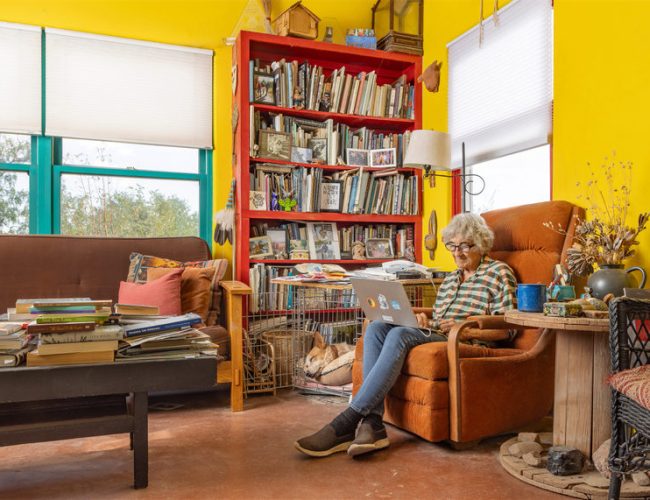 Lucy Lippard at her home in Galisteo. Photo by Kevin J. Miyazaki/The Rabkin Foundation. © Kevin J. Miyazaki 2024.
By Chelsey Johnson
If you know anything about Lucy Lippard, you know she’s one of the most significant art writers and curators of our time. You may know her thirty published books and countless essays on artists, art movements, and land. You may know her as a cofounder of the legendary artists’ book space, Printed Matter, the feminist art collectives Heresies and the Ad Hoc Women’s Committee, or any number of groups that rose up in the latter half of the twentieth century to fight institutional gatekeepers for fair inclusion of women and people of color. You may know that following decades of culture-shifting writing and activism in her hometown of New York City, she moved in 1993 to the tiny historic village of Galisteo, where she edits and writes most of the monthly community newsletter, El Puente de Galisteo, and serves in the auxiliary fire department. Any one of these sentences could outline a remarkable life, but all of them cohere in the singular Lucy Lippard—and they’re just the start.
Lippard tends to understate how she’s built her extraordinary bibliography and career. “I haven’t made that many decisions about what I’m doing and not doing, just things come along. One thing leads to another, and that’s it,” she says of her approach. “I mean, I’m always changing. I’m interested in this, and then I’ve done that, and I go off in a corner and get interested in that, and so on. I meet somebody or I fall in love or get involved in some group like Heresies.” Her intellectual interests have proven inseparable from her romantic ones, as she admits with her rapid, ready laugh. “One guy I lived with—I’ve lived with several—said to me, ‘You tend to choose your men with what you’re interested in at the moment.’ I said, ‘Yeah.’”
But look, many people meander through life from one thing to the next and just end up lost. Lippard’s inner compass is tuned to a singular set of instincts she has always trusted. If she’s ever been afraid, she says she can’t remember it. Across almost nine decades (she’ll be eighty-nine in April) her entire way of being in the world has been to follow her curiosity: on foot, on wheels, in words, and into the company of brilliant artists and thinkers.
“I have always seen myself as an outsider,” Lippard says. “People think, Oh, she’s an insider in the art world. But I never went to Warhol’s parties, I didn’t know any collectors, I stayed away from the gallery scene, and so forth. So I’m an outsider in that sense. I’m an insider in the fact that I lived in studios.”
Those studios turned out to hold many of the foremost innovators in conceptual and minimalist art. Deeply enmeshed in arts communities from her twenties onward, Lippard swiftly rejected the prevailing standard of critical distance and objectivity. She wrote about friends and lovers and acquaintances, curated their work, and collaborated with them on projects and activism. And they gave her fine art. In fact, they gave her so much art she hung it on every wall of her New York loft, including in the bathroom, and stashed it under furniture. When she moved to Galisteo, she gave most of her collection and archives to the New Mexico Museum of Art.
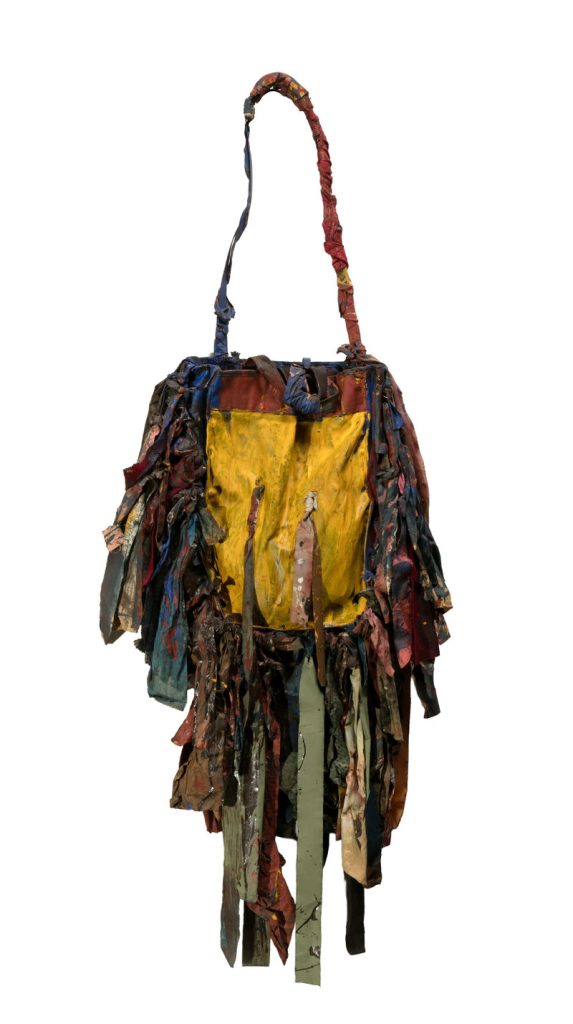
Much of that astonishing work has re-emerged into the light for the knockout new exhibition, Lucy R. Lippard: Notes from the Radical Whirlwind, at the Vladem Contemporary in Santa Fe through August 9, 2026. The title comes from a 1982 lament by the eminent New York Times critic Hilton Kramer, who believed “high art” must be guarded from politics and popular culture: “There was every reason to suppose that a writer of this quality would one day become one of our leading historians of the Modern movement. Yet in the seventies Miss Lippard fell victim to the radical whirlwind.”
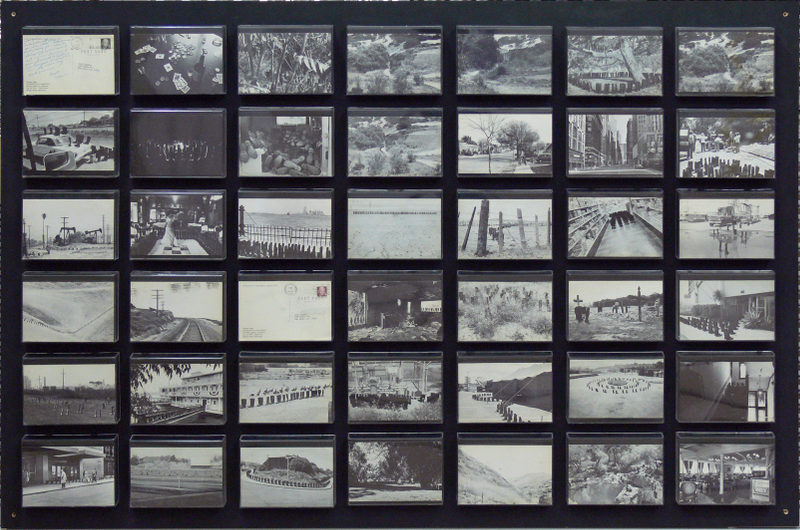
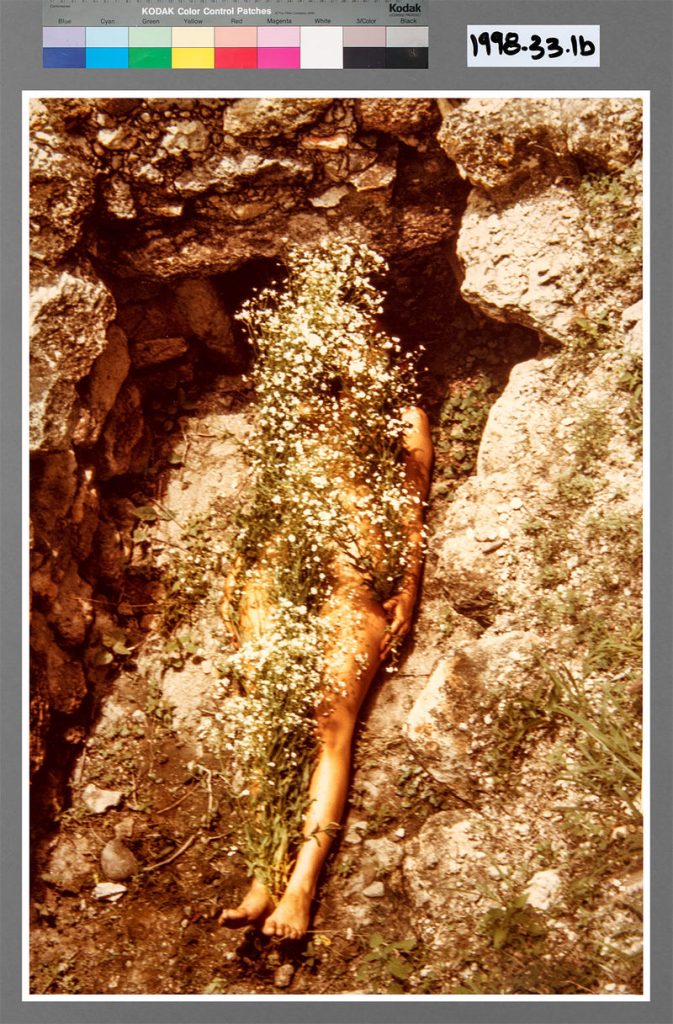
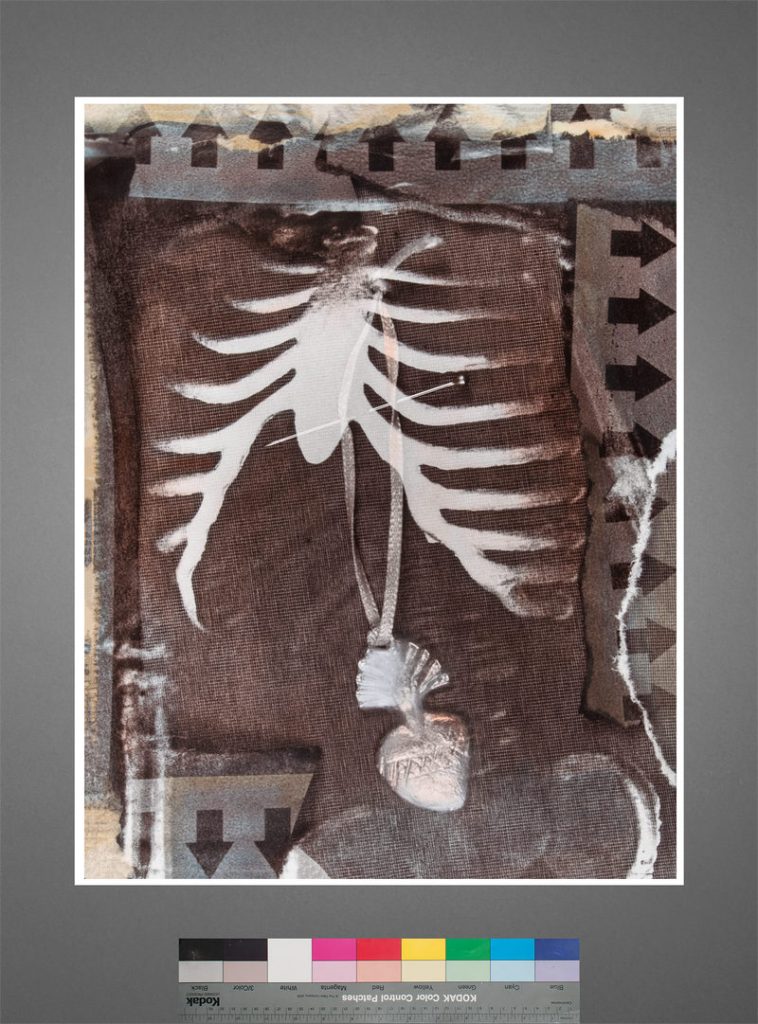
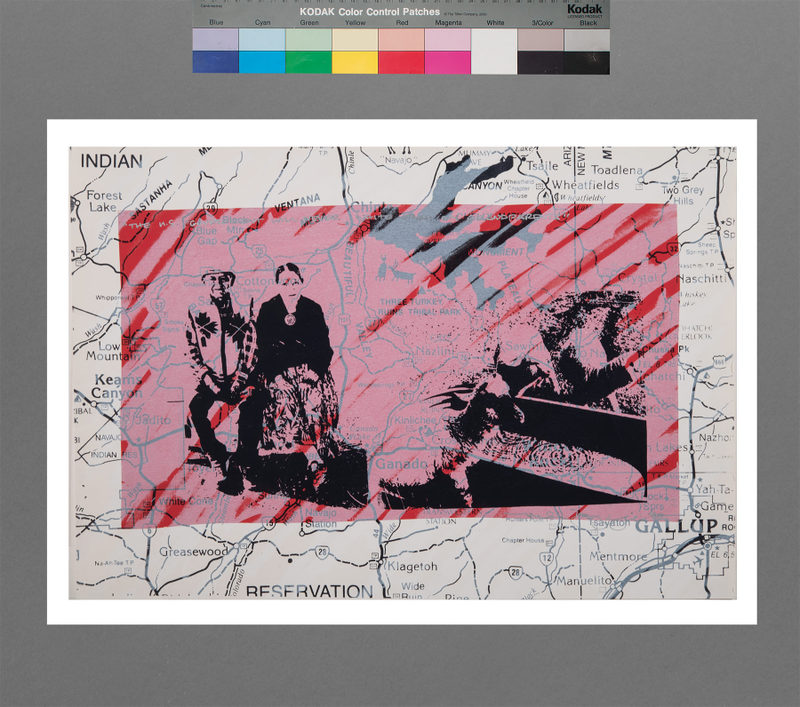
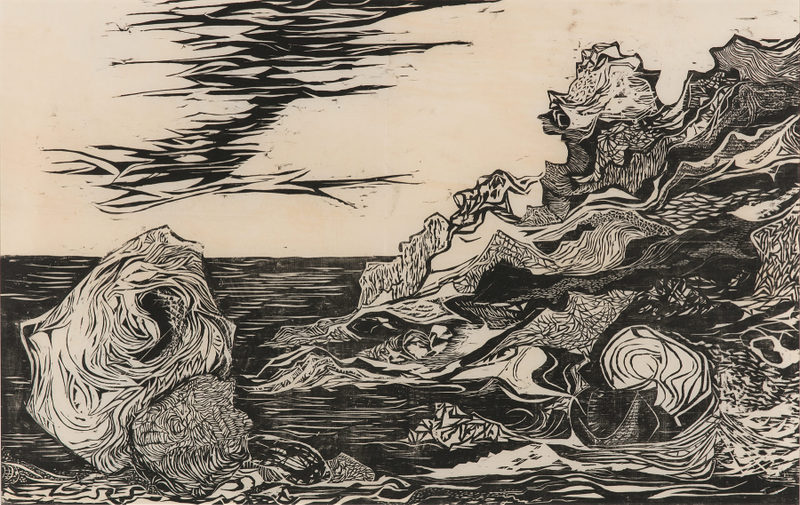
Drawing on these copious archives and personal narratives, curator Alexandra Terry has pulled off a feat of worldbuilding across the Vladem’s two galleries by telling the story of Lippard’s career through her collaborations and relationships. The fine art in the main-floor gallery draws a core sample of some of the most significant practitioners of experimental, abstract, conceptual, and feminist art: Eva Hesse, Robert Rauschenberg, On Kawara, Edward Ruscha, Ana Mendieta, Jaune Quick-to-See Smith, Howardena Pindell, Nancy Spero, Harmony Hammond, Ad Reinhardt, Sol LeWitt, and more. There’s a painting by Lippard’s ex-husband, Robert Ryman, as well as a striking abstract sculptural object by their son Ethan Ryman, a talented music engineer-turned-painter. And though Lippard declines to be labeled an artist herself, an intricate woodcut print she made is also on exhibit, despite her reservations. “It’s a beautiful piece, and it tells the story of her entry into understanding what it takes to be an artist,” says Terry. “Having practiced art herself, understanding how physical it can be and what it really is—that’s important because as a curator, as a writer, often you can be so disconnected from the process. But she was always very much aware of the process of it all.”
Moving out of the studios and into the streets, so to speak, the show’s other half in the upstairs gallery holds a trove of printed media. There’s a lived-in, personal feeling to this spread of small-run artists’ books, posters, pins, comix, correspondence projects, and experiments, by artists both eminent and obscure. These are objects that have been handled, passed around, worn, taped up in public space. You can flip through reproduced zines, yellowed edges and all. One gallery wall glows with a moving slideshow of Lippard protesting, speaking, looking at art, eating cake, her arms slung around friends. In this beautifully analog space, the counterculture’s energy feels tangible.
Taken altogether, Notes from the Radical Whirlwind is an immersive guide to creative defiance, pleasure, generosity, and friendship. The exhibition has the depth and specificity of a self-made universe, simultaneously intimate and epic.
Intimate and epic describe Lippard’s approach to writing as well. She is drawn to the marginal details that define cultural shifts, specific stones in vast landscapes, interiors of artists’ studios as they work, the urgent present moment in the sweep of geological time, insular communities and their complex human networks. Even as her interests roamed into history, geology, myth, land use, extraction, and all matters of place, her visual and narrative sensibilities have remained keenly attuned to the aesthetics of all. She says, “I can drag art into everything.”
Lippard lives with her solicitous red heeler Tanita in the little house she built creekside in Galisteo. The main room has sunny yellow walls and a coffee table built by Sol LeWitt and a loft she still prefers to climb up the ladder to sleep in every night. Her current desk, famously, is a slab of plywood atop Tanita’s crate. Lippard revels in her autonomy, and the thrift that enables it. “Everything in this room is secondhand, including me,” she jokes from her self-described throne, a reupholstered La-Z-Boy that used to be her father’s. Everything in the room has a story behind it, and the story of Lucy’s wild and wide-ranging life materializes through and among the objects she has accrued and made.
This was how she wrote her sole work of memoir, Stuff, cheekily subtitled Instead of a Memoir (2023). Stuff tethers her autobiography only to the material things that surrounded her at the time of writing in 2022 and 2023: art objects, furnishings, rocks, photographs. The self-imposed writing constraint is characteristic of Lippard. For one, tightening the frame makes possible the impossible task of describing a very full life; for another, it draws a clear boundary around what she will tell. Lippard is a lively, candid storyteller who keeps a firm hand on the narrative wheel. Her writing eschews the common memoirist impulse toward confession, self-exposure, and cathartic revelation, favoring instead vivid events, descriptions, and observations deftly recounted in a smart, conversational, and at times irreverent voice.
In person, Lippard’s voice is a gravelly alto, punctuated by a quick, easy laugh. Once you listen to her speak, you’ll hear her voice in her writing too, especially in her more recent books like Stuff and the exuberant Undermining: A Wild Ride Through Land Use, Politics, and Art in the Changing West. Her prose is clear, energetic, and warmly intellectual; in several of her books, a running sidebar of text and pictures tells parallel and related stories to the main body of work. Standard forms cannot contain her.
Lippard decided early in her career to break from the academic, formalist art criticism of the time to write accessibly, even—and especially—on complex subjects such as conceptual art. At a time when art writing was for and about a highly select few, this move showed swagger. “I am probably safe in saying, as I have of some exhibitions I have organized, that no one but me (and my editors) will read the whole book through,” she deadpanned in the introduction of Six Years: The Dematerialization of the Art Object from 1966 to 1972. Indeed, the outraged (and suffocatingly stiff) 1973 Artforum review of Six Years called it “explicitly an uncritical endeavor.” Conceptual artist and critic Mel Bochner railed, “Lippard’s notion of how art informs other art is one of misguided democratization, defined as everybody can understand everything.”
Bochner and Lippard were both wrong: Six Years became the definitive text on the origins and history of conceptual art, and it was both prescient and enduring. Its canonical red cover, bearing the entire eighty-six–word title and subtitle in plain white Helvetica, can be purchased as a T-shirt. Six Years made her name and marked a career turning point for Lippard.
Another turning point was Overlay: Contemporary Art and the Art of Prehistory (1983). This was her first foray into stones, maps, rituals, feminism and prehistory, and land art, and it set the course for several books to come. Lippard had been working on a novel in rural Devon, England, when on her weekly walks on the Dartmoor, she noticed stones placed in the landscape, inscrutable traces of human artistic expression. She became fascinated by “times and places where art was inseparable from life,” as she later wrote in Overlay: “The ancient sites and images are talismans, aids to memory, outlets for the imagination that can’t be regulated, owned, or manipulated like so much contemporary art because so little is or ever will be known about them.”
Both on the ground and on the page, Lippard journeys to see what she can find, and embraces what surpasses her understanding. In the process, she strikes a rare balance of conviction and humility. In Mixed Blessings: New Art in a Multicultural America (1990), the first published book to discuss the cross-cultural processes taking place in the world of contemporary Latinx, Indigenous, Black, and Asian American artists, she explains that “the book is above all a record of my own still-incomplete learning process.” She writes, “The context does not exist for a nice, seamless narrative and probably never will. I can’t force a coherence that I don’t experience, and I write with the relational, unfixed feminist models of art always in the back of my mind.”
Drawn to the powerful glow of expertise, scholars and writers are often tempted or trained to claim the authoritative take. But browse any library shelf of dusty art history books for glum evidence of its fossilizing effects. Because she stays open to the limits of her knowledge, always in intellectual motion, Lippard writes into an enduring relevance.
She also writes with great descriptive beauty, especially about place. One example from her landmark The Lure of the Local: Senses of Place in a Multicentered Society (1997): “I can feel kinesthetically how it would be to hike for hours through a vast ‘empty’ landscape that I’m dashing through in a car—the underfoot textures, the rising dust, the way muscles tighten on a hill, the rhythms of walking, the feeling of sun or mist on the back of my neck.” Undermining (2014, dedicated in part “to New Mexico, one of the loves of my life”) marshals her reverence for place into a voracious and unflinching exploration of how land in the West is used and abused; the policies and histories that enable this; and the ways art can respond to, resist, document, or even be complicit in, the damage. Lippard names the fast-paced Undermining as one of her favorites, and it’s an exemplary entry point to her canon, equal parts images and prose, a petite giant of a book.
The original plan was not to be an art writer at all. Fiction was Lippard’s first love. “But I was no good at the kind of fiction I like to read,” she says of the character-driven realism she is drawn to. No matter how she tried, her own work turned irrepressibly experimental. Lippard kept writing conceptual stories and vignettes on the side, and ultimately published a novel called I See/You Mean (1979), along with a collection of short works from 1951–1994, Headwaters (2024). Her fiction is an aperture into different rooms of Lippard’s mind: intuitive, imagistic, both personal and enigmatic, and sometimes diaristic. Sentence structures shuffle and overlap, time collapses and loops, autobiography goes pointillistic. Rocks recur in several pieces, often with animistic qualities. Drawings and photographs mingle with text. The intensity of some of the stories lingers long afterward like a strange dream.
“I gave up fiction for what can be seen as hack art journalism, though always inspired to do and say what I wanted on the model of what I once thought artists were,” she says, even as she came to understand the precariousness of the artist’s life and how “even the freest of spirits” are beholden to the art world’s dynamics and dysfunctions. “I decided to freelance forever because I hate being told what to do. I make my own decisions and mistakes.” At least outwardly, Lippard prefers not to second-guess or ruminate, more engaged by the realities and possibilities of the present. In The Lure of the Local, she writes, “Nostalgia is a way of denying the present as well as keeping some people and places in the past, where we can visit them when we feel like taking a leave of absence from modernity. It can also be seen as an apology for the betrayal of forgetfulness, a halfhearted bow to the significance of histories we are too lazy to learn.” It’s one thing to write this in your fifties, but does it hit differently in your eighties when you’re sorting through your massive archives and circling through an entire exhibition about your life? Not for Lippard. “I’ve never been nostalgic, except perhaps for landscapes. I can walk through Devon or Maine or Spain or New York City in my imagination when I like. But I like change.”
Political change is at the forefront of her mind these days. Living through McCarthyism catalyzed her first political awakening when Lippard was a teenager and her father was dean of the medical school at the University of Virginia. “I was going to high school, and I said, ‘I’m going to tell everybody you were a communist,’ because he was friends with communists in New York in the ’30s—both my parents were. My father was a very gentle man, and he grabbed my arm and he said, ‘Don’t do that.’ And it hurt. And that was a moment where I thought, Oh. People were scared to death.”
Now, she says, that feeling is back. “This is definitely the worst in my lifetime. The cruelty is what gets to me, especially living in a border state.” In true form, she’s collaborating on a local project called Impact Art Lab, training people to build activist and mutual aid networks and design art-based direct actions.

And she is still writing steadily, despite her desire to slow down a little. “If it’s something that interests me, I think, Oh, that’ll be fun. And if it doesn’t, I just say I’m too busy. I’m trying desperately not to do these things, not to say yes.” Why, then, does she keep saying yes? “My partner says, ‘You never say no!’ And I say, ‘I say no all the time! But I just say yes too.’”
Meanwhile, another book is in the works. At a friend’s house in Galisteo a few years back, a Colombian drag queen filmmaker offered Lippard a tarot card reading. “I said, ‘I’d love to start another book, but I’m so old I probably wouldn’t live to finish it,’” she recounts wryly. Fortunately, the tarot spread foretold she’d have eight or nine more years. So she got underway with The Burden of Memory, a book about U.S. sites of contested history. She recounts the drag queen’s reading as a great story, and indeed, the tarot revelation may have provided a useful nudge. But regardless of what the cards say, if there’s anything we can learn from her example, it’s that Lucy Lippard has never asked or needed permission to do exactly what she wants.
—
Chelsey Johnson is the author of the novel Stray City and the director of the City of Santa Fe’s Arts & Culture Department.