
The Art of Time Travel
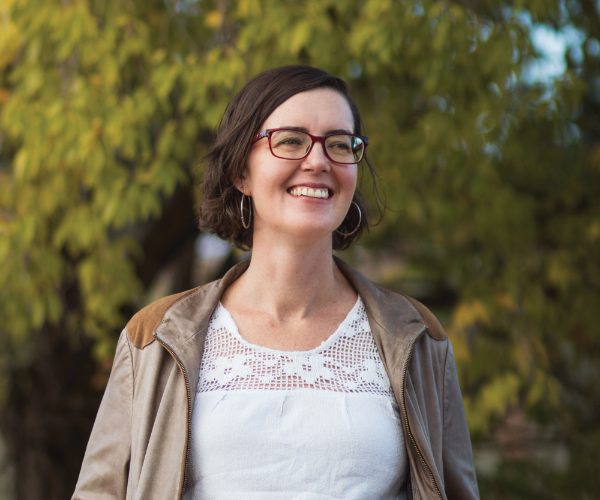
By Emily Withnall
When I’m out walking I often pause to consider the landscape, trying to imagine what a specific place may have looked like one hundred years ago, or five hundred years ago. I take in the shapes of the hills and mountains and conjure other people, other forms of settlement, and other relationships to the land. And when the wind feels particularly harsh, it comforts me to know that others across time have also endured it.
The more I learn in editing El Palacio, the more vividly I can imagine these scenes from the past. There are plenty of gaps in my knowledge of New Mexico histories and cultures and I take pleasure in slowly filling them, issue by issue, and expanding the layers and nuance of my understanding so that I can, in turn, share this knowledge with readers.
Though I grew up in Las Vegas, for example, I knew very little of the Chicano activism that happened there at the height of El Movimiento. The cultural pride from this time was re-tained, but the history itself was not taught—at least, not when I was in school. In Myrriah Gómez’s article about students who participated in the 1970s protests and created art and community, I learned about the critical role that women and children played in the Chicano Movement—roles that, as Gómez points out, have often been overlooked.
As a norteña, I also knew little of the southern part of the state. With the opening of the Department of Cultural Affairs’ newest Historic Site, Taylor-Mesilla—the former home of J. Paul Taylor and Mary Daniels Taylor—the objects within the site provide a physical archive of the layered, multicultural history of the region. Coupled with the genealogical and historical archives Mary assembled throughout her life, the family’s decision to share their home and research helps to deepen our understanding of the past.
Ensuring the enduring legacy of cultural traditions is something Nacha Mendez is also invested in. Mendez is one recipient of the 2025 Governor’s Awards for Excellence in the Arts, and as a renowned musician her life has been shaped by cultural pride, overcoming adversity, and using music to seek healing and connection. Mendez’s inspiration from other musicians and support from teachers early on led her to create a music scholarship for New Mexican girls of color so that the reverberations of cultural learning can ripple forward into the future.
Sometimes the connection between past and present can take form literally. At Acoma Pueblo, a historic excavation of a 150-year-old homesite was recently completed to make way for the building of a much-needed bridge. As Laura Paskus writes in her article, the Pueblo led the project in partnership with the Office of Archaeology to ensure the protection of culturally sensitive areas and to provide a broader understanding of what is important to preserve.
Without deep ties to the land or culture, it can be easy to remove yourself from the arc of history and to look back at events with a feeling of detachment. In her article about two installations within SITE Santa Fe’s Once Within a Time exhibition, Rica Maestas writes about the powerful ways artists Daisy Quezada Ureña and Charisse Pearlina Weston demand that we acknowledge our presence and contributions to a history that is not static but ever-present. In Quezada Ureña’s words, “Things are shifting, and we need to understand what we’re becoming.”
As if in response, in her poem, “Sun Series,” Santana Shorty says, “when you are looking for the cure, a cure, any cure, you will look back and be astonished by your own unwillingness to believe.” How we see ourselves in relationship to the land, each other, our ancestors, and future generations will shape our understanding of the past and our ability to imagine what is possible in the future.