What Happens to the Land, Happens to the People
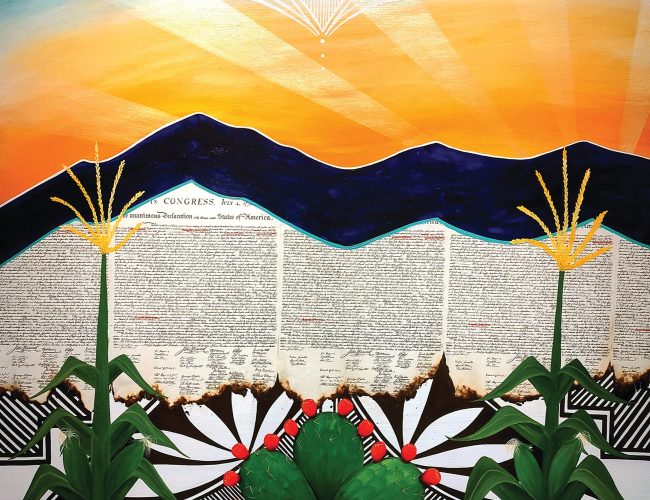 Mallery Quetawki (Zuni Pueblo). Merciless, 2025. Acrylic, gold leaf, Declaration of Independence on parchment. 48 × 48 in. Courtesy of the artist and the Community Environmental Health Program at UNM-COP.
By Dr. Christina M. Castro (Taos & Jemez Pueblos)
Indigenous Artists in the Movement to Protect Their Homelands
Embedded in the mountainscape are pages from a large-scale printing of the Declaration of Independence. The bottom half of the pages are intentionally singed as they meld into distinctly pueblo black and white line work, accentuated by two cornstalks and a prickly-pear cactus at the center with ripe red fruit, seemingly ready for picking. Beyond the silhouetted mountain range, the sun is setting, sending illuminating rays upward. The entirety of the sky is a bright yellow, except for a small patch of blue along the top. At the center, there is more delicate linework, perhaps a representation of divinity or a symbolic prayer holding everything together; a promise of a brighter day ahead.
Mallery Quetawki’s (Zuni) Merciless is a substantial and evocative tribute to Dewankwin Kyaba:chu Yalanne (so-called Mt. Taylor). Her artist statement reads, “To all the broken treaties and desecration of Aweklan Tsit’da (Mother Earth), may she show no mercy against the opening of uranium mines that threaten her place of vigil.”
Quetawki is one of thirty-one artists featured in the Essential Elements: Art, Environment, and Indigenous Futures exhibition, on view through April 5, 2026, at the JoAnn and Bob Balzer Contemporary Art Gallery at the Museum of Indian Arts & Culture. Using the four elements essential for life on this planet, artists representing eighteen tribal communities explore the critical issues of climate change, environmental degradation, and the ongoing effects of colonialism and racialized capitalism on the health and well-being of their respective homelands.
Quetawki’s work is striking in the way she manages to weave the sacred and profane to create breathtaking visual representations of our collective stories of strength, adaptation, and resistance. Quetawki holds a bachelor of science degree in biology from The University of New Mexico and is a second-year graduate student at Johns Hopkins University, studying public health. She has served for nine years as the communications and outreach specialist for UNM’s Community Environmental Health Program, where she creates multimedia messaging for the public, which she describes as “research translation.”
Serving as a community educator, as well as a resource for scientists to better understand and address community needs, Quetawki’s guiding questions include: How does science create real-world applications? How does science respond respectfully to community concern, and how can the community benefit from data and research?
“It’s hard to speak on Traditional Ecological Knowledge (TEK) and Indigenous ways of knowing to really rigid scientists,” she says. “My work involves a lot of convincing. My perspective is on science, research and culture, traditional and ecological stewardship, and ultimately fighting for justice for the most marginalized communities.”
Quetawki describes her art activism, or “artivism,” as something that has come about more recently, beginning with her growing awareness of the environmental issues impacting Zuni and surrounding communities. In particular, she was drawn to learning about the fight for Zuni Salt Lake, a long-term battle the tribe engaged in to protect this sacred site, home to Salt Woman—or Salt Mother as she is known to the Zuni people. Since time immemorial, the Zuni and other local tribes have made pilgrimages to Salt Woman to collect her salt for ceremonial events. From 1994 to 2003, a proposal to develop a coal mine near Zuni Salt Lake would have extracted water from the aquifer below the lake and impacted Zuni Pueblo sacred sites. The proposal was withdrawn after several lawsuits and community refusal.
For Indigenous artists, embedded in our creativity is our connection to spirit—to our homelands, to our ancestors, to our collective history and future as original peoples in a nation that continues to deny the right to the fullness of our humanity. Although it sometimes feels like we can never catch a break, here we are, not only surviving but thriving in spite of the violences we’ve endured, speaking and relearning our languages and histories while continuing ceremonies embedded in our traditional calendars and epistemologies. We wouldn’t do what we do, what our ancestors have always done, if we didn’t believe in the power of our prayers to care for this land and for one another. It occurred to me, while immersed in the exhibition, that every piece carries a story of our survivance; and more than that, what I like to call our Indigenuity: the ability to create beauty out of the most difficult of circumstances.
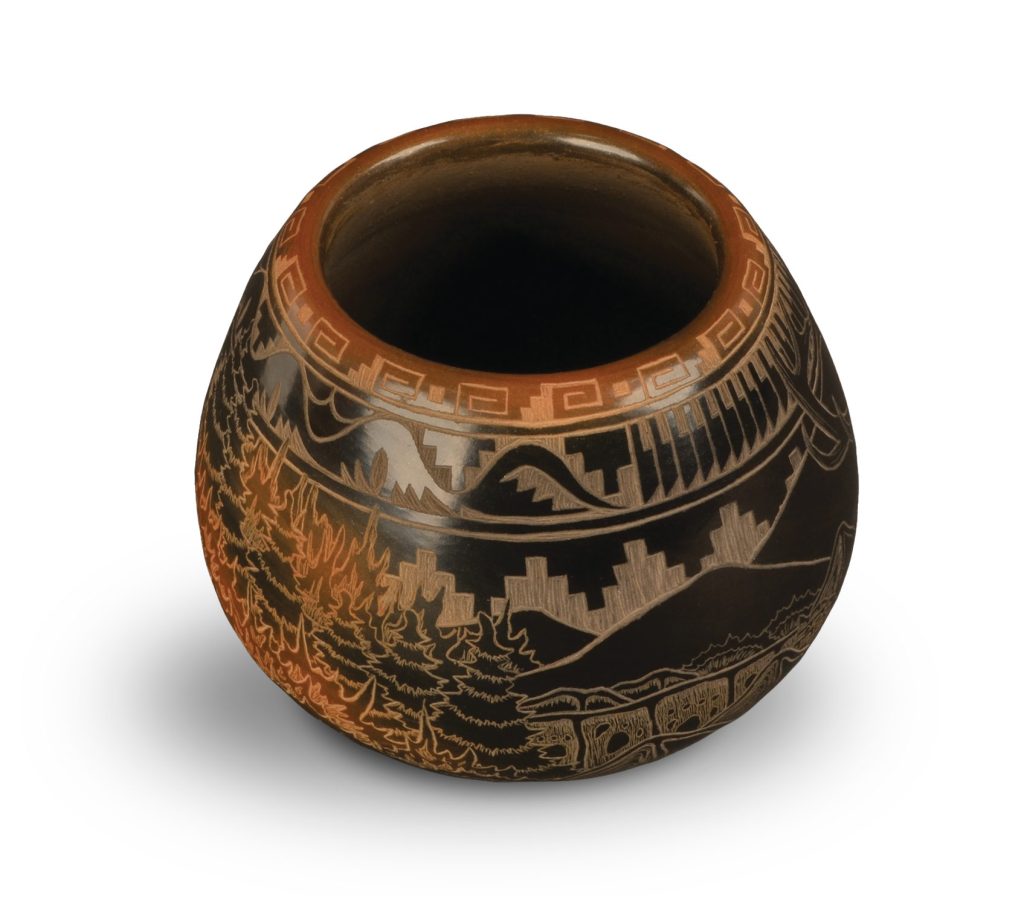
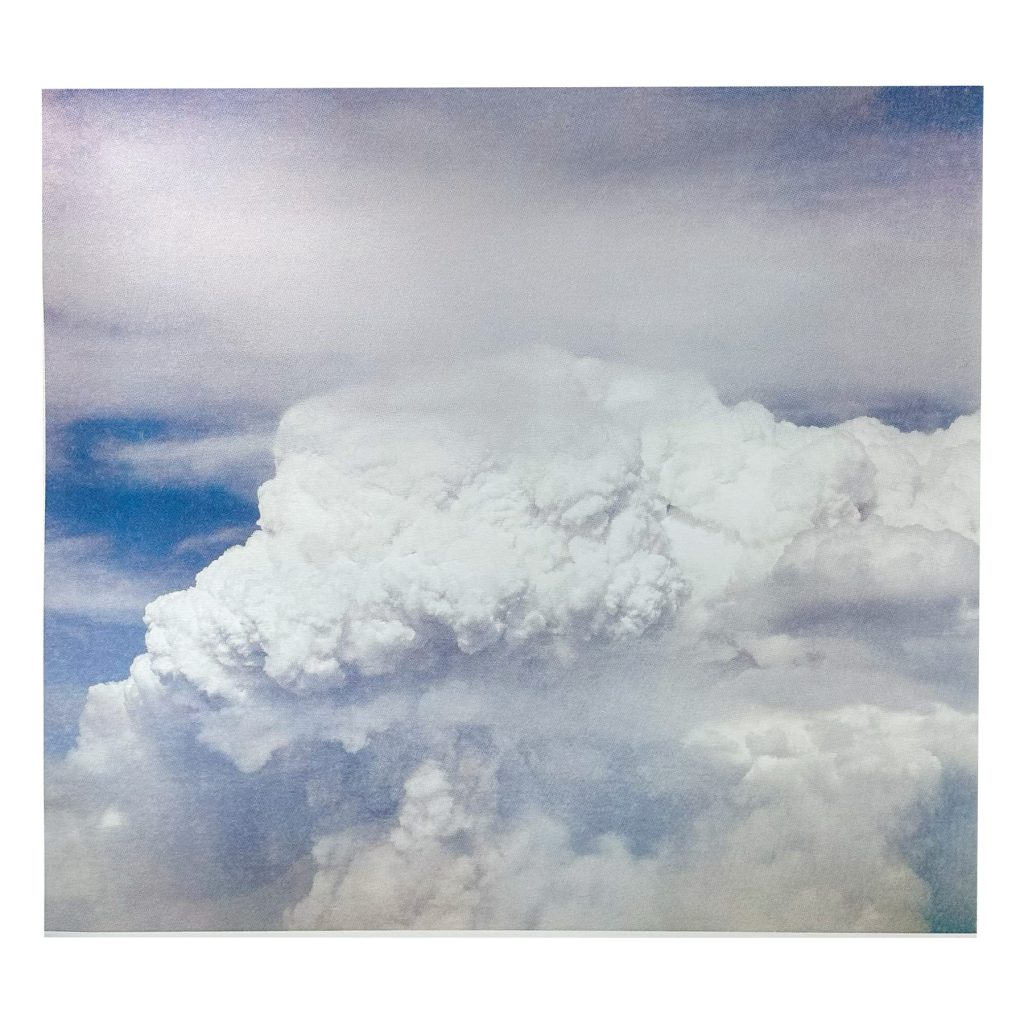
The diversity of mediums—from homemade paper to film to earthen materials like clay—employed by almost three dozen artists in the exhibition is incredible to witness. The ornately detailed vessel titled Las Conchas Fire, by Santa Clara Pueblo potter Kevin Naranjo depicts, on smoke-colored clay, intricately-chiseled, billowing orange flames running through a backdrop of pine trees along the eastern Jemez mountain range. Avanyu, the pueblo water serpent, circles the lip. The sacred deity is known to live in the sky and waterways, relieving the destruction of the fires with the promise of rain. Naranjo’s ability to take an event so singularly devastating and create a work of art with such fine-toothed precision encapsulates the transformative power of creativity to take pain and turn it into something redemptive and beautiful.
The Las Conchas Fire of 2011 started in the Santa Fe National Forest and burned more than 150,000 acres, threatening Los Alamos National Laboratories (LANL) and the town of Los Alamos. After five days of steady burning, it became the largest wildfire in New Mexico state history at the time. The catastrophic fire was the result of human-caused climate change, more specifically, the burning of fossil fuels like coal, oil, and natural gas that create greenhouse gases such as carbon dioxide and methane, that are released into the Earth’s atmosphere. In addition to twentieth-century forest mismanagement, these conditions have led to dramatic alterations in wildfire frequency and size, impacting forest ecosystems and function. Driving through Los Alamos en route to Jemez Pueblo, the burn scars are still visible, and I can’t help but mourn the devastation to my homelands that had once been so lovingly cared for by my ancestors.
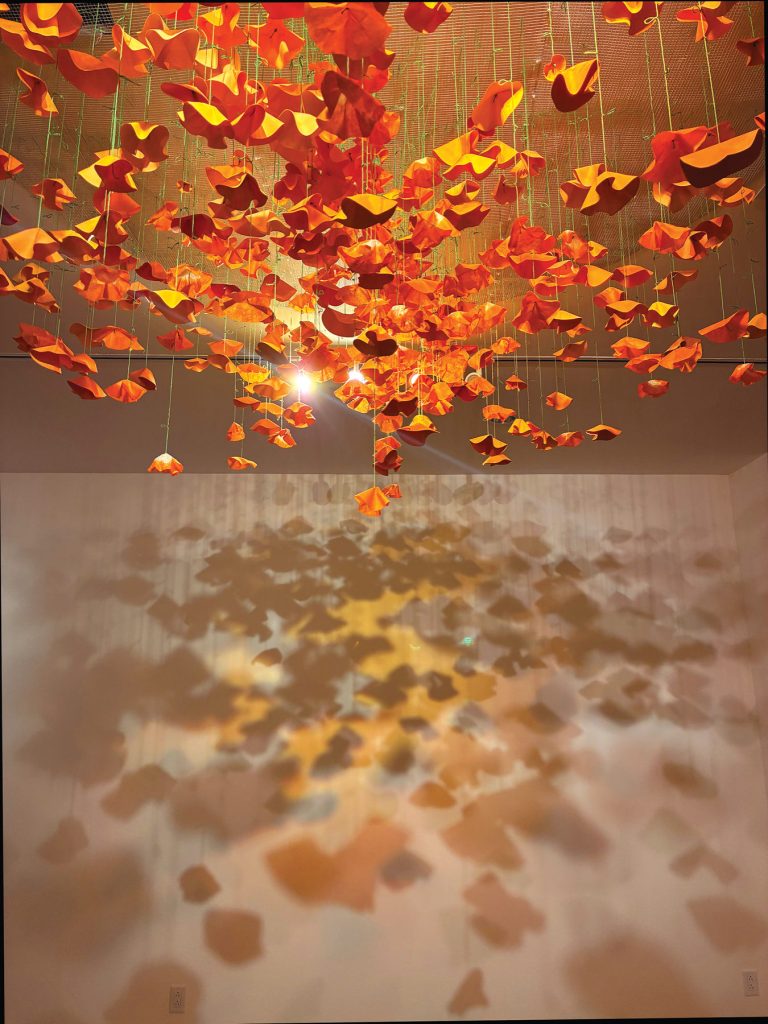
At the opening of the bright gallery, an umbrella of wild poppies constructed of handmade paper, dyed with natural plants, and tethered by strings, cascades down from the ceiling, casting complex shadows on white walls. In the artist statement for Leah Mata Fragua’s (yak tityu tityu yak tiłhini [Northern Chumash]) colorful installation, The Sun is on the Ground, she writes, “Wild poppies need intense heat to germinate, making them one of the first flowers to bloom after a major fire. Their profusion and vivid colors following the devastation of wildfires are powerful symbols of resilience and renewal.” The installation is accompanied by audio generated from poppy data which seeks to further immerse the viewer “in the subtle, often overlooked dialogues between land and culture.”
In 2016, a friend from Standing Rock, South Dakota, called to ask me, and any others I could round up, to come support a growing action to stop an oil pipeline from being constructed on her tribal lands. The Dakota Access Pipeline (DAPL), often referred to by tribal people as the “Black Snake,” would desecrate sacred sites and could potentially compromise her tribe’s main water source, the Missouri River. Her family and others had formed an encampment and were calling friends and relatives from all nations to come and support them in this last-ditch effort to prevent the prophesied Black Snake from entering their beloved homelands.
At the time, I was in the second year of my PhD program, feeling the full range of madness that comes with such an endeavor, in addition to being the wife of an equally busy small business owner and mom to a rambunctious three-year-old daughter. Although I was where I wanted to be, knowing I’d be among a small percentage of terminally-degreed Native folks and would utilize the acquired credentials to enact some tangible change in my communities, I was also feeling disconnected from the “real” world I so wanted to impact. The phone call shook me. It made me think of everything we as Indigenous people have had to fight for to still be here.
I made two trips to the NO DAPL encampment. The first, in September 2016, with a couple of friends and my daughter. She was one of many children at the camp at that time, as most of the lead organizers were women, mothers. By then they had formed a school, Mni Wicˇhóni Nakícˇižin Owáyawa, Defenders of the Water School. My daughter was too young to be aware of what she was stepping into, but in the future I wanted her to know that she was a part of a collective effort that would make its way into history books; one significant story in a larger movement on Turtle Island, led by Indigenous matriarchs to protect our lands and livelihoods. I needed her to know that she—that we—are part of this movement. I still remember the chill of nights sleeping in a thin tent, the wind howling as I cuddled my daughter close for warmth as she slept soundly, oblivious to the harsh world I was pushing back against.
I returned again with friends Thanksgiving week of the same year. The elements were extreme and the tension was thick. As soon as we entered camp, I noticed how many more people were there since my last visit, the billowing flags from many tribal nations ushering us in with urgency. We lucked out and got to stay in a Mongolian yurt with colorful, ornate design work on the exterior, complete with a wood stove in the center. The warm, womb-like structure was a welcome reprieve to cold days spent on Turtle Island, dodging water cannons and attack dogs.
By then, “Pueblo Camp” had been established and many of my own community members were there, lending their support to the cause. I will never forget Thanksgiving Day, after the day’s actions died down. We pueblo folks convened when the sun went down. Accompanied by a drum and song from a relative from Kewa Pueblo, a handful of women donned traditional dresses and danced corn dances under a blanket of stars on lands foreign to our own. We danced as prayer, for the people of Standing Rock and for all those who showed up to the call and for our beloved Mother Earth to know we were here to protect her against the imposing Black Snake.
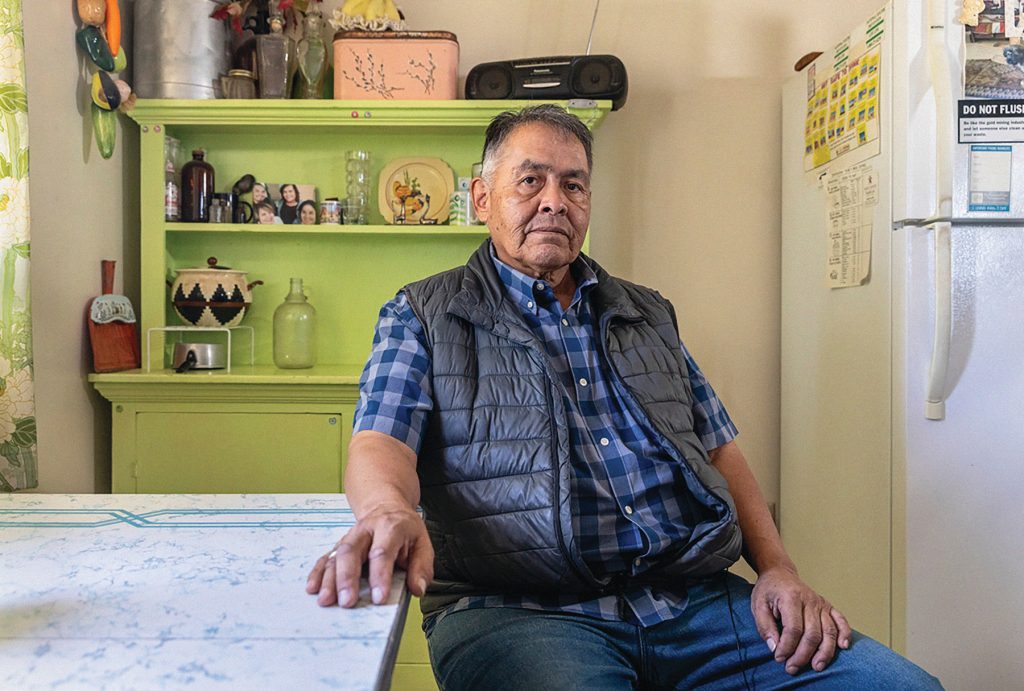
Some say we lost that battle against the Black Snake, but I disagree. The experience changed me and many others. I remember coming home, still on a high from the experience, and having a conversation with my aunt from Taos Pueblo, elder Henrietta Gomez, a highly respected matriarch in our Pueblo. In so many words, she said, It’s nice that you went but what are you going to do to help us here at home and the environmental threats we face here?
As tourists flock to our state annually to enjoy our geography and culture, it is easy to see and experience the beauty of our land and never know the lived history of the people here. New Mexico continues to be deemed a “sacrifice zone” for ongoing resource extraction. Oil and gas industries fund massive portions of our state budget, including our public schools, early childhood education, general infrastructure including roads, highways, water access, and healthcare. With the current political climate, we are looking at protections around sacred sites like Chaco Canyon being lifted for continued resource exploration.
Since the early twentieth century and the discovery of uranium on the Navajo Nation, tribal communities in New Mexico have had to endure the brunt of the destructive impacts of nuclear colonialism on our lands and bodies: from the invisible labor of pueblo people and Hispanos who travelled up the hill daily in the early 1940s to work in some of the most dangerous conditions at LANL, leading to the development of the first atomic bomb, to those whose lands and bodies were sacrificed to that first test detonation known as “Trinity” in 1945 on the plains of the Alamogordo Bombing Range in White Sands, to those currently working in the nuclear corridor of Southeastern New Mexico. Most recently, in late 2025, we battled and lost to LANL an attempt to prevent the “controlled release” of tritium into our local atmosphere. Tritium is a radioactive form of hydrogen that is highly toxic if inhaled or ingested and is known to cause cancer and genetic damage.
A photograph by Shayla Blatchford (Diné) in the Essential Elements exhibition depicts the commanding presence of Larry King, a community leader from Church Rock, New Mexico. King worked as an underground surveyor at a uranium mine that had experienced a toxic spill. Living in the vicinity of the mine, King was able to assess the impact of the spill on the land, water, and livestock, observing that many of his cattle died off shortly thereafter. This photograph is one of many that belong to Blatchford’s ongoing Anti-Uranium Mapping Project, a project she founded that seeks to document, archive, and share the images and stories of those affected by uranium mining on the Navajo Reservation from an Indigenous perspective. Raised in Southern California, Blatchford was shocked to learn of the more than five hundred abandoned uranium mines within the reservation boundary where her mother grew up.
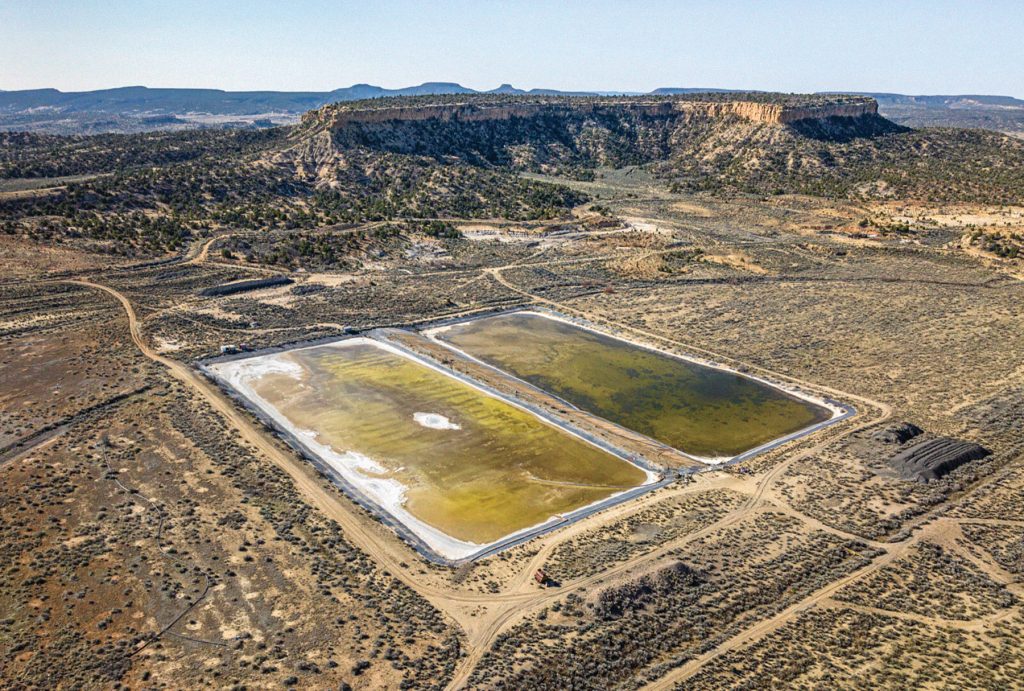
Her aerial image of the United Nuclear Corporation’s Uranium Heap Launching Pond that contaminated the Rio Puerco and groundwater with radioactive, acidic, and toxic waste appears like an oozing sore on an otherwise pristine landscape. Looking at this photograph, I am forced to acknowledge the hard truth that our lands and our people continue to be expendable to these industries. As long as my relatives in the Southwest continue to endure these material conditions, my work continues.
Like Blatchford, as a young person, Quetawki learned little-to-nothing about how uranium mines had been impacting local Indigenous communities. “I was a full-grown adult when I realized our neighbors in Laguna and Diné were living amongst unmediated mine sites,” she says. “I had zero idea how mines affect Indigenous communities; no one teaches you that. You never hear about the process of plutonium creation and the making of the atomic bomb. You only hear about the successes. Movies like Oppenheimer only add to this narrative.”
Since beginning her employment at UNM in 2016, Quetawki has implemented what she describes as silent activism in her art. “As a scientist you have to be objective. There are no biases, no feelings in science, you work with data, and whatever comes out is what it is,” she says. “My role is to interpret this research into traditional knowledge systems for people in our communities. In doing so, my art just naturally went in that direction. I see people and the conditions they live in, and I have to translate that information to them. I use art as a tool to speak to justice and representation. The real conversations happen off the page.”
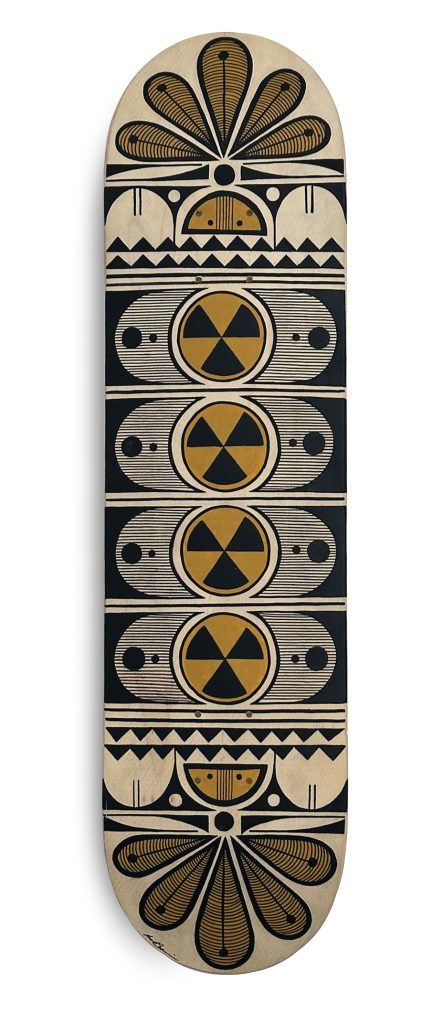
Two smaller pieces reflect this silent activism—DNA Damage and We Will Continue to Fight. Both utilize color and symbols associated with the nuclear industry, a DNA strand to highlight the inherent binary of our worldview as pueblo people versus the dominant culture’s insatiable desire for power and domination. DNA Damage is a visual representation of the heavy metals—arsenic, mercury, lead, and uranium—used to create weapons of mass destruction attacking a DNA strand.
She doesn’t stop there. Quetawki incorporates sacred symbolism and geography, urging us to reflect and find strength in the genetic inheritance found in our DNA, rather than focus on the sickness and death these industries can cause. “It’s not just one community it speaks to,” she emphasizes. “It’s the Downwinders, the miners, and of course, families. It touches on epigenetics, which to me is the scientific term for historical trauma that carries over in generations, experiences and exposures. These pieces of art become sources of power.”
Further, Quetawki embeds what she describes as esoteric knowledge in her work, through ancient iconography only her community can interpret. “As a Zuni woman I can’t paint certain things, but I can depict colors and forms that only a Zuni person would understand. I do the same thing in my work. As I depict obscure concepts like DNA damage, I also embed ceremony on how we protect ourselves from these ongoing impositions. As pueblo women, we will continue to fight, we are matriarchal protectors.”
After my return from Standing Rock in 2016, my aunt’s words offered an invitation to go deeper than my PhD program would allow. I needed to do more than write a dissertation and find a cushy job in academia. That conversation became a catalyst for the formation of my grassroots, women-led pueblo organization, Three Sisters Collective, established in 2017 to continue the advocacy for our rights as Indigenous people to live in our homelands free of harm. We are not the only organization in New Mexico that was born from the NO DAPL movement; the youth-led Pueblo Action Alliance is also doing work to educate the broader community about the impacts of extractive industries and to lobby against false climate solutions.
As we say in Indian Country: What happens to the land, happens to the people.
Interviewing Quetawki, a comrade in the movement, and visiting the timely Essential Elements exhibition reminded me why I do this work as an Indigenous land defender. The Land Back movement isn’t just about returning lands to Native hands, although that is indeed part of it. It is a restorative action that affirms our innate relationship to our homelands and acknowledges our responsibility therein.
Quetawki maintains her commitment to advocating for the most vulnerable communities through her art. “We have always been resilient,” she asserts. “We’ve lived through so many decades of impositions as a community, as a people. Although we face these issues, we have the power to heal, to move forward, to look beyond the surface. We need to make sure we continue to fight so we don’t forget our commitment to the land and to each other. This includes holding our law and policymakers accountable, as it is their responsibility to make sure our environments are safe to live in. Our DNA is our kinship. We are in this together.”
—
Dr. Christina M. Castro (Taos & Jemez Pueblos) resides in O’ga P’ogeh (Santa Fe). She is a mother, writer, scholar, educator, community organizer, multidimensional artist, and public speaker. Dr. Castro received her doctorate in 2018 from the Pueblo PhD Program at Arizona State University’s School of Social Transformation and Justice Studies, and she is an independent consultant with Castro Consulting, LLC.