
Los Molinitos de la Gente
The People’s Gristmills, 1600-1950
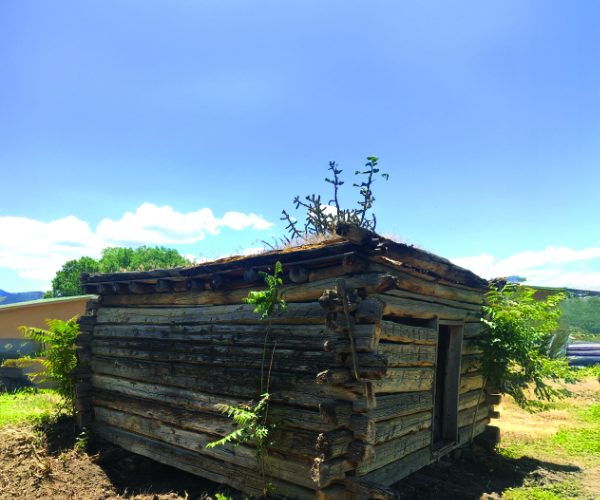 Molino de los Parciantes, el molino abandonado. Photo by Levi Romero.
By José A. Rivera, Levi Romero, and Enrique R. Lamadrid
After the Spanish introduced wheat to the Americas, molinitos (small gristmills) in New Mexico played a major role in the agricultural economy for centuries. Wheat, in its ground form as flour, was a staple during the Spanish colonial period of the fledgling Province of Nuevo México. Whole kernel flour could spoil, so it was baked into bizcochos (hard tack) that dried easily and kept for months. To process raw wheat, local mills became essential infrastructure along with the acequias that powered them.
The Pueblos welcomed wheat cultivation, and the staple grain became a part of their diet, alongside corn. Many hundreds of loaves are baked for Feast Days in hornos (outdoor ovens), and to this day, traditional Pueblo enchiladas are made with wheat tortillas, since corn tortillas were introduced much later, along with the large white concho nixtamal corn used to make them. The Pueblos also appreciated the advanced milling technology introduced by the Spanish pobladores (settlers). Previously, corn was laboriously hand ground by women using a mano and metate.
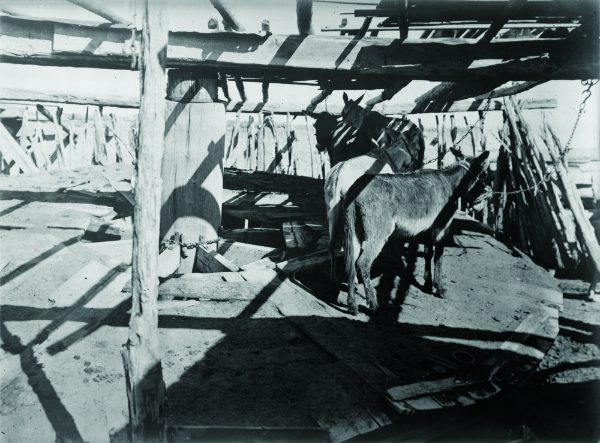
Most molinitos were built from logs and were situated near the banks of watercourses. A few others were built from adobe bricks, and in at least one case, an adobe mill on the Camino Real de Tierra Adentro was powered by burros. Researchers have documented the existence of several hundred mills, with the earliest reference dating to about 1600 at the first Spanish settlement, San Gabriel. Unlike large industrial mills, these smaller mills were susceptible to the effects of weather, and most collapsed after prolonged periods of non-use and abandonment.
The Early Gristmills
At instruction from Juan de Oñate, New Mexico’s first governor, his party of pobladores, with the assistance of local Tewa farmers from Ohkay Owingeh/San Juan de los Caballeros, dug the first acequia near the confluence of the río Grande and the río de Chama in 1598. In the high desert environment, water from nearby streams was vital for domestic consumption as well as for food production at hundreds of villages along the northern río Grande corridor.
A few years after the founding of the first Spanish settlement at Yungue Owingeh/San Gabriel across the river, fray Juan de Torquemada conducted an inspection of New Mexico and reported on the diversity of crops already thriving at the new colony, and noted that water diverted from the río de Chama “irrigates all the varieties of wheat, barley, and corn, in cultivated fields, and other items that are planted in gardens, because those lands produce cabbage, onions, lettuce and beets, and other small vegetables.”
The varieties of wheat Torquemada mentioned were introduced to the Americas as part of the Columbian Exchange of garden crops, fruits, and grains between the Americas, Europe, and West Africa. Maize, or corn, is the American staple that went global. In a letter addressed to his relatives on March 22, 1601, Oñate referred to wheat cultivation and the first gristmill built at San Gabriel: “Our wheat has been sown and harvested, and it does extremely well in that land… A flour mill has already been erected. More than 1,500 fanegas of wheat were gathered this year, and there remain to be harvested more than another three thousand.” The fanega was both a measure of volume (1 fanega=1.58 bushels) and a name for the land necessary to produce it.
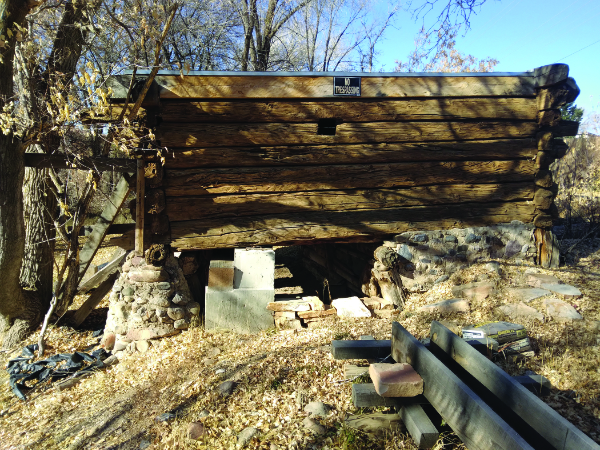
To build the mill at San Gabriel, the colonists needed only simple hand tools: axe, adze, awl, hammer, chisel, and a small saw. They brought the heavy millstones with them up the Camino Real, as noted during the Juan de Frías Salazar inspection of the Oñate expedition in December 1597 at the Valley of San Bartolomé, near the Santa Bárbara mines, before setting out on the final journey to El Paso del Norte. In his report, Salazar notes that Captain Alonso de Quesada, Sergeant Hernán Martín, and soldier Pedro Sánchez each declared they were transporting millstones among other supplies, tools, and equipment in carts pulled by oxen and mules.
In time, the pobladoresconstructed molinos along the river valleys using falling water to power the handmade machinery inside each mill. Most of the small gristmills were built from pine and fir logs cut from nearby forests, dragged by a team of horses, and then peeled by hand and sawed into the lengths needed to form the exterior walls of the mill house.Molineros (millers) quarried and shaped the milling stones from basalt deposits on neighboring mesas and took them back to the community in carts. Typically, one of the landowning villagers took the initiative to construct a molinito on his property for use by the rest of the community.
Payment was in kind, usually a modest share of the flour and powdered chile after the milling. The molinitos were also used for grinding dried chile pods into powdered red chile. Levi Romero’s tío, Celestino, is one of many people who recall that the residue from the chile would remain on the ruedas and gave the flour a slight chile flavor. Both pobladores and Pueblos patronized the same mills, many of which were referred to by the name of the molinero, for example: the José de la Luz and Pedro Barela Molino de Truchas, the Molino de los Duranes in Ranchos de Taos, the Corsinio and Lauriano Córdova Molino in Vadito, the José Maximiano Cruz Molino in Las Trampas, the Juan de la Cruz Borrego Molino in El Güique-Estaca, and the Felipe García Molino in Angostura.
Nineteenth-century merchants and entrepreneurs built larger mills using durable construction materials such as rock and adobe masonry. While the molinitos were driven by a small horizontal paddle wheel situated at the base of the log building, commercial production required the use of an overshot water wheel outside the building with a connecting driveshaft to move the large stones or more modern steel rollers and sifters inside. The molinitos had little chance of surviving into the present day. While most fell into disuse by the late 1930s, a few continued in service until the 1940s and 1950s.
We call them “molinitos de la gente”to distinguish them from the industrial mills that supplied large quantities of white wheat flour and other milled grains to U.S. Army posts and reservations under government contracts. The molinitos, on the other hand, were family-owned and served the needs of local villages through exchange and bartering arrangements negotiated by each molinero.
Once commercial milling reduced the cost of flour and other milled grains, small-scale milling was no longer economical. Some molinitos were converted for use as storage sheds, and others were abandoned. Exposed to the elements season to season, most eventually rotted and collapsed. For those left standing, the logs were often repurposed as fence and corral posts or simply chopped for use as firewood. The internal components were also made of wood and were replaced after decades of use. When the mills closed, these too were likely consumed as fuel or converted to other uses. The durable millstones were left lying around the owner’s property, and some were later sold as artifacts. In recent times, millstones are often used as landscaping materials, and some have been observed in public spaces, such as footpaths bordered with millstones. There are also gravesites in some camposantos (cemeteries) that are framed by rows of ruedas de molino (millstones). Still others can be found at museum exhibits depicting life in New Mexico during the colonial and territorial periods.
Although reports exist as to many of their historical locations, very little has been done to survey what remnants, if any, exist on the ground today. Reports by travelers and others described gristmills at various communities such as Manzano (1847, Torrance County), Peña Blanca (1855, Sandoval County), and Santa Cruz (1881, Santa Fe County). Earlier references date to the Spanish Colonial period at San Gabriel around 1600, Santa Fe in 1756, Chimayó in 1776, and Ojo Caliente in 1807.
Photographic evidence can be found for historic molinos that no longer remain at Chamita, Chimayó, Sena, La Ciénega del Embudo, Santa Fe, Vallecitos, Pecos, Ledoux, El Güique-Estaca, Nambé, Cañada de Cochití, Taos, Sebolleta, and others. In addition, longtime residents still have memories of places along acequias where molinos once operated and can point to rubble or stones that served as foundations for the mill structures.
In 1988, David Snow prepared a report on the acequia systems of Santa Fe and noted that water from acequias powered several gristmills along the Santa Fe River. The earliest known mill, he states, was called “el molino de San Francisco” and was located upstream from the plaza and built prior to 1756. A number of others were built during the nineteenth century, one of which was located on the south side of the river just east of Cristo Rey Church. Higher up the river on the north bank was the “molino de las ánimas” (mill of the blessed souls) on what was called the Acequia Rivera, just west of 1497 Canyon Road. Two mills were referenced in property deeds from 1856 and 1887, and another in a plat map from 1898, located somewhere along the Acequia Madre.
Further south, at Angostura near Algodones, Felipe García built a molino propelled by a large wheel, thirty to forty feet in diameter, slanted on an axle. Four burros walked along a wheel platform while rotating the axle as the wheel revolved in a contrary direction under the weight of their steps. A rawhide rope was strapped around the rim of the platform, then passed into two openings of an adjacent adobe building, leading to a smaller wheel and the millstones. Troughs holding the ground grain separated the bran, the whole wheat, and the white flour. Travelers who passed through the area remarked on the lush fields and orchards that lined the Camino Real in the vicinity of Algodones. Apples, peaches, quince, pears, apricots, and grapes were grown along with corn, chiles, and beans. Elders from the community recall that Felipe García’s molino ground wheat and corn for local Hispano farmers as well as for the Pueblos of Tamayá/Santa Ana, Katishtya/San Felipe, and Kewa/Santo Domingo.
Commercial mill buildings that survived are well known to the public, for example the Cleveland, St. Vrain, and La Cueva mills along the Mora River, as well as one at Pendaries Village near Rociada, the stone mill in Cimarrón, and the Old Dowlin Mill at Ruidoso. A handful of horizontal wheel molinitos are still standing and have been listed in state and national registers which today serve as historic landmarks linking the past with the present. These “survivors” include the Molino Barela de Truchas relocated to El Rancho de las Golondrinas, the Córdova Molino in Vadito near Peñasco, the Molino de los Duranes in its original location in Ranchos de Taos, and the Cruz Las Trampas Molino reassembled and on loan to the Cleveland Roller Mill. Along with the Barela de Truchas Molino, two other molinitos were relocated to El Rancho de las Golondrinas: the Molino Viejo de Talpa from Taos County and the Old Golondrinas Mill from near Truchas and then rebuilt on the foundation of the original molino site at Golondrinas. Another mill still standing is located in Apodaca, known locally as the Molino de losParciantes (mill of the irrigators).
Preservation of molinos has been undertaken in different ways, some by a family member as in the case of the Córdova Molino, others by sponsor agencies such as the Rancho de las Golondrinas that relocated the Truchas and the Talpa molinos to their compound, and also by historical societies in the case of the Molino de los Duranes in Taos County. Those involved ranged from volunteer engineers to contracted architects, with assistance from funding sources. Where needed, logs and other wood material were easily replaced due to the simple design of these small gristmills.
In remembrance of the times, Levi Romero wrote a poem about the Molino de los Parciantes, once managed by his uncle Sylviano Griego, titling it “Molino abandonado.” The repeating chorus line is taken from a traditional canto, “trillando – el tril.” After threshing in a nearby field, it was sungas crops such as corn, beans, chile, or wheat were laid out and winnowed in sábanas (sheets) in the afternoon breeze to remove dust and debris before milling. The canto was handed down to Romero by Aarón Griego, who said that one person would stand at each end of the sábana and shake it while they sang the canto in unison as the breeze blew the debris from the produce that was being prepared for milling.
Preserving the molinitos
Preserving the molinitos recognizes that these handcrafted flour mills sustained self-sufficient farming for multiple generations of Nuevomexicanos. When the small mills were in operation, the owner handled repairs independently or solicited aid from neighbors with knowledge of mill construction. Recently, one mill owner followed this approach, and with a grant from the Society for the Preservation of Old Mills, succeeded in restoring a family gristmill once operated by both his grandfather, Corsinio, and father, Lauriano Córdova. Gustavo Córdova recalls that his grandfather, Corsinio, married in 1893 and soon cleared a parcel of land along the río Pueblo in Vadito and prepared it for farming. After his first harvest, he visited nearby mills and, with the help of neighbors, built the Córdova Molino in 1895. After a relocation in 1897 to a site where he constructed an acequia to provide the waterpower, Corsinio operated the mill until he died in 1926. Meanwhile, Corsinio’s son, Lauriano, learned the milling operation by observing his father and took over running the mill at age fourteen when his father passed. Lauriano continued milling until his death in 1976. After years of neglect, Gustavo secured the grant to complete the restoration in 2003. It remains on the family property to this day.
In the case of mills requiring extensive repairs, preservation sponsors have teamed up with landowners and hired consultants to conduct structural assessments and develop a restoration plan. In a recent example, the Taos County Historical Society obtained funds from the New Mexico Historic Preservation Division (HPD) to restore the Molino de los Duranes at its original site along the Camino Abajo de la Loma in Ranchos de Taos. Following a nomination from Rachel Preston Prinz, a Santa Fe architectural designer and historian, along with HPD, the mill was placed on the State Register of Cultural Properties in 2019 and the National Park Service’s National Register of Historic Places in 2020. Erected in 1879, this molinito’s log crib construction stands out as the last surviving water-powered gristmill in the Taos Valley. In the Statement of Significance in their nomination report, staff at HPD noted the importance of the molino as an engineering structure along with its role in agriculture: “the mill was a critical component of the regional agricultural cycle in which farmers and residents at the end of the spring and fall harvests would bring corn and wheat to the mill to be ground into flour.”
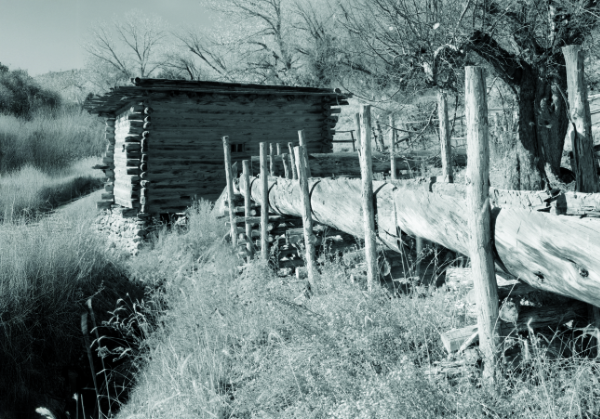
Martin Stupich, Barela de Truchas Molino, Courtesy of Library of Congress, Prints and Photograph Division. Creator: Historic American Engineering Record. Negative number: HAER NM 14A-1.
Some preservationists file reports in national repositories as in the case of Martin Stupich who collaborated with the Historic American Engineering Record and posted his collection of photographs of the Barela de Truchas Molino at the Library of Congress along with a sketch detailing the interior mechanisms on the top floor and the water wheel in the lower level. El Rancho de Las Golondrinas offers milling demonstrations at the Truchas Molino during their annual harvest festivals. In addition to the Truchas Molino, the living history museum at Golondrinas features two other molinitos, making these three mills the most anywhere in New Mexico that can be found that are open to the public. Volunteers and staff of the Rancho routinely maintain the structures as part of the museum experience for visitors. For an example of commercial-scale mills, the ranch property also includes a replica of the adobe mill built by the Pacheco family in the Rociada Valley of San Miguel County.
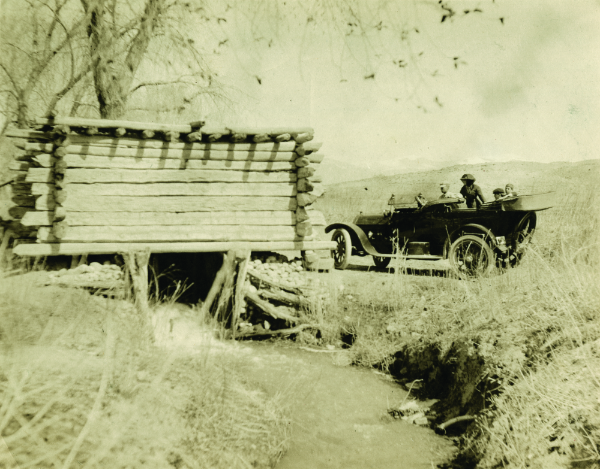
Two small mills not yet restored include the still-standing Molino de los Parciantes at Apocada near Embudo, and a partial structure constructed of terrones at El Llanito near Bernalillo. Earl Porter, the volunteer and now retired engineer who restored the Barela de Truchas Molino in the 1990s, left behind survey maps of mill sites throughout New Mexico, some of which might still be standing or can be reconstructed. Other sites on the maps will probably only show traces of where the mills once stood. With pride, current landowners often point to rubble and say, “This is where our molino used to grind wheat from our fields.” Or they point out that the carrier ditch is still called “la Acequia del Molino.” In cases of total collapse, some families save remnants such as the logs, waterwheels, hoppers, or durable millstones that they display on their patios. Memories live on from one generation to the next. All molinos, whether standing or in ruins, are windows to a past agrarian culture, monuments to a self-sufficient economy that sustained village life for generations. Los molinitos de la gente have become iconic in the cultural memory of the people, a reminder of our querencias, the love of ancestral homelands, and respect for the resilience of our ancestors.
Molino Abandonado -Levi Romero
From: A Poetry of Remembrance: New and Rejected Works
sopla viento, sopla más y la paja volará
ahí preparado el banquete
pa’ todo el que vaya entrando
sopla viento, sopla más y la paja volará ahí preparado el banquete pa’ todo el que vaya entrando
la historia
de un pueblo
hecha polvo
¿qué pasó aquí,
qué es esto?
¿en dónde está la sabiduría
granma, granpa?
ya no quedan ni mígajas
ni tansiquiera una tortilla dura
¿el sonido esta tarde?
una Harley retumbando por la plaza
¿y con eso seponemos de quedar contentos?
sopla viento, sopla más y la paja volará
ahí y preparado el banquete
pa’ todo el que vaya entrando
sopla viento, sopla más y la paja volará ahí preparado el banquete pa’ todo el que vaya entrando
aquel molino
en un tiempo con su rueda en el agua
ahora, se usa de dispensa
¡ay, hasta miedo me da
arrimarme a este pueblo!
las lenguas como flechas
apuntadas y venenosas
somos hijos de los hijos
de hombres en aquel antepasado
que se trataban como hermanos
ayudándose unos a los otros
al estilo mano a mano
sopla viento, sopla más y la paja volará ahí preparado el banquete pa’ todo el que vaya entrando
sopla viento, sopla más y la paja volará ahí preparado el banquete pa’ todo el que vaya entrando
¿qué pasó aquí,
qué es esto?
¿qué no te conozco,
de qué familia eres?
¡o, pues, yo y tu abuelo
anduvimos juntos
en la borrega en Colorado
y en el betabel en Wyoming!
nos conocemos bien
sin saber quién semos
esta tarde, aquí
el maíz bailando
seco en el viento
y el pueblo sin molino
sopla viento, sopla más y la paja volará ahí preparado el banquete pa’ todo el que vaya entrando
sopla viento, sopla más y la paja volará ahí preparado el banquete pa’ todo el que vaya entrando
Molino Abandonado -Levi Romero
From: A Poetry of Remembrance: New and Rejected Works
blow breeze, blow some more
and the husk will fly
prepared is the banquet
for all who enter
blow breeze, blow some more
and the husk will fly
prepared is the banquet
for all who enter
the history
of a village
turned to dust
what happened here,
what is this?
where is the wisdom
gramma, grampa?
not even crumbs remain
not even a hardened tortilla
the sound this evening?
a Harley roaring through the plaza
and is that what should make us content?
blow breeze, blow some more
and the husk will fly
prepared is the banquet
for all who enter
blow breeze, blow some more
and the husk will fly
prepared is the banquet
for all who enter
that molino
at one time with its wheel in the water
is now used as a storage shed
ay, I am even fearful
to approach this village!
tongues like arrows
pointed and venomous
we are children of the children
of men in that ancestral time
who regarded each other as brothers
assisting one another
hand to hand
blow breeze, blow some more
and the husk will fly
prepared is the banquet
for all who enter
blow breeze, blow some more
and the husk will fly
prepared is the banquet
for all who enter
what happened here,
what is this?
do I not know you,
what family do you belong to?
ooh well, your grandfather and I
travelled together
as sheepherders in Colorado
and in the sugar-beet fields of Wyoming!
we know each other well
without knowing who we are
here, this evening
the cornstalks dancing
dry against the wind
and the village without its molino
blow breeze, blow some more
and the husk will fly
prepared is the banquet
for all who enter
blow breeze, blow some more
and the husk will fly
prepared is the banquet
for all who enter
We encourage readers to share stories, knowledge, photographs, poems, and other memories about molinos of your community.
—
José A. Rivera is Professor Emeritus of Community and Regional Planning, University of New Mexico. His research deals with comparative water institutions globally and mutual aid societies of the American Southwest. Among others, his publications include Acequia Culture: Water, Land, and Community in the Southwest(1998) and The Zanjeras of Ilocos Norte: Cooperative Irrigation Societies of the Philippines (2020). Email
Levi Romero is Professor Emeritus in the Chicana and Chicanos Studies department at the University of New Mexico. He was selected as the Inaugural New Mexico State Poet Laureate, 2020-2023. He is the author of A Poetry of Remembrance: New and Rejected Works, and coauthor of New Mexico Poetry Anthology (2023), Querencia: Reflections on the New Mexico Homeland, and other publications. Email
Enrique R. Lamadrid is Distinguished Professor Emeritus of Spanish, University of New Mexico, and editor of the prizewinning Querencias Series at UNM Press. He is a commissioner of the Álamos de los Gallegos Acequia Association in Albuquerque’s North Valley. In 2023, he coedited Water for the People: Acequia Heritage of New Mexico in a Global Context with José A. Rivera. Email